

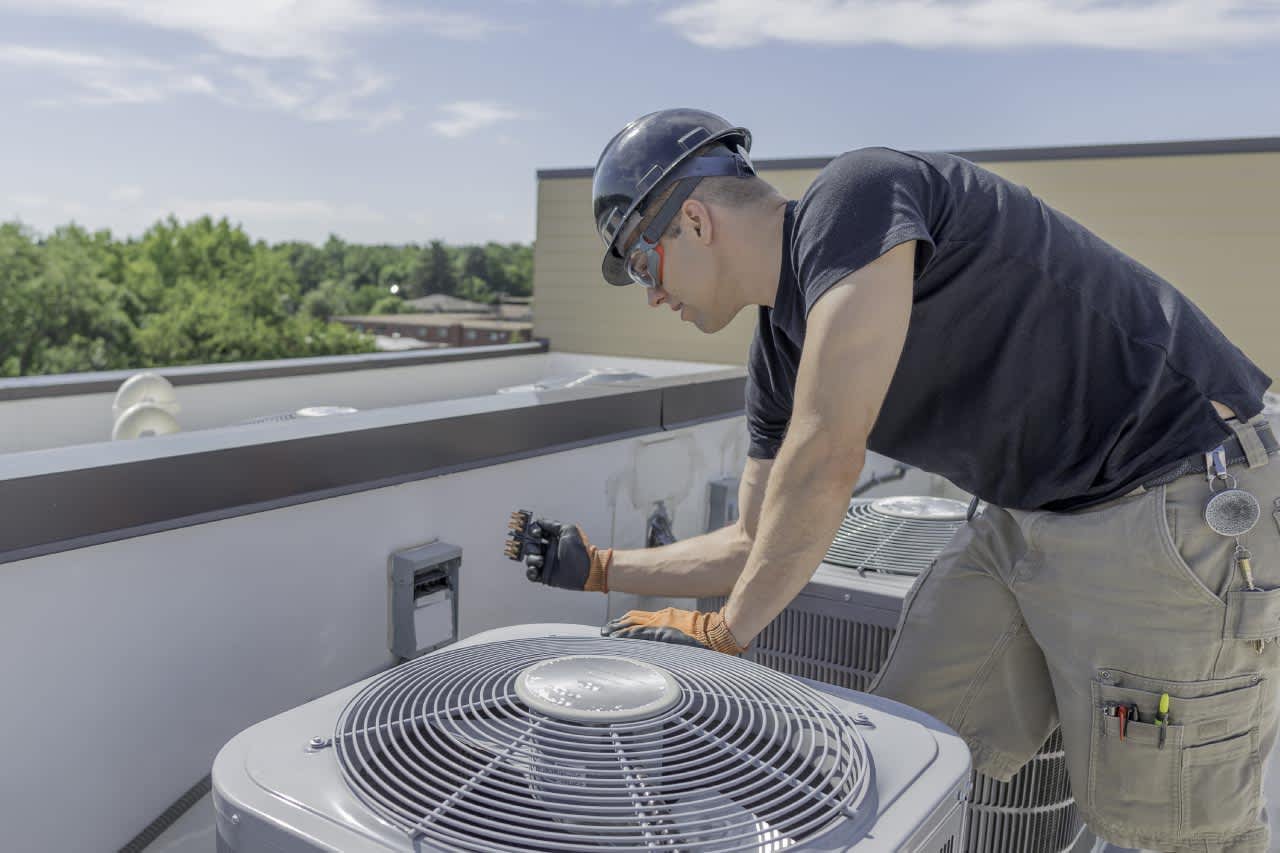
Did your HVAC pro recently tell you that you may need a new disconnect? If so, start budgeting for the cost to install an AC disconnect here.
Heating and air conditioning service costs depend on your project and location. Check with a local pro for your specific job.

Expect to pay $3,887 to $8,073 for your professional AC replacement labor, depending on system type.
Your AC unit type and your home’s square footage are the biggest drivers of total replacement cost.
Your budget should include ductwork changes that add $3,000 to $7,500, plus electrical upgrades and old unit removal.
Hiring a local air conditioner installation professional ensures your system is installed to code for safe, reliable cooling.
In 2026, the national average cost for AC replacement is $5,978, based on 24,979 verified projects from Angi Pros. Most homeowners pay between $3,887 and $8,073, with the spread driven by system type, home square footage, and local contractor fees. If your project requires ductwork modifications, budget an additional $3,000 to $7,500 on top of that range.

The type of AC unit you choose is the primary driver of purchase and installation cost, with options ranging from compact portable AC unit models to whole-home central systems. Costs vary significantly by type of new AC unit, as shown in the breakdown below:
Portable AC unit: These free-standing units can be moved throughout your home.
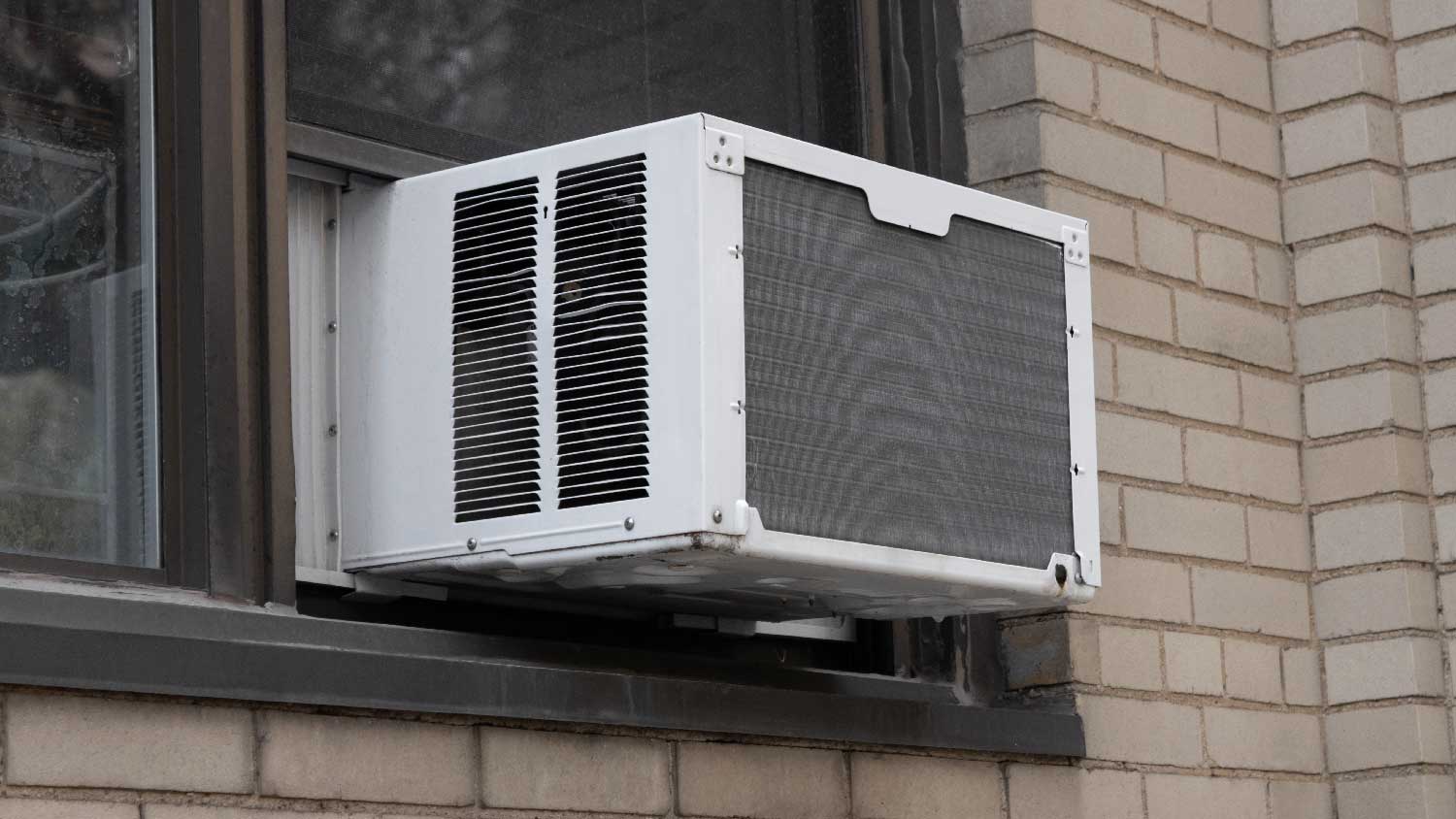
Window AC unit: These air conditioners rest in a window, and they cool small areas of your house, such as one room.
Central AC: The most popular AC option, central units cool down an entire house through a system of ducts.
Ductless split system: These air conditioners have an indoor and an outdoor unit, and they don't require extensive ductwork.
Geothermal: Geothermal AC systems use the ground temperature for heating and cooling your home.
Below, you can find the average costs for different types of air conditioning units, as well as the installation cost:
| Type of New AC Unit | Average Unit Cost in 2026 | Average Installation Cost in 2026 |
|---|---|---|
| Portable AC Unit | $100–$500 | $80–$700 |
| Window AC Unit | $150–$800 | $60–$400 |
| Central AC | $2,500–$4,500 | $3,500–$7,000 |
| Ductless Split System | $2,000–$3,000 | $1,200–$10,000 |
| Geothermal | $4,200–$12,000 | $11,000–$28,000 |
Manny was very trustworthy and professional. He gave me a very fair price. Within 24 hours he had done his inspection and given me an estimate. It's the first time I talked to an HVAC company that didn't make me feel like I was getting overcharged. One of the other companies I spoke to was trying to charge 6 times the cost. He took lots of pictures and video and explained step by step what was done wrong by the other contractors and what he would need to do to fix it. He was able to do the work the day after I accepted the estimate. He completed all the work in one day. I am confident and very relieved to say that my HVAC system is set up properly.
AC unit size directly affects cost, and getting the sizing right matters as much as the price itself. An undersized unit may force you to install additional systems later, while an oversized one can drive up energy bills and cause uneven cooling. Here's how air conditioning unit cost by size costs compare by AC tonnage:
| AC Tonnage | BTUs | Average Cost in 2026 |
|---|---|---|
| 1.5 | 18,000 | $1,300–$4,000 |
| 2 | 24,000 | $1,500–$5,000 |
| 3 | 36,000 | $2,000–$5,500 |
| 4 | 48,000 | $2,600–$6,200 |
| 5 | 60,000 | $2,800–$6,800 |
AC tonnage refers to the amount of heat an AC unit can remove from a home in one hour. A 1-ton unit, for example, can remove 12,000 British thermal units (BTUs), while a 3-ton system will remove 36,000 BTUs. The larger your house, the more cooling power you'll need. The general rule is that you'll need 1 ton of cooling for every 500 or 600 square feet.
Many other variables factor into which size air conditioner will work best in your home. For example, a basement is naturally cooler than first- or second-floor rooms. Rooms with high ceilings also require more air conditioning or the addition of ceiling fans to circulate air better.
Many people are tempted to buy larger units for faster cooling, but the result can be higher electric bills, inconsistent cooling, higher humidity, and, in some cases, mold. Your HVAC contractor will calculate the correct size unit for your living space.

Hiring an experienced local AC installation pro is the safest way to ensure your new system is installed correctly, and most homeowners pay $500 to $2,500 in labor for AC replacement. Getting a quote before committing gives you a clear picture of what to expect and helps you avoid unexpected costs from improper installation.
While most projects are handled by the HVAC company from start to finish, there are some cases when additional help is needed:
Plumber: Central AC systems require drain lines to remove condensation from the air handler. Adding a drain line is usually included in the cost of installing a new AC system. But if not, you can expect the plumber costs to range between $180 and $500.
Electrician: Central AC units must connect to a dedicated circuit with a standard 240-volt connection. Most AC units also require 15 to 60 amps of power, depending on their size. If your home doesn't have the required electrical circuit, you'll need to hire a local electrician to install one. New electrical circuits range from $100 to $150.
Where you live has a meaningful impact on AC installation costs, since labor rates rise in areas with higher costs of living or stronger seasonal demand, and local building codes or regional climate requirements can add to the total. The table below shows estimated installation prices across several U.S. cities to illustrate how costs vary by location.
| Location | Average AC Unit Installation Price in 2026 |
|---|---|
| New York, NY | $7,000 |
| Miami, FL | $4,150 |
| San Francisco, CA | $7,900 |
| Green Bay, WI | $4,000 |
| Nashville, TN | $4,900 |
The cost of replacing your air conditioner varies on a state level. For example, you can expect to pay more for an AC replacement in Northeastern states, such as Maine and Connecticut, as well as Southwestern states, like California and New Mexico.
Beyond the unit and standard installation, several additional expenses can affect your total AC replacement budget, from permit fees and ductwork to warranties and removal of your old system.
How quickly you need your AC replaced can affect what you pay, and 66% of Angi customers reported needing a replacement within two weeks. Emergency requests during peak cooling seasons like spring and summer tend to cost more because technician demand is at its highest during those months.
The seasonal energy efficiency ratio (SEER) measures how efficiently an AC unit cools your home over a season, with all sold units rated above 13 SEER and some reaching up to 27 SEER. Higher-rated units deliver lower energy costs and faster cooling, but the most efficient models can be three or four times more expensive than standard options. If your hot season is short, the premium may not pay off, but if you are replacing a broken unit regardless, upgrading to a higher SEER model is worth considering to offset long-term energy bills.
Larger or multi-story homes often need more than one AC system to cool multiple zones effectively, with a basic two-zone setup starting at $1,700 to $2,000. Each additional zone adds $350 to $500 to the total, so budgeting for zoning early helps avoid surprises. Costs vary depending on the number of zones you need, as shown in the table below.
| Number of HVAC Zones | Average Cost in 2026 |
|---|---|
| Two | $1,700–$2,000 |
| Three | $2,050–$2,500 |
| Four | $2,400–$3,000 |
Installing a new central AC system without existing ductwork adds $3,000 to $7,500 for 300 linear feet of new ducts, with larger homes paying more due to the greater total length required. If you already have ducts, plan to have them inspected before installation, since sealing leaks, replacing damaged sections, or improving airflow may be necessary before the new system can run efficiently.
Most HVAC companies include removal and disposal of your old unit as part of the installation, but if you need it handled separately, expect to pay $25 to $200 depending on the system's size and how accessible it is.
Most regions require AC systems to be installed by a licensed professional, so before signing any contract, confirm your HVAC pro is licensed and committed to meeting local and federal regulations. Skipping this step can result in fees or code violations that cost more to resolve than the permit itself.
Most central AC manufacturers include a five-to-ten-year warranty covering parts and equipment, but extended coverage is available for $100 to $500 depending on the length and scope of the plan. Keep in mind that HVAC warranties do not automatically transfer to new homeowners, so factor that into your decision if you plan to sell your home.
Hiring an AC replacement pro costs more upfront, but you benefit from faster installation, improved energy efficiency, and reduced risk of system damage. Pros bring specialized tools and expertise, making the process smoother and often saving you money on future repairs or higher energy bills.
Replacing an air conditioning system is a complex project that requires specialized knowledge. Here are some of the top reasons to work with a pro:
AC technicians ensure your electrical system, ductwork, and existing infrastructure aren’t damaged during installation.
They have the tools, refrigerants, and expertise needed to safely remove old units and install new ones according to code.
Working with a pro ensures your system operates efficiently and reliably, avoiding costly breakdowns.
Bundling AC replacement with maintenance or duct cleaning can save on overall home comfort and energy costs.
If you want to take on parts of the project yourself, here are a few DIY tasks that can help save time and labor costs:
Clear the area around your existing unit to give technicians easy access.
Ensure proper measurements of your space so the new system is correctly sized.
Remove furniture, plants, or obstacles that could interfere with installation.

If your air conditioner is relatively new and only has one or two issues, you may be able to repair it instead of replacing it. AC unit replacement costs $5,978 on average, while AC repairs cost $450 to $2,000 or more. This makes repairs a better option in most cases, depending on the age of the unit.
AC units last 10 to 20 years. If your unit is nearing the end of its lifespan, you’re better off putting the repair money toward a replacement, especially if you’re pouring expenses into regular repairs.
Some AC types, like window units, are sometimes not worth repairing. Since a new window AC unit costs $150 to $800, fixing common issues—like replacing the fan motor, coil, or compressor—can cost more than a new unit.
Replacing an existing AC unit will cost anywhere from $3,887 to $8,073 for most people. This cost assumes you already have the required ductwork and electrical setup to simply replace the old unit.
Installing a new AC unit from scratch requires adding new ductwork, which increases the overall cost. Your home size and the total length of the ductwork will also impact the price.
Installing a new AC unit can be stressful, especially if you’re on a tight budget. Here are a few ways to keep costs down:
Consider the best time to install an AC unit, which is during the fall or spring. You can save 10% to 15% during these seasons.
Check for government rebates and tax breaks when upgrading to a high-efficiency system.
If you need only a few rooms cooled in your home, consider opting for window units or a ductless mini-split system.
Ask your HVAC contractor about financing options to make your new AC unit cost more affordable.
Invest in yearly maintenance to avoid costly repairs and get the most from your AC unit’s lifespan.
Get quotes from multiple contractors to compare rates.
It's possible to find rebates or tax breaks from federal or state agencies to offset the cost of air conditioning. Home upgrades that are Energy Star® approved can provide up to $3,200 annually in federal income tax credits until the year 2032.
State governments may offer rebates if you install a particularly high-efficiency system, but they are often limited in duration. It's worth researching your state’s rebate options before you hire a professional air conditioning company.
In addition, air conditioning manufacturers are phasing out the hydrochlorofluorocarbon (HCFC), an ozone-destroying greenhouse gas known as R-22. As of 2015, R-22 production has gone down by 90%.
Under current regulations, manufacturers may no longer produce or install new AC units that contain R-22. However, companies can still manufacture new parts, such as condensers with R-22, for replacement in existing units.
Be ready to provide details about your current system, including its age, capacity, and any performance issues, as this helps your pro recommend the right replacement unit.
If your budget allows, ask your pro about optional upgrades like a more energy-efficient model, smart thermostats, or zoning systems for improved comfort.
Be prepared for unexpected costs, such as ductwork repairs, electrical upgrades, or refrigerant line issues that may be discovered during installation.
Discuss your timeline and seasonal considerations with your pro, as extreme weather and high demand periods can affect scheduling and installation speed.
Home is the most important place on earth, which is why Angi has helped more than 150 million homeowners transform their houses into homes they adore. To help homeowners with their next project, Angi provides readers with the most accurate cost data and upholds strict editorial standards. We’ve surveyed over 10,000 real Angi customers about their project costs to develop the pricing data you see, so you can make the best decisions for you and your home. We pair this data with research from reputable sources, including the U.S. Bureau of Labor Statistics, academic journals, market studies, and interviews with industry experts—all to ensure our prices reflect real-world projects.
Want to help us improve our cost data? Send us a recent project quote to [email protected]. Quotes and personal information will not be shared publicly.
I have used Columbus Worthington Air for years and recommend them whenever I have a chance. The staff is quick, courteous, and well-trained.
 ARS Columbus Worthington Air
If you’re good people wanting to do business with good people, hire Matt. He is a consummate professional and utterly competent. He installed a water heater in my home at a price that beat competitors by hundreds of dollars with a promise to support the unit for its life (even after its 6 yr...
 Greene's Plumbing Services
Corey Carr was great. I had damage from a recent storm and needed to have my mast and other components replaced. The project entailed coordinating with AEP, and Corey helped make a stressful situation a lot less stressful. I really appreciated his dedication to service and the job very well done.
 Mr. Electric of Columbus
This service was great. My air conditioner went out during the heat spell that we had. My husband has health issues and they came out that night and at 9:30pm the air conditioner was fixed and running. We are sooo very thankful, this is the company I will be using from now on and would...
 Mr. Mechanical Ohio
Great company! Price was competitive, technician showed up on time and completed the job (exterior electric Radon fan replacement) quickly. Would hire them again.
 MaGen Property Inspections and Radon Mitigation
Raven and crew does absolutely fantastic job. They are very professional if any concerns were to occur with any of her work she always took responsibility and finished out with a great job. I have worked with her business for a year and have always been satisfied. Very trusted business and...
 Creations of Transformation LLC
I would recommend this company to anyone! He showed up on time, was friendly, completed a very difficult repair on our dryer vent cover, was responsive, and pricing was extremely fair and competitive. I would have him back to do any of our repairs or cleanings without hesitation!
 U.S.A. Dryer Vent, LLC
Ace Fireplace Services' chimney sweep service is truly exceptional. They used advanced technology to ensure a thorough cleaning process, and my chimney has never looked better. I highly recommend their services.
 Ace Fireplace Services
The technician was very professional and friendly. He answered all my questions and was very thorough. He left the fireplace area very clean . He inspected from the roof and advised me as to other work that might need to be done. There was no pressure there. I was very satisfied with the...
 Supreme brick & chimney
On time, clean and finished fast. Windows seem sturdy and the finish is good. Caulking was done with no smudges. Would recommend.
 Window Depot USA of Central Ohio
From average costs to expert advice, get all the answers you need to get your job done.
Did your HVAC pro recently tell you that you may need a new disconnect? If so, start budgeting for the cost to install an AC disconnect here.
Discover the true window AC unit installation cost to learn about labor, permits, and ways to save on your window AC project.

Getting AC and furnace replacement done at the same time can lead to huge benefits for your wallet and your home. Here’s everything you need to know.
Planning a window AC unit installation? Learn about benefits, costs to expect, and how to hire the right local pro for a secure, draft-free setup.

There are few things more important to homeowners than keeping their AC systems running. Use this guide on AC leak repair to keep your home cool and comfy.
Whether you need to repair, service, or replace your AC unit, here are the questions you should ask an HVAC technician before you hire them.