


Hardwood floor repair costs depend on the problem. This guide breaks down common costs based on factors like the type of problem, repair method, and whether you hire a pro or DIY.
Hardwood flooring installation costs $2,469 to $7,032, with an average of $4,724. A pro will set the price depending on the size of your room and quality of the materials.


The national average cost to install hardwood flooring ranges from $6 to $12 per square foot, while high-end wood and larger spaces can cost $13 to $25 per square foot.
Installing hardwood in a 250-square-foot room typically costs $1,800 to $6,300, whereas a 1,200-square-foot area can run $8,500 to $31,500.
Labor for hardwood floor installation generally costs $3 to $6 per square foot, with simpler wide-plank installations sometimes as low as $3 to $4 per square foot.
Refinishing existing hardwood floors costs an average of $3 to $8 per square foot, while dustless refinishing typically ranges from $5 to $8 per square foot.
Hardwood floor material prices vary by type, from $4.50 to $16 per square foot for engineered hardwood, $5 to $12 per square foot for white oak, and up to $9 to $15 per square foot for Brazilian walnut.
Hardwood floor installation costs $4,724 on average. This cost normally ranges from $2,469 to $7,032, or between $6 and $25 per square foot for both labor and material. High-end woods or large jobs will put you on the upper end of the cost range, and the total cost will also depend on the room size.
Adding hardwood floors to your space is an investment that can lead to major benefits. For one, it’s easier to care for and maintain than carpet—so parents can say goodbye to juice stains forever. It also lasts longer than tile because it can be finished (and refinished) time and time again. In most cases, it can serve your home for a lifetime.
The total cost of hardwood flooring installation varies based on room size, repair needs, and characteristics of the wood planks, such as the type of hardwood, grade, hardness, species, width, and thickness.
The national average cost to install hardwood flooring is $6 to $12 per square foot for labor and material fees. For higher-end wood and larger spaces, like if you’re redoing your entire first floor in hardwood, you may pay more—possibly between $13 and $25 per square foot. Here’s what you may pay depending on your home size and how much flooring you’re interested in replacing.
| Room Size (Square Feet) | Average Cost |
|---|---|
| 150 | $1,100–$3,800 |
| 250 | $1,800–$6,300 |
| 500 | $3,400–$13,000 |
| 1,000 | $6,000–$24,000 |
| 1,200 | $8,500–$31,500 |
| 1,500 | $10,000–$36,400 |
| 2,000 | $12,000–$48,000 |
Hardwood flooring is a broad category that includes several different styles and patterns of flooring. Solid hardwood is the traditional type, but you'll also find engineered wood and parquet flooring made from wood. Material and installation costs will depend on which one you choose.
| Type of Hardwood Floor | Average Cost (Per Square Foot) |
|---|---|
| Solid hardwood | $5–$28 |
| Prefinished hardwood | $6–$12 |
| Engineered hardwood | $4.50–$16 |
| Genuine parquet | $20–$45 |
| Faux parquet | $7–$15 |
There are many different species of wood to choose from, all with associated costs. The best wood species for your hardwood flooring installation depends on the installation location and the foot traffic it’ll see.

| Type of Wood | Appearance | Cost per Square Foot | Benefits |
|---|---|---|---|
| Maple | Subtle grain pattern | $4–$15 | Highly durable |
| Red oak | Warm undertones and a reddish cast | $5–$11 | Long lifespan |
| White oak | Straight grain with cooler undertones | $5–$12 | Good for indoor and outdoor applications |
| Hickory | Lots of color variation for a one-of-a-kind rustic look | $6–$14 | Durable for high-traffic areas |
| White ash | Light in color with a straight grain | $6–$14 | Elasticity helps it absorb sound |
| Brazilian walnut (ipe) | Darker wood streaked with light grain | $9–$15 | Resistant to fire, insects, fungi, and dents |
Hardwood is often 3/4 inches, 5/8 inches, or 1/2 inch thick, though you can also find options in other thicknesses. Thicker flooring can cost a bit more than thinner floors, but the thicker the wood, the more it can withstand everyday use. A wood floor pro can help you choose the best wood thickness for your floor.
| Wood Thickness | Average Cost Per Sq. Ft. (Materials Only) | Best Use |
|---|---|---|
| 3/8 inch | $3–$8 | Lightest foot traffic areas |
| 5/8 inch | $4–$10 | Lighter traffic areas, like guest rooms |
| 1/2 inch | $4–$13 | Medium foot traffic areas, like bedrooms |
| 3/4 inch | $5–$16 | High-traffic areas |
Hardwood flooring falls into grades or categories based on physical characteristics. Low-grade floors have a natural, rustic character with knots, color variations, and mineral streaks. These cost about $6 to $18 per square foot installed. High-grade wood, or clear wood, has a more uniform look and color without imperfections. This tier costs anywhere from $8 to $23 per square foot.
| Wood Grade | Characteristics |
|---|---|
| Cabin (or #3 Common Grade) | Rustic aesthetic with significant color variations and other pronounced imperfections |
| Character (or #2 Common Grade) | Some color variation, knots, and other imperfections with a natural look. |
| Natural (or #1 Common Grade) | Some slight knots and color variation, less rustic looking |
| Select (or Clear Grade) | Minimal to no knots, color variations, or imperfections |
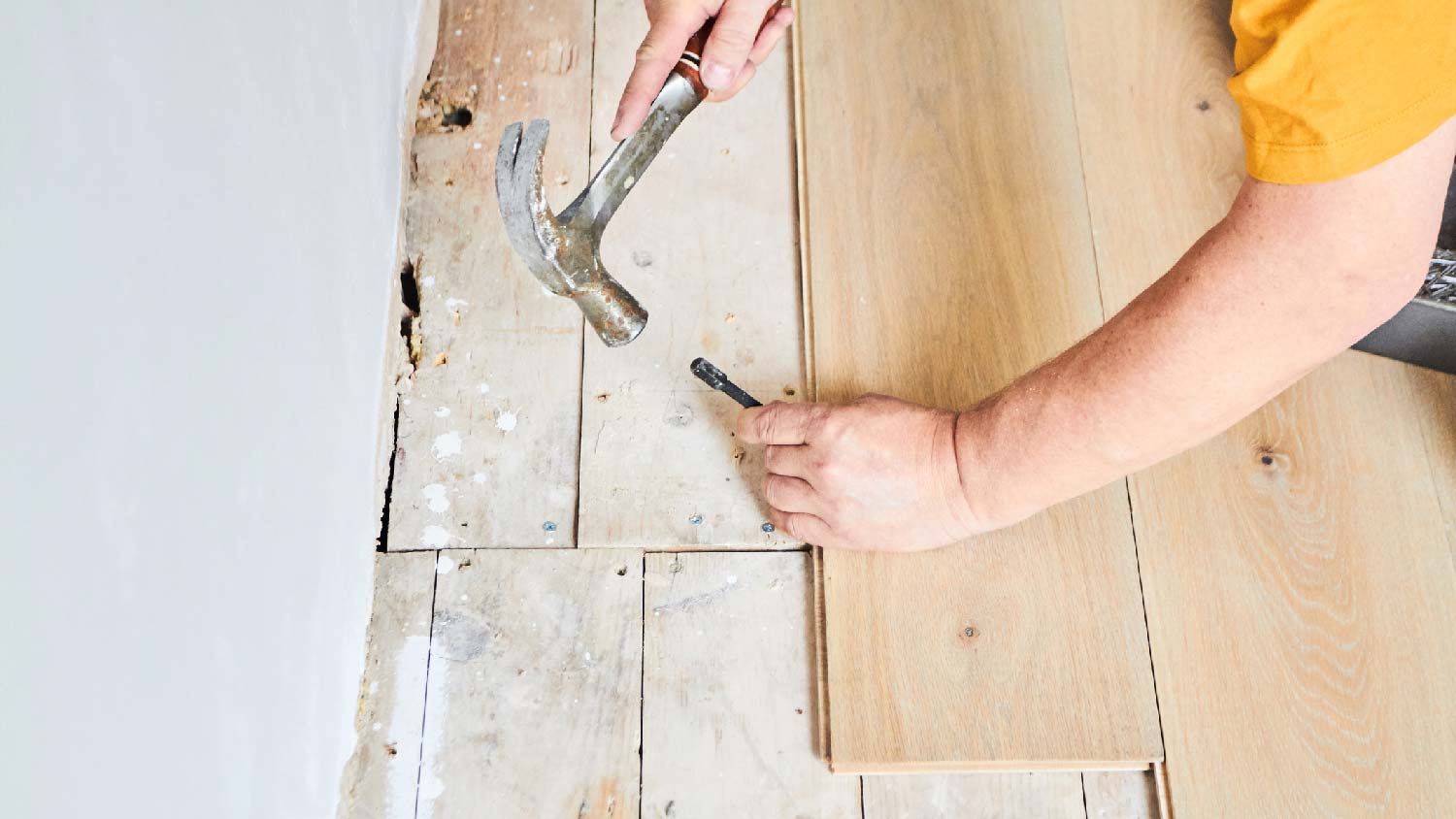
Hardwood planks tend to be 5 inches wide or narrower. However, wide plank formats cost more at $4.50 to $18 per square foot for materials alone. You'll need fewer boards to cover a floor with wide planks (6- to 12-inch-wide boards), so they can reduce labor costs.
The harder a wood is, the more effort it takes to install. Expect hardwoods (think Brazilian walnut) to require more elbow grease than softwoods (like pine). For this reason, the materials you choose cause hardwood floor installation costs to vary widely.
Most wood flooring costs come from materials rather than labor. On average, labor costs $3 to $6 per square foot. However, you may end up paying more for jobs that take longer. This includes installing planks that have to be finished on-site, patterns like herringbone and parquet, or installations in complex layouts with unique corners.
On the other hand, you may only spend $3 to $4 per square foot on labor when installing wide plank floors since they cover more area and take less time to put in.
While durable flooring options may cost more, consider the wear and tear your floor will withstand in high-traffic areas, especially in homes with children and pets. If you’d like help choosing a material, a flooring pro can recommend strong materials that will look great in your home.

Wood color varies dramatically across species, including:
Light and pale tones
Warmer, medium tones
Rich, dark tones
You'll also see price variations by cut. Plain-sawn planks with a wave-like pattern are the most affordable, while quarter-sawn planks with straighter grain are more expensive. One rare pattern is the highly linear grain of rift-sawn boards, which cost even more.
If furniture needs to be removed from the room in order to install flooring, your pro may charge an additional fee, typically about $60 to $120 per hour, to do so. You can often save money by clearing out the room yourself ahead of time.
Carpet Removal
Tile Removal
Existing Hardwood Floors or Laminate
When replacing an existing floor, you or your installer may discover mold, insect, or water damage to the joists below. Extensively rotted joists will need repairs before you install new floors. Signs of damage are creaky floors and doors that begin to stick. Subfloor repairs can cost an additional $900 to $3,000, while joist repairs cost an extra $40 to $60 per square foot.
Finish refers to the protective coating applied to hardwood to extend its durability. Some hardwood comes prefinished for an extra $2 per square foot, reducing labor costs. Finishing unfinished wood after installation adds $2 to $7 per square foot in labor.
Additionally, different types of finishes vary in cost. For example, a polyurethane finish costs less than a penetrating resin finish.
If you opt for a gorgeous herringbone pattern, none of the materials you need will change, but the amount of time the project takes and the overall cost will. Choosing this style can add an extra 30% to your final bill because of the extra care required for installation. Expect to pay $12 per square foot to have any type of wood arranged in this fashion.
One of the most appealing benefits of hardwood floors is that you can refinish them when they start to look a little worse for wear. In general, hardwood floors cost an average $4,726 to install while refinishing hardwood floors costs an average of $1,887. Hardwood floors last up to 100 years, but you will likely need to refinish them a few times throughout their lifespan.
Refinishing hardwood floors involves sanding the floor to remove superficial damage and to remove the finish before applying a new stain and sealant. It’s a good option when minor surface scratches occur across a large portion of a hardwood floor. Keep in mind that engineered wood can only be refinished once or twice. Traditional refinishing costs $3 to $8 per square foot, while dustless refinishing costs $5 to $8 per square foot.
If you notice damage like dents and dings that are limited to a small area, you may be able to replace just a plank or two and avoid the cost of a full replacement. Often, repairs and refinishing can restore hardwood floors to their original beauty for about half the cost.
But if the floors have extensive damage—cupping or crowning boards, water damage, or deep gouges, for instance—then full replacement may be the way to go.
Hiring a local hardwood flooring pro costs more upfront, but you benefit from faster installation, precise craftsmanship, and a polished, long-lasting finish. Pros bring specialized tools and experience, making the process smoother and often saving you money on mistakes or repairs.
Installing hardwood flooring is a detailed project that requires specialized expertise. Here are some of the top reasons to work with a pro:
Hardwood flooring pros ensure your subfloor, walls, and baseboards aren’t damaged during installation.
They have the tools and techniques needed to install a variety of hardwood types accurately and efficiently.
Working with a pro ensures your flooring is level, secure, and finished correctly, reducing the need for costly repairs.
Bundling flooring installation with sanding, staining, or finishing services can save on overall project costs.
If you want to take on parts of the project yourself, here are a few DIY tasks that can help save time and labor costs:
Clear the room of furniture, rugs, and other obstacles before installation begins.
Acclimate your hardwood planks to the room’s temperature and humidity so they adjust properly.
Plan the layout and mark any cuts or patterns ahead of time to make the installation process smoother for the professionals.
Hardwood or other solid wood floors are not good candidates for wet areas of a home. Liquids can soak into natural wood floors and cause finishes to discolor or fail, particularly at the joints between the boards or near the ends of the boards next to the baseboards.

While you may choose to update hardwood floors as a personal preference, certain signs can indicate that your floors need replacing before serious damage occurs. Keep an eye out for the following:
Cracked, warped, or buckling planks
Gaps between boards, which may indicate that those boards have become detached
Mold growth, which may indicate an underlying moisture issue
Loose, creaking, or shifting floorboards, which may indicate structural issues
Fading from sun damage
Scratches, dents, or other irreparable surface damage
Visible nail heads, which may indicate that the floor has been sanded too many times
Dark stains or soft spots that result from water damage
The National Association of Realtors® reports that:
Refinishing hardwood floors has a cost recovery of up to 147%
New wood floors have a cost recovery of up to 118%
In short, if you resell your home after doing either upgrade, you’ll likely see a return on investment (ROI) and then some because refinishing and installing new hardwood floors add value to your home.
If you plan to sell your home, refinishing takes less time and money than a new installation, giving you a bigger ROI. If you plan to stay in your home, replacing wood floors can offer long-term improvements in the flooring’s appearance.
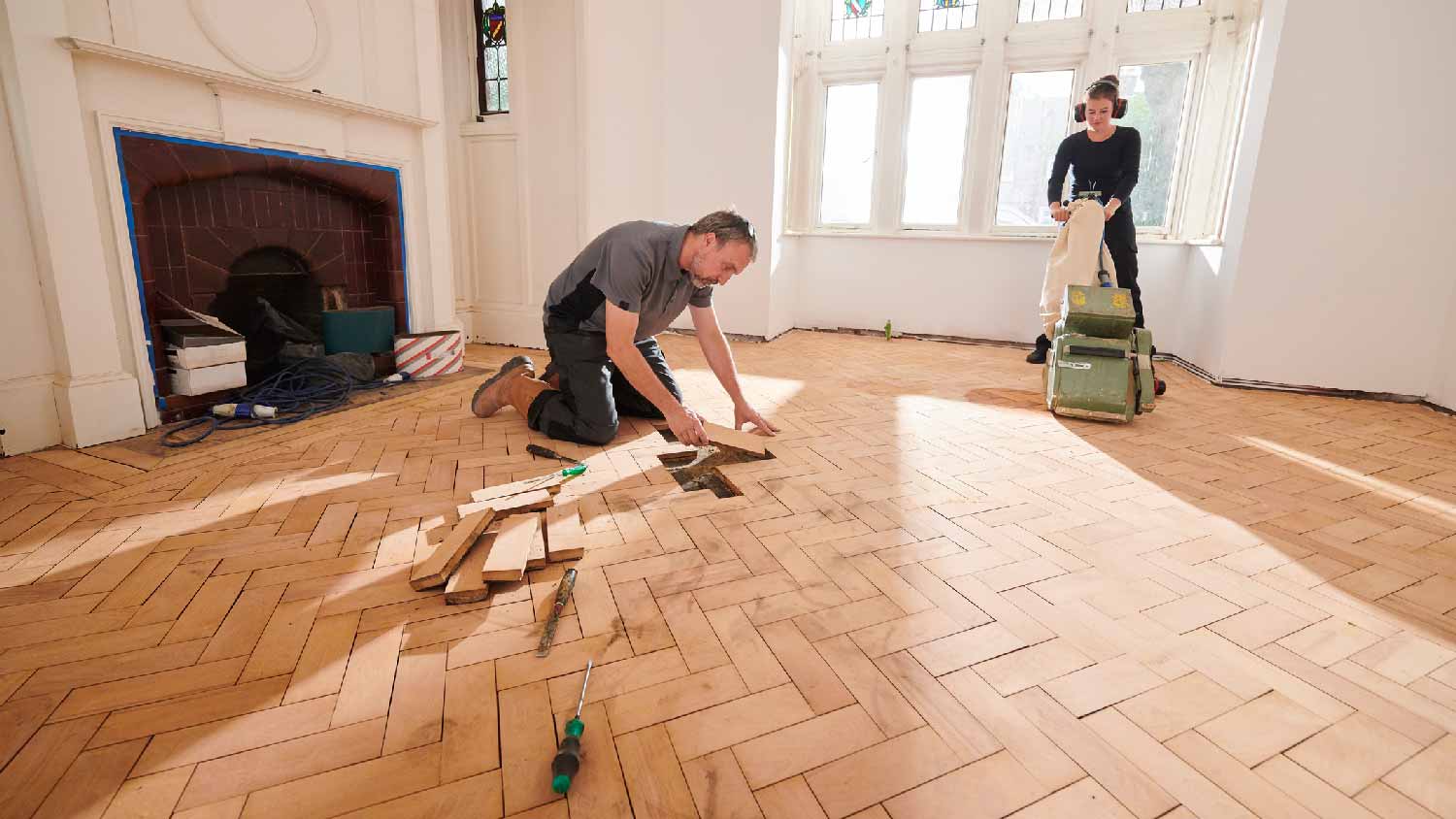
There are plenty of ways to reduce the cost of hardwood flooring installation without sacrificing the quality of your floors. Here are a few tips:
Think beyond looks: Install a less expensive wood species, grain, thickness, or grade.
Refinish, don't replace: It costs much less to restore hardwood than to replace it.
Install prefinished wood: Trade higher up-front costs for lower labor costs.
Rip up your own carpet: DIY carpet disposal is less risky and can help cut labor costs.
DIY engineered wood: Engineered wood is simpler and less costly to install and repair.
Break up the project: Instead of installing new flooring in the whole house, start with a new floor in one or two rooms.
Be ready to provide details about your space, including square footage, subfloor condition, and the type of hardwood you’re considering, as these factors influence installation methods and materials.
If your budget allows, ask your pro about optional services like underlayment, radiant heating compatibility, custom staining, or trim and molding updates.
Be prepared for unexpected costs, such as subfloor repairs, removal of old flooring, or addressing moisture issues that may be discovered during installation.
Discuss your timeline and accessibility with your pro, as furniture removal, room layout, and drying time for finishes can affect how long the project takes.
Home is the most important place on earth, which is why Angi has helped more than 150 million homeowners transform their houses into homes they adore. To help homeowners with their next project, Angi provides readers with the most accurate cost data and upholds strict editorial standards. We’ve surveyed over 10,000 real Angi customers about their project costs to develop the pricing data you see, so you can make the best decisions for you and your home. We pair this data with research from reputable sources, including the U.S. Bureau of Labor Statistics, academic journals, market studies, and interviews with industry experts—all to ensure our prices reflect real-world projects.
Want to help us improve our cost data? Send us a recent project quote to [email protected]. Quotes and personal information will not be shared publicly.
From average costs to expert advice, get all the answers you need to get your job done.
Hardwood floor repair costs depend on the problem. This guide breaks down common costs based on factors like the type of problem, repair method, and whether you hire a pro or DIY.

It’s impossible to keep floors damage-free over the years. Thankfully, the cost to refinish hardwood floors is far less than the price tag to replace them altogether.

Here’s what you should expect to pay when renting an orbital, drum, vibrating, or edging floor sander—as well as where you can rent them and what else to know.
Before repairing or partially replacing flooring, make sure to discuss these hardwood floor repair questions with a pro.
Planning a refinishing project? This guide will walk through how long it takes to refinish hardwood floors, including what will slow down your timeline.

Learning how to finish unfinished hardwood floors is a big project, but it is one that experienced DIYers can take on. Use this guide to find out how to get it done.