

•
Find out the average cost to install a ceiling fan in Baltimore, MD. Learn what you can expect to pay for local ceiling fan installation and electrical work.
Ceiling fan service costs depend on your project and location. Check with a local pro for your specific job.


The average cost to install a ceiling fan in Washington, D.C., is $294 for most standard projects.
Your final project price depends on the fan style, ceiling height, and whether you need new electrical wiring.
Upgrading to a smart ceiling fan adds convenience but increases your total materials cost to $275 to $655.
Hiring a local ceiling fan installer in Washington, D.C., to install ceiling fans keeps you and your household safe from electrical shocks.
This article was created using automation technology and thoroughly fact-checked and edited by an Angi Editor in accordance with our AI policy.
Installing a ceiling fan in Washington, D.C., costs $294 on average, with prices ranging from $174 to $432. Your total price depends heavily on the fan's size, the condition of your home's existing electrical wiring, ceiling height, and local labor rates. Before starting this electrical project, understanding these specific cost factors helps you plan a budget that fits your home perfectly.
When hiring a local electrician to install a ceiling fan in Washington, D.C., several variables influence your final bill. We will explore how the fan's design, the wiring complexity, and the available physical space determine the overall budget for this project.
The specific design and functionality of the fixture dictate both the purchase price and the installation complexity. In Washington, D.C., where extreme humidity and hot summers make airflow essential, selecting the right model keeps your living spaces comfortable.
| Fan Type | Description | Local Average Cost | National Average Cost | Pros | Cons |
|---|---|---|---|---|---|
| Standard | Basic, indoor, 3–5 blades | $165–$440 | $150–$400 | Affordable, easy to install | Fewer features |
| Low-profile/hugger | Sits close to ceiling, for low ceilings | $165–$440 | $150–$400 | Good for low ceilings | Lower airflow |
| ENERGY STAR | Energy-efficient, lower operating cost | $220–$545 | $200–$500 | Saves energy, may qualify for rebates | Higher upfront cost |
| With lighting | Includes integrated light kit | $220–$495 | $200–$450 | Dual purpose, saves space | More wiring, higher cost |
| Smart | Wi-Fi, app, or voice control | $275–$655 | $250–$600 | Convenience, automation | More complex install |
| Outdoor/wet-rated | For porches, patios, damp/wet locations | $220–$655 | $200–$600 | Weather-resistant | Needs special hardware |
Standard indoor fans are straightforward to mount, costing $165 to $440 on average. Upgrading your outdoor patio to withstand muggy subtropical weather with wet-rated outdoor models runs between $220 and $655. The total project cost averages $294, but choosing a smart fan with complex wiring pushes the price higher. While the electrician is running new wires, it is a great time to consider a light fixture installation to brighten the room.
The blade span of your fixture determines the amount of support hardware required and the time it takes to secure it safely. Larger units demand heavy-duty brackets and a second set of hands to lift into place. During the hot and muggy summers in Washington, D.C., oversized fans provide maximum relief in large living rooms.
Compact fans measuring 29 to 36 inches cost $55 to $330 for the unit itself. Conversely, massive fans with blade spans of 60 inches or more require extensive reinforcement and cost $165 to $655. Most homeowners spend between $174 and $432 for the complete installation, though oversized units sit at the higher end of that range. If your large fan requires access from above, you must also factor in the attic fan installation cost to improve overall home ventilation.
| Fan Blade Span (Inches) | Local Average Cost (Fan Only) | National Average Cost (Fan Only) |
|---|---|---|
| 29–36 | $55–$330 | $50–$300 |
| 42–52 | $110–$545 | $100–$500 |
| 60+ | $165–$655 | $150–$600 |
The physical work required to mount the bracket, connect the wiring, and assemble the blades makes up a significant portion of your budget. Electricians in Washington, D.C., adjust their rates based on the difficulty of the job, especially when working in unconditioned attics during subtropical heatwaves. Professionals charge a flat rate for straightforward replacements or bill by the hour for complex wiring tasks. Running new wires through finished ceilings or reinforcing joists increases the time spent on the job. If your home has outdated wiring, you need an electrical panel upgrade to safely handle the new load.
Adding modern conveniences like remote controls, wall switches, or smart home integration increases the complexity of the wiring process. Upgrading to a smart fan allows you to automate your cooling schedule in Washington, D.C., keeping the house comfortable before you even walk through the door on a humid day. Installing specialty mounting hardware for sloped ceilings or extra-long downrods adds to the materials list. Integrating these advanced controls requires precise electrical connections to function correctly. Adding a dedicated wall switch mirrors the switch replacement price, as the electrician must open the wall and run new conduit.
Unique structural challenges and the current state of your home's electrical system dictate the final scope of work. Older historic homes in Washington, D.C., lack the necessary ceiling support or modern wiring to handle heavy fixtures, especially those designed to combat the region's extreme humidity. Installing a fixture in a room without existing overhead wiring requires cutting into drywall and running new lines. You must also account for the time it takes to patch and paint the ceiling after the electrician finishes the structural reinforcement.
Beyond the initial installation, you need to plan for ongoing maintenance and operational expenses.
Manufacturer guarantees protect your investment by covering replacement parts and motor defects. Purchasing an extended warranty in Washington, D.C., provides peace of mind, as frequent use during hot, muggy summers puts extra wear on the motor. Extended coverage plans add a flat upfront fee to your project but save you money if the unit fails prematurely.
The electricity required to run the motor and integrated lights impacts your monthly utility bills. Using a ceiling fan during Washington, D.C.'s subtropical summers lets you raise your thermostat and reduce your reliance on air conditioning. Energy-efficient models use minimal wattage, costing just a few dollars a month to operate. Choosing LED bulbs for the light kit further minimizes your energy consumption.
Keeping the blades clean and the motor lubricated ensures the fixture operates silently and efficiently. Dust and moisture from the humid Washington, D.C., climate accumulate on the blades, requiring regular wipe-downs to prevent wobbling. Hiring a professional for a one-time tune-up or balancing service involves a flat service fee. Addressing minor wobbles early prevents severe motor damage down the line.
Local sales tax applies to the purchase of the fixture and the materials used for the installation. When budgeting for your project in Washington, D.C., you must calculate the local tax rate into your total expenses. The extreme weather in the region means you invest in durable, higher-end models, which increases the total taxable amount.
Homeowner's insurance policies require licensed professionals to perform electrical work to maintain active coverage. Protecting your home from electrical fires is crucial in Washington, D.C., where severe weather and flooding already pose risks to your property. Hiring a certified electrician guarantees the wiring meets local safety codes and keeps your insurance policy intact.
Hiring an expert ensures your new fixture operates safely and efficiently. In Washington, D.C., local electricians charge between $50 and $130 per hour for ceiling fan installations. The total labor time dictates your final bill, especially if your project requires complex wiring or high-reach equipment for vaulted ceilings. When planning your budget, remember to include the 6% local sales tax applied to your materials. We recommend hiring a pro to keep your home safe and sound.
Before hiring a ceiling fan installer, verify they hold the required electrical license for Washington, D.C., and ask for proof of liability insurance and workers' comp if they have employees. Hiring an unlicensed ceiling fan installer can leave you with little protection if something goes wrong and may make it harder to recover payments or hold them accountable. To verify the required licensing type, visit the official website of the Washington, D.C., government licensing board for more information.
Before starting ceiling fan installation, confirm whether your project requires permits in your area and who is responsible for obtaining them. Permit requirements and costs vary by location, but most ceiling fan installation permits range from $20 to $100, depending on the scope of work and your local municipality. Working without the proper permits can lead to fines, project delays, or complications when selling your home. If you're hiring a ceiling fan installer, review your contract to ensure they will handle the permitting process and inspections. To verify permit requirements, visit your city or county's official building department website for the most accurate and up-to-date information.
Bringing in a ceiling fan installer in Washington, D.C. protects your home from electrical hazards while saving you hours of frustrating ladder work. Relying on an expert ensures you receive a high-value upgrade that operates flawlessly.
* Professionals use specialized voltage testers to safely handle complex wiring connections.
* Experts assess ceiling joists and install proper bracing to support heavy fan motors.
* Hiring a contractor guarantees perfectly balanced blades to prevent wobbling and motor strain.
* Licensed tradespeople adhere to strict building codes required for older district homes.
Home is the most important place on earth, which is why Angi has helped more than 150 million homeowners transform their houses into homes they adore. To help homeowners with their next project, Angi provides readers with the most accurate cost data and upholds strict editorial standards. We survey real Angi customers about their project costs to develop the pricing data you see, so you can make the best decisions for you and your home. We pair this data with research from reputable sources, including the U.S. Bureau of Labor Statistics, academic journals, market studies, and interviews with industry experts—all to ensure our prices reflect real-world projects.
Want to help us improve our cost data? Send us a recent project quote to [email protected]. Quotes and personal information will not be shared publicly.
517GMJ intalled a new junction box, breakers and wiring for my electric stove (240 v) and installed the electric stove and range hood fan. They came to look at my apartment, and put together a proposal/scope and were timely in performing / completing the work. They...
 Hvac507 517GMJ
Excellent Jorge and his team did an excellent on this remodel and previous works. They now have done complete kitchen and bathroom remodel fir us, carpeting, attic fan replacement. flooring painting and overall general repairs tasks. His was very wise with his advice, kept to the budget which...
 Builders XLT
I used CCR to remove popcorn ceilings in a DC condo - they were very friendly, gave a competitive quote, and stayed on top of all the regulations to get the work done quickly and effectively.
 Compliance Construction & Remediation, Inc.
Could not be more pleased! Our flat roof DC rowhouse ponded after a major storm and leaked through to our bedroom. George came out immediately (a Thursday) to give an estimate band proposal. By Sunday, the roof was repaired and by Wednesday the interior (our ceiling) was patched up. The crew...
 Louise August
This is actually the third time I have hired this company, and I continue to be very happy with them. I had a roof leak that created a ceiling leak in an upstairs room. After the roofers fixed the leak, this company came in to fix the interior damage. They cut out a 48”x48” section of ceiling...
 Cabido Design & Build
Ceiling leak, General Handyman services
 JW Home Improvement
A little pricey I thought And the handyman removed a ceiling barrier without my knowledge and I was in ear distance to consult what I wanted him to remove or place back where he got it from between the ceiling and the attic. After he had used a half a bag of compound he asked me did I want...
I originally called them because I had thought my back wall needed to be retucked and pointed, after a thorough review of my problems and looking at the state of the wall and mortar, they informed me and showed me that I only had a few spots that were bad, and that in fact my ceiling was...
 Louise August
Nestor and team were very professional and punctual. They installed a ceiling fan in my bedroom where there was no wiring/fixture, so they cut holes in the walls/ceiling to pull over the wiring, installed the fan, and then patched and pained everything. When they left they cleaned up...
 Chapin Handyman LLC
Tech came on time and quickly changed out fan motor and blades for new. Efficient, friendly, and accommodating. Recommended!
 Polar Bear Air Conditioning And Heating Inc
From average costs to expert advice, get all the answers you need to get your job done.
Find out the average cost to install a ceiling fan in Baltimore, MD. Learn what you can expect to pay for local ceiling fan installation and electrical work.

Find out the average attic or whole house fan installation cost in Washington, D.C. Learn what you can expect to pay to keep your home cool and comfortable.
Find out the average attic or whole house fan installation cost in Baltimore, MD. Learn what you can expect to pay for local labor and materials today.
Looking to upgrade your home's cooling? Learn about ceiling fan installation costs, safety warning signs, and how to hire a local ceiling fan installer.
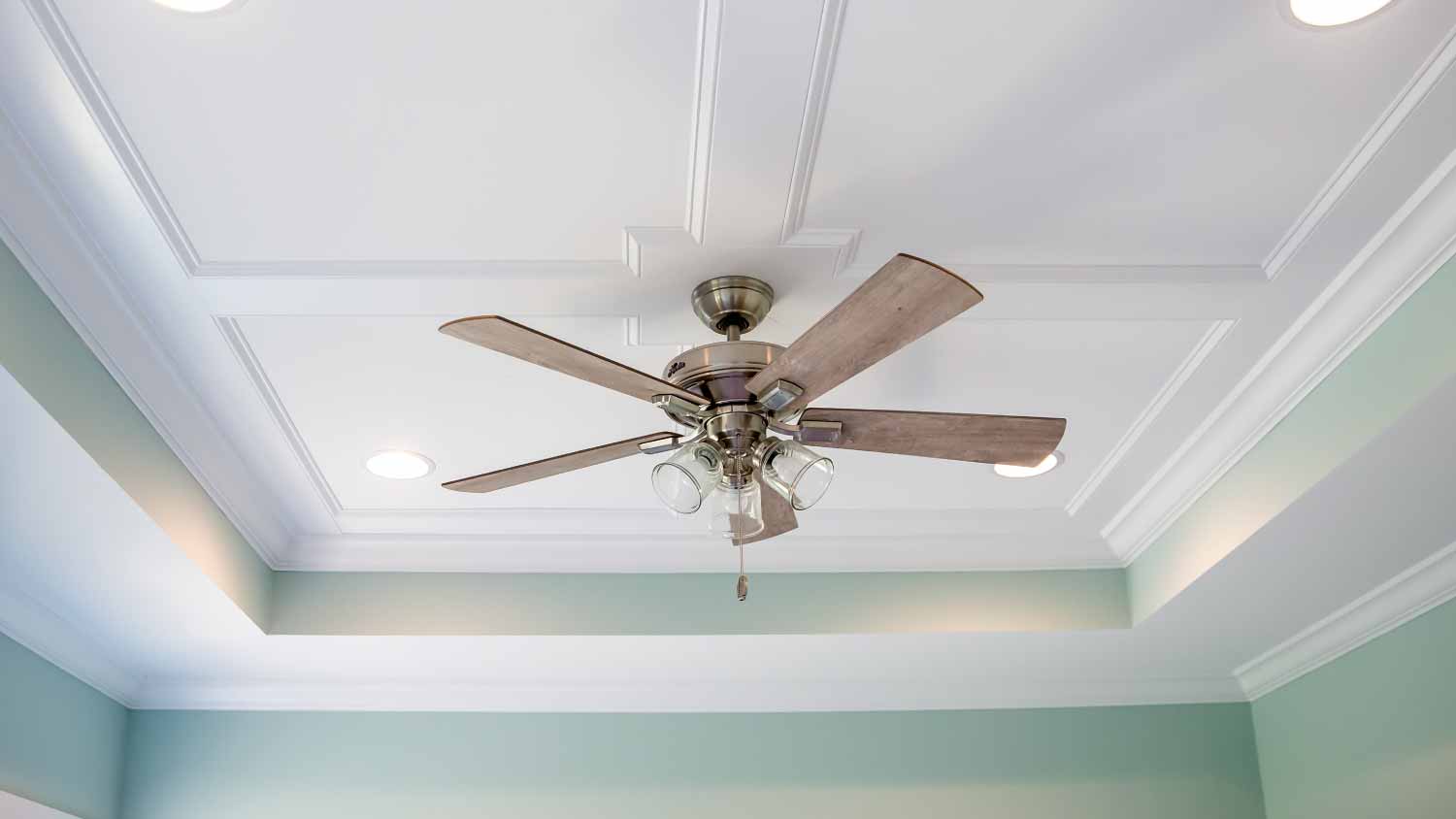
A fan that isn’t tightly and properly connected can pose risks to your family and home. Knowing who to hire to install a ceiling fan is affordable and safe.
Looking to cool down a room or get some more air flowing throughout the house? Learn how to install a ceiling fan without existing wiring.