
Learn all the factors that influence the cost to install a heat pump water heater at your home.
Here’s “watt” you need to know about the energy usage of this major household appliance

Your water heater wattage depends on tank size, with 10 to 20-gallon heaters using 1,000 to 2,000 watts and larger 30 to 80-gallon models using 4,500 watts.
Running a 4,500-watt water heater costs about $62 per month or $2 per day, based on average electricity rates and two hours of daily operation.
You can lower your energy costs by replacing your current model with an ENERGY STAR tankless heater, adding a timer, or insulating the tank to keep heat from escaping.
Hiring a local water heater installation professional helps you select energy-efficient models and complete proper installation, keeping your home comfortable while reducing monthly utility bills.
When you’re enjoying a hot shower or relaxing in a warm bath, you’re probably not thinking, “How many watts does a water heater use?” But knowing how much electricity is being used by one of your household’s most important appliances is helpful when it comes to improving energy efficiency and managing utility costs.
If you need help calculating your water heater’s energy use or want to replace it with a more energy-efficient model, hire a local water heater contractor to get the job done. Let’s review the wattage used by a water heater and how to use that information to your advantage.
To find out how many watts your water heater uses, it’s easiest to look directly at the tank to read the wattage and other energy information printed on the label. Otherwise, here are some guidelines:
10–20-gallon water heater: 1,000–2,000 W (1,600W average)
30–80 gallon water heater: 4,500 W
Even though residential water heaters range in size, those in the 30-80 gallon range typically use the same wattage, 4,500W. That’s because wattage is not based on the capacity of the tank, but the energy needs of the heater itself.
If you need a refresh on watts (W), it’s a basic measuring unit of energy primarily used to calculate larger volumes of electrical power. A watt equals an amount of energy for one second. For context, a typical home wattage is between 1,083 to 1,375 watts.
When discussing and measuring an appliance’s power consumption, we typically refer to its energy needs in watts. If we measure the amount of energy a device needs to operate for an extended period, such as a week or a month, we use kilowatt-hours (kWh). Keep these definitions in mind when evaluating your water heater’s energy consumption.
Your water heater is one of the biggest energy users in your home. Aside from heating water for your shower or bath, it also supplies hot water to your faucets, washing machine, and dishwasher. Keep in mind, though, that unlike an air conditioner or other appliance that might run during the majority of the day, your hot water heater will run about two hours per day. Based on that average, let’s figure out how much running your water heater costs.
You are charged by the kilowatt hour on your electric bill, so let’s see how many kilowatt hours a 4500W water heater needs to run:
Wattage x Number of operating hours / 1,000
4500W x 2 (hours) / 1,000 = 9 kWh
That means your hot water heater needs 9 kWh to run each day, or around 270 kWh to run per month. According to EnergySage, the average cost for electricity is $0.23 per kWh. Let’s do the math:
4500W: $0.23 x 270 kWh = $62.1 per month, or about $2.07 per day

Even though your water heater costs a little more than a dollar an hour to operate, there are ways you can conserve energy and save money on your electric bill each month. Follow these tips and tricks to save on your water heater’s utility costs.
Replace your current water heater with a more efficient model: You could opt for a tankless water heater, which provides hot water when needed rather than store it up for later use. This type of model uses less energy and it also takes up less space. But if you prefer a more traditional water heater, newer models—especially those with the ENERGY STAR® label—will run more efficiently.
Add a timer: Set a schedule for your water heater to run only when you need hot water. You can call a professional plumber or a water heater contractor to install one on your current hot water heater.
Insulate your water heater: The water needs to be heated, not the rest of the room or basement. Wrap your heater in insulation or some type of thermal cover that will keep that heat from radiating outward.
Stick to a maintenance schedule: It’s important to have your household’s major appliances and systems repaired or serviced regularly to prevent future issues and troubleshoot current ones. For your water heater, this means draining or flushing the tank to remove any build-up that could prevent it from working properly.
Lower the thermostat: Decreasing the water heater’s temperature will naturally result in water that isn’t quite so hot, but it can add up to savings.
Do full loads of laundry and dishes: By running these appliances only when full, you’ll save energy. Also, consider using a cold or warm setting as opposed to hot to give your water heater a break.
Limit your shower time: If you get your best ideas in the shower and prefer to linger, then it’s a good idea to replace your current shower head with a low-flow one.
If you’re good people wanting to do business with good people, hire Matt. He is a consummate professional and utterly competent. He installed a water heater in my home at a price that beat competitors by hundreds of dollars with a promise to support the unit for its life (even after its 6 yr...
 Greene's Plumbing Services
As usual with ECO, tech Jordan was outstanding, very professional, very knowledgeable, and very thorough with repairs made to tankless water heaters. Very highly recommend ECO!!!
 Eco Plumbers, Electricians, and HVAC Technicians
Did a great job replacing the ice maker and water regulator on my refrigerator. He was quick and thorough, very friendly and professional. If I needed a heart transplant I'd want him to do it!!!
We had a gutter blockage that was causing water to sheet down the side of the house and ultimately it started to come in at a window (need mortar people next). Called around 7:30am, and he responded by 8am. He was able to come out the same morning and do a look over and clean out. He also...
Scott checked our large crawl space for mold and water infiltration and recommended a viable solution. The crew was efficient and they cleaned up well after the job. The job was expensive but I am confident that I won't have to deal with the problem again. Highly recommend.
 AdvantaClean of Dublin
They were the most through inspecting the water system in my house. Even going the extra mile to get the water professionally tested for contamination.
 Hague Water Conditioning, Inc.
Very well. Have already used them again to fix hot water heater
 Service Olympians
The Paul Davis team was very professional and went the extra mile to take care of my water damage. The work was very high quality and done in a timely manner. I would highly recommend their services.
 Paul Davis Restoration
Honesty is hard to find in business today. GBR met me today at a 3 story building regarding my being told that I needed to tuckpoint the brick because of water leaks. The owners took the time to evaluate the situation and advised me that I did not need their service at all. They pointed me...
 GBR Masonry Inc
They unclogged the drain and sent me a bill for more than 4 times what I paid before. I called the Water Works to ask why the bill was so high and that they should have gotten my authorization before assuming they could make expensive decisions like that on my behalf and for their benefit....
 The Waterworks
From average costs to expert advice, get all the answers you need to get your job done.
Learn all the factors that influence the cost to install a heat pump water heater at your home.

Looking to replace or upgrade your water heater? Use this water heater replacement cost guide to see what the work will cost and what factors affect your total.
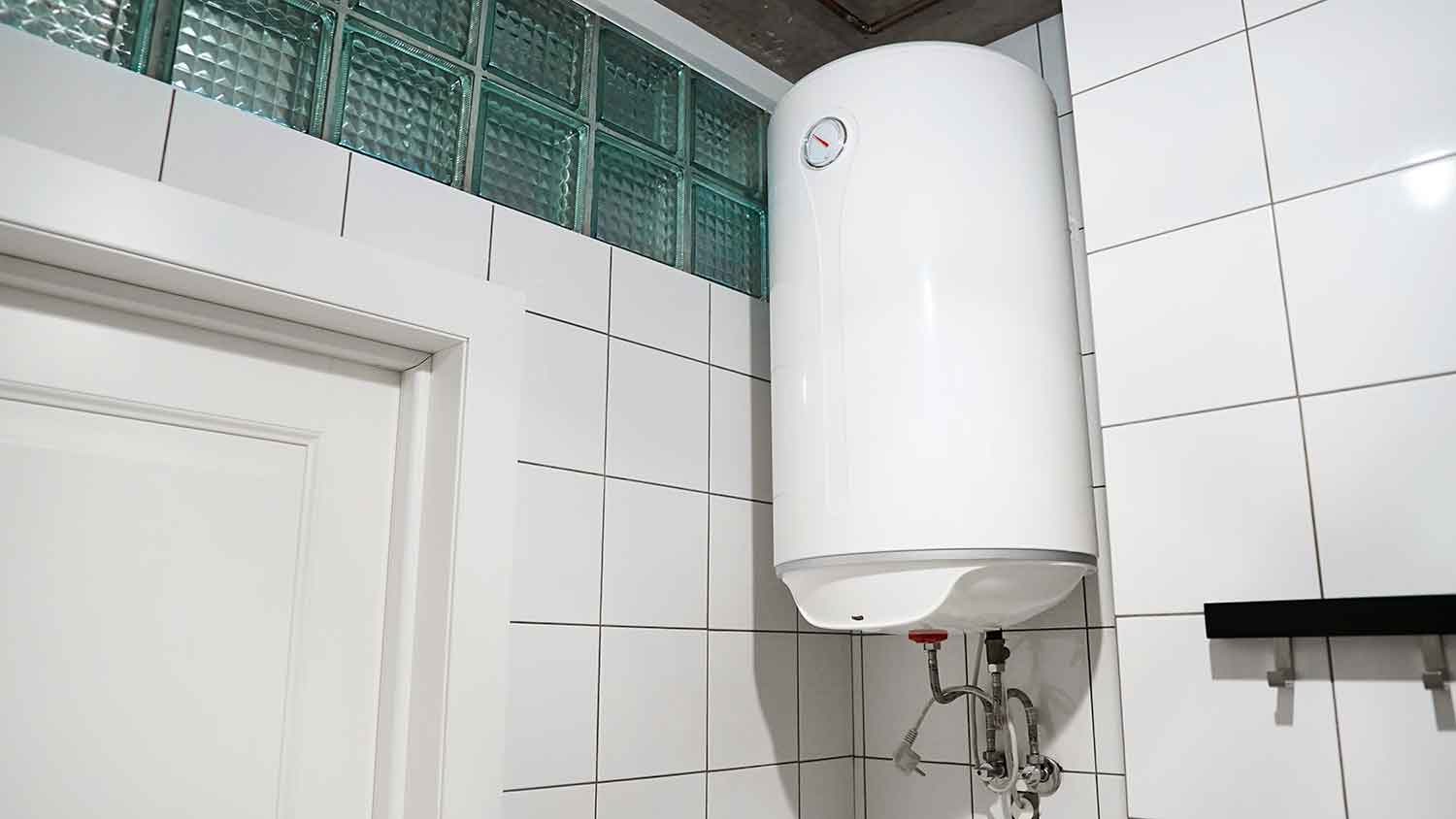
Running out of hot water too quickly or hearing strange noises when you call for hot water? Use this water heater repair cost guide to see what a fix will cost.
Learn how many amps you'll need to have for your water heater to operate. Some homeowners will need to upgrade amperage before installing new water heaters to avoid electrical outages and fires.
What size water heater you need depends on the number of people in your household and how much water you use. Keep reading to learn about water heater sizing.

Hybrid water heaters will have you weighing high initial costs versus long-term savings. Is it the right option for you? Explore the pros and cons of hybrid water heaters.