
When calculating wildlife removal costs, you’ll need to consider the type, size, and amount of animals. Our guide will show you the wildlife removal cost.
Here's how to sniff out what type of skunk is living in your neighborhood

The striped skunk is the most common type of skunk in North America, and you can find five to thirteen living per square mile in your area.
Humane skunk removal costs range from $300 to $600, depending on your location, so addressing the issue early helps keep your property protected.
Secure your trash cans, pet food, and compost to remove easy food sources that attract skunks to your yard and encourage them to den nearby.
Hiring a local skunk control professional provides humane removal and peace of mind when skunks have already denned on your property or when deterrents aren't working.
When it comes to skunks, their reputation—and certainly their hard-to-remove smell—precedes them. While they all share the ability to produce that identifying odor, there are many different types of skunks, ranging from spotted to striped to hog-nosed. Use this guide to help you spot and identify the most common species of skunks in the U.S.
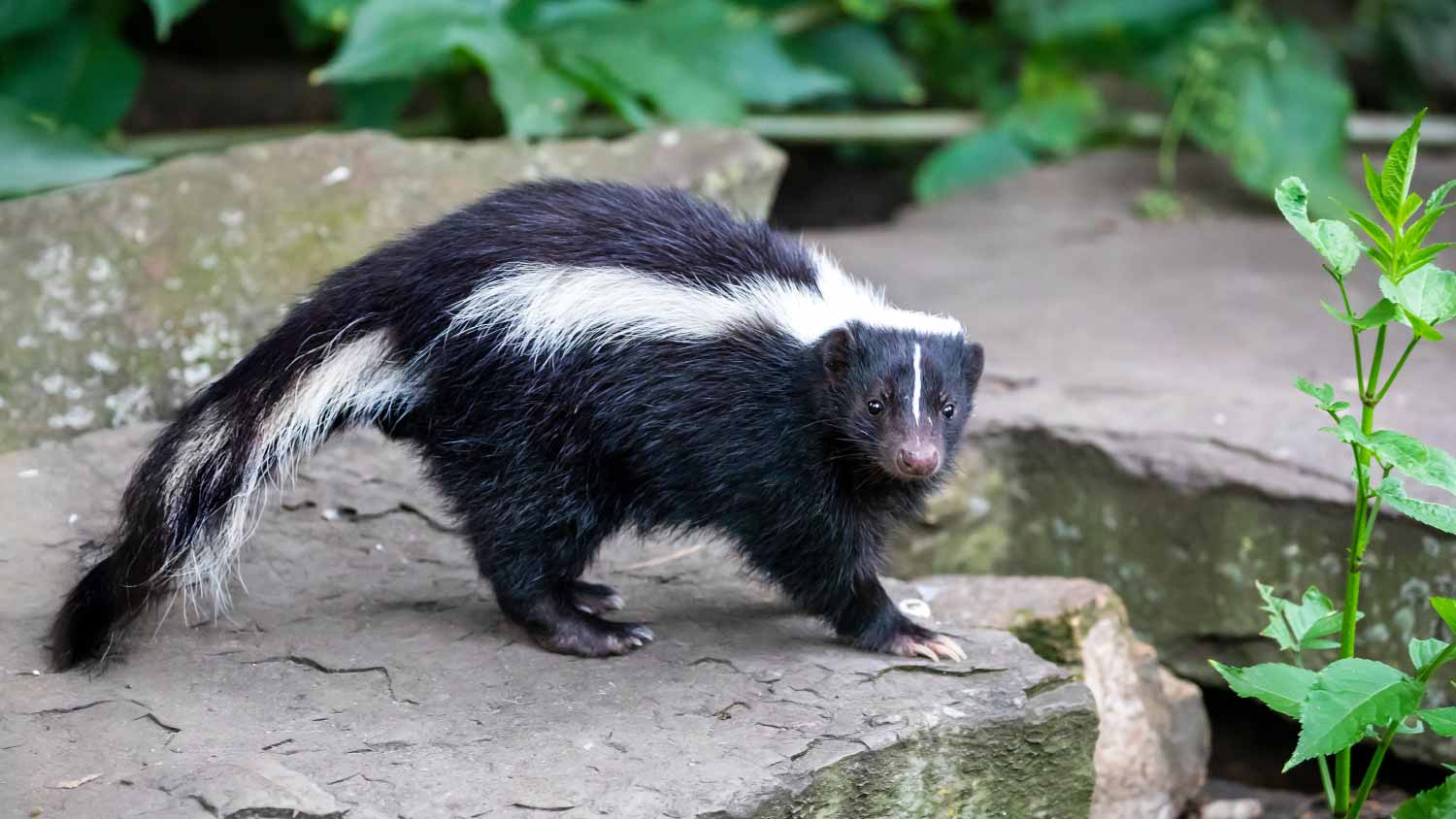
The striped skunk is the most common type of skunk in North America. According to the National Wildlife Federation, they are highly adaptable and abundant—for every square mile you can find anywhere from five to thirteen striped skunks. This species of skunk has adapted to thrive in almost any environment, from heavily wooded areas to urban settings. Their resilience comes, in part, from their ability to scavenge (and digest) a wide variety of foods, including human garbage, insects, and plants. They can even adapt to a desert climate, but their favorite habitat is suburban neighborhoods that have plenty of trash cans to scavenge.
The striped skunk is also highly recognizable (think Pepé Le Pew or Flower from Bambi). When identifying the striped skunk, look for black fur with a prominent white stripe or stripes down their backs. Striped skunks are around the size of a cat, and you will most likely see or hear them rooting through your garbage or compost at night.

Often mistaken for striped skunks, hooded skunks live primarily in Mexico and the southwestern United States, including southeastern Arizona, southwestern New Mexico, and southwestern Texas. According to Texas Tech University’s Natural Science Research Laboratory, this white-sided skunk prefers to live along stream courses, particularly on rocky ledges or among streamside vegetation. These skunks love to eat insects and food waste, and they’re usually spotted on the hunt just after sunset.
Hooded skunks are bigger than their striped cousins, typically between 22 and 31 inches long. The species also has quite a lot of variation in terms of the striped patterns on their fur. They usually have a ruff of white fur around their necks, which gives them a “hooded” appearance. Any of the following fur patterns can occur on hooded skunks: primarily black fur with two stripes running down their backs to the tail, primarily black fur with one large white stripe running down the middle of the back through the tail, and a combination of one large white stripe and two smaller white stripes, all running down their back and tails. Hooded skunks can even morph their fur patterns depending on their age or desire to attract a mate.

Although the Eastern spotted skunk is common in the eastern regions of North America, they can be seen as far north as Minnesota and as far south as Central America. Unlike other types of skunks, they prefer denser wooded areas to suburban or urban environments, so you are less likely to see them in your yard. However, the males, in particular, wander during mating season—primarily March and April—so you’re most likely to see this type of skunk in urban or suburban areas during those months.
You’ll know if you spot an Eastern spotted skunk on your property by the distinct, irregular black-and-white pattern on their backs that looks like spots or broken stripes. Their tails are usually white, and they typically have a white spot on their foreheads. They range in size from 18 to 27 inches long. You might also recognize their distinct “handstand” maneuver—the males stand on their front hands and spray (up to four feet) when threatened.

This type of skunk is primarily found throughout various habitats in the Western region of the United States. Like the striped skunk, Western spotted skunks are very adaptable and live in a wide variety of areas, ranging from the desert and the woods to urban forests and the suburbs. The Western spotted skunk is often mistaken for the striped skunk, but the main difference is that it’s smaller at only 14 to 18 inches long.
They typically have red, brown, or black fur with three white stripes that run lengthwise down the front part of their bodies, as well as three white stripes that run vertically on the hind part of their bodies. The stripes are so varied that it gives the appearance of spots. Some other identifying traits include short, round ears, a black tail with a white tip, and white spots between the eyes and below both ears.
The adult Western spotted skunks tend to be more solitary than other species. So if you see a lone skunk wandering at night with the specific “spotted” pattern, it’s very possible that it’s the Western Spotted Skunk.
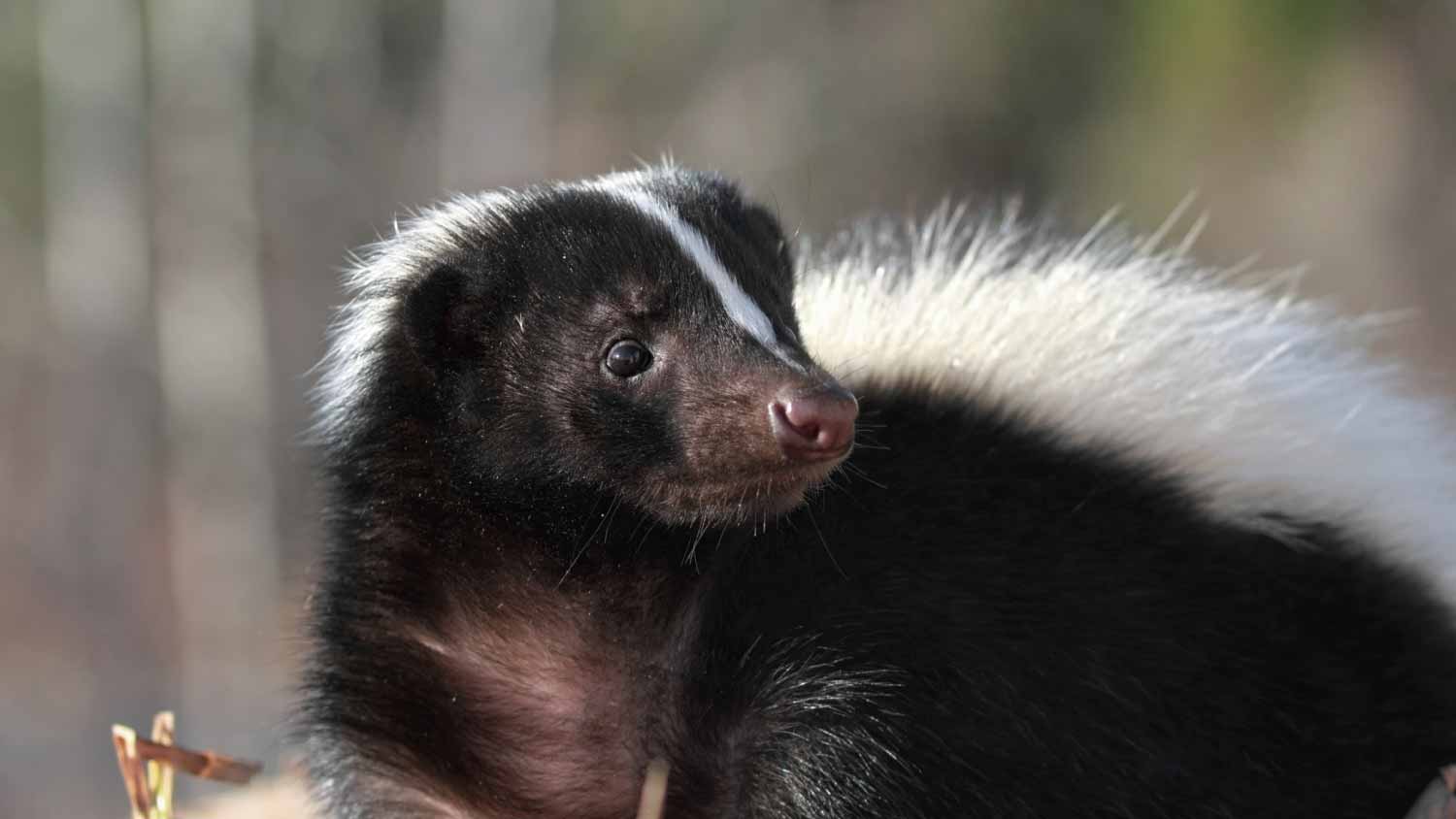
This critter’s territory is in both Central and North America, but it’s primarily found in the Southwest region of the United States, specifically southeastern California, New Mexico, Arizona, and Texas. The American hog-nosed skunk is the largest North American skunk, extending between 17 to 37 inches long.
This type of skunk was named after its broad “hog-like” nose. It’s also referred to as the “rooter skunk” for its habit of rooting out food from under rocks and other obstacles. Sometimes, you can tell that a hog-nosed skunk has been on your property because there will be little patches of ground that appear plowed.
Hog-nosed skunks can be identified by their noses (if you can get close enough to see it) but also by the broad, white stripe that runs from the top of their heads all the way to their tails. The American hog-nosed skunk’s body fur is black, with an entirely white tail.
There are many different types of skunks, but they all share some common characteristics. Here are some of the common skunk behaviors and traits:
Omnivores: All skunks are omnivores and eat a variety of foods, including animal meat and vegetation. In other words, they like to rummage through your garbage, but they also eat insects like grasshoppers and bees.
Nocturnal: Skunks are nocturnal, which means you probably won’t catch them in the act—not that you want to!
Smelly when provoked: A startled skunk can emit a strong, unpleasant odor. It’s their defense against predators, and skunks only use their noxious spray when they are scared or agitated.
Fortunately, skunks are gentle creatures, and you can keep skunks away in an equally humane manner. Start by removing the easy temptations from your property, like food waste and pet food. Also, cover up any openings, crawl spaces, and outbuildings to prevent skunks from setting up a den.
If a skunk has already moved into your property and started denning, simply fill the den (when the skunk isn’t in there) with rocks, pine straw, or leaves. You can also try noise repellants or motion-sensitive lighting since skunks don’t like noises or too much light.
If removing food, blocking a den, or other tactics aren’t working, you can hire a local pest control company offering skunk removal services to remove the skunks safely. Skunk removal costs range anywhere from $300 to $600, depending on the area.
Amber Guetebier contributed to this article.
A reliable team for moves across state. My switch to a new place needed careful lifting through tight hallways. The movers checked the doorway first, then carried heavier pieces with slow, controlled movements. Their patience helped prevent damage, and I?d choose them again.
This company does it right. Firstly, I want to say that Landan was a joy to work with. He was so kind, transparent, and had everything under control. His entire team showed up ready to work and they were all very respectful of the fact that we were in an office space. A little backstory – we...
 Krumlauf Floors
I had FabClean 614 clean my apartment, and she did an outstanding job. She was so professional and efficient. My apartment looks absolutely spotless every surface, every corner, all cleaned to perfection. Definitely highly recommend FabClean 614 if you're looking for top-notch cleaning...
 Fab Clean 614
Raven and crew does absolutely fantastic job. They are very professional if any concerns were to occur with any of her work she always took responsibility and finished out with a great job. I have worked with her business for a year and have always been satisfied. Very trusted business and...
 Creations of Transformation LLC
I would recommend this company to anyone! He showed up on time, was friendly, completed a very difficult repair on our dryer vent cover, was responsive, and pricing was extremely fair and competitive. I would have him back to do any of our repairs or cleanings without hesitation!
 U.S.A. Dryer Vent, LLC
Best cleaning I've had at my property
Ace Fireplace Services' chimney sweep service is truly exceptional. They used advanced technology to ensure a thorough cleaning process, and my chimney has never looked better. I highly recommend their services.
 Ace Fireplace Services
This company went above and beyond with their work, chimney sweeps are usually pretty messy, but the clean up was spot on.!! Josh explained every thing that he was doing, and the things that he was checking to make sure the chimney was safe for me and my family. He was very professional,...
 Supreme brick & chimney
Good workers and they do a good job.
 Mira Construction
Mary Cleaning Service is amazing! The entire staff is very professional and they pay a great deal of attention to detail. I would definitely recommend!
From average costs to expert advice, get all the answers you need to get your job done.
When calculating wildlife removal costs, you’ll need to consider the type, size, and amount of animals. Our guide will show you the wildlife removal cost.
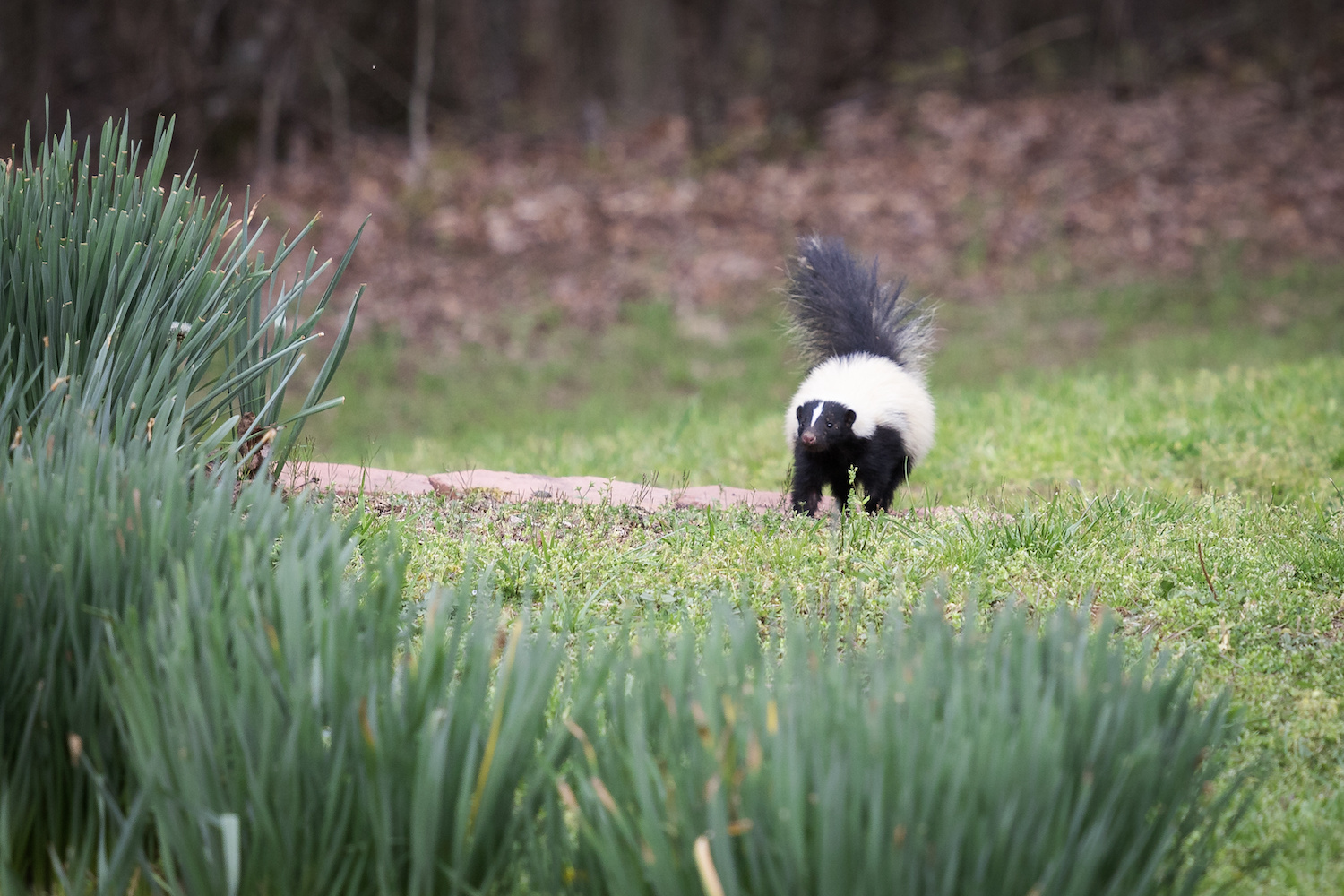
Your skunk removal cost will depend on several factors, including type, location, and more. Our guide will cover everything you need to know about skunk removal costs.
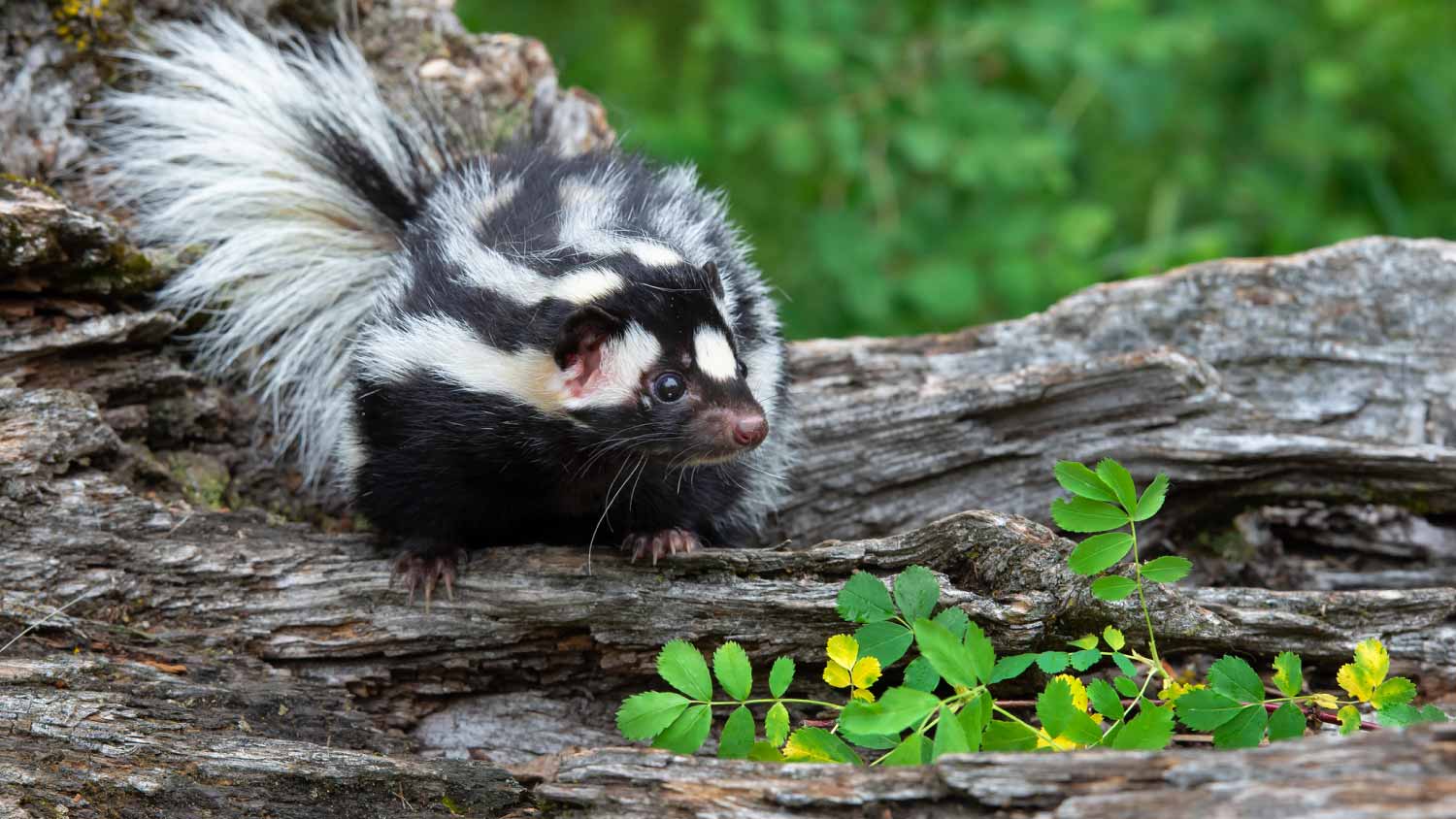
Skunks may look cute, but they’ll make you smell like a rotten egg for a week. Here’s who to call to remove skunks from your yard or home.

Learn how to get rid of skunk smells—or at least subdue the stench—with some quick action, simple household ingredients, and a bit of effort.
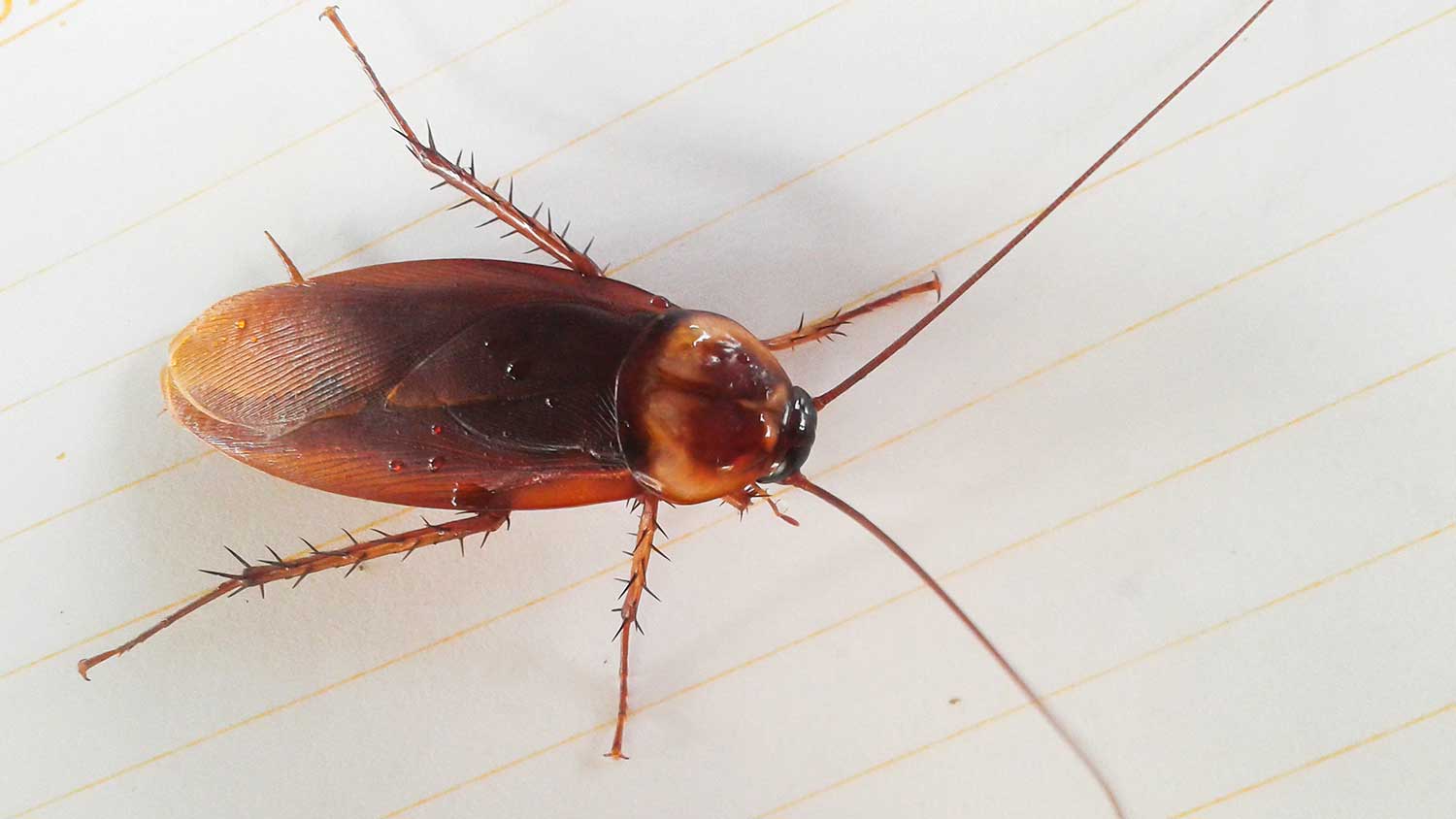
Learn the difference between a palmetto bug vs cockroach and what you can do to get rid of them. Follow this guide to learn more.

Properly identifying weeds is essential for keeping them under control. Learn about the most common types of weeds in grass and how to get rid of them.