
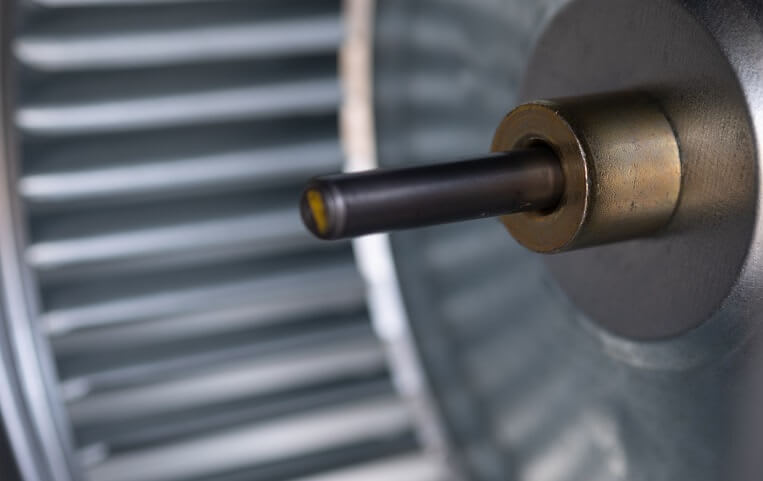
When your HVAC system is acting up, it could be the blower motor to blame. See how much blower motor replacement costs in Baltimore, MD, and what impacts the price here.
Heating and air conditioning service costs depend on your project and location. Check with a local pro for your specific job.

The cost to replace a blower motor in Washington, D.C., ranges from $110 to $2,180, with larger-horsepower motors carrying the highest price tags.
Motor type and speed affect pricing, with PSC motors costing less upfront than ECM and variable-speed models.
Additional parts like capacitors, bearings, or TXVs can add anywhere from $10 to more than $760.
Hiring a licensed HVAC technician in Washington, D.C., helps ensure safe installation, efficient airflow, and reliable long-term system performance.
Washington, D.C.'s elevated cost of living pushes blower motor replacement costs above the national average. The average Washington, D.C. blower motor replacement cost ranges between $327 and $980, with most homeowners paying around $610, depending on factors like the motor size, motor type, and system accessibility. Here's what to expect when budgeting for blower motor replacement in the nation's capital.
These are the key factors to consider when budgeting for blower motor replacement in Washington, D.C.
Blower motor size is one of the most significant cost factors. Motor size is measured in horsepower amounts ranging from 1/4 to 1 horsepower. An AC fan motor cost increases with horsepower, while labor costs for each size are roughly the same.
The most common residential motor sizes are one-quarter, one-third, and one-half. Since HVAC systems in Washington, D.C. typically run year-round to accommodate the region’s fluctuating temperatures, selecting the correct blower motor size can help improve your system’s function and efficiency. Higher-horsepower motors have more power to push air and usually operate more quietly, while a motor that's too large for your home can needlessly increase installation costs and may make your system less efficient.
| Blower Motor Size | Average Cost Range |
|---|---|
| 1/4 horsepower | $110–$600 |
| 1/3 horsepower | $110–$870 |
| 1/2 horsepower | $130–$1,090 |
| 3/4 horsepower | $190–$1,630 |
| 1 horsepower | $270–$2,180 |
Furnace blower motors come in various types, each at a different price point. Single-stage permanent split capacitor (PSC) motors come at a lower upfront cost than two-stage or variable-speed electronically commutated motors (ECM), but they're less efficient to run with higher operating costs.
| Blower Motor Type | Average Cost Range |
|---|---|
| Permanent split capacitor (PSC) | $380–$870 |
| Electronically commutated motor (ECM) | $655–$1,250 |

Blower motors can also be categorized by speed. Single-stage motors are the simplest (and least expensive) option, while variable speed motors are on the pricier end.
| Blower Motor Speed | Average Cost Range |
|---|---|
| Single-stage | $325–$980 |
| Two-stage | $350–$1,200 |
| Variable speed | $655–$1,640 |
Your system’s ease of access can affect your labor costs for HVAC maintenance. You'll probably get a minimal baseline fee if it’s somewhere quick and easy, such as a main-floor closet. However, if your Washington, D.C. home has its HVAC equipment installed in a tight attic, crawl space, or other difficult-to-access area, you might get an extra charge.
If your HVAC system is still under warranty, you’re in luck. Most warranties will cover the premature failure of the blower motor, so you’ll just have to cover labor for about $165 to $270.
Part of your HVAC repair cost may include replacing other parts of your blower at the same time as the motor. These extra HVAC system components and the labor required to replace them will add to your total cost. For example, you may need to replace your HVAC TXV if your AC system isn’t blowing cool air. You can find other blower parts and their costs in the table below.
| Blower Component | Average Cost Range |
|---|---|
| Belt | $5–$110 |
| Capacitor | $10–$55 |
| Bearing | $20–$190 |
| Wheel | $25–$325 |
| ECM repair kit | $35–$65 |
| Shaft | $45–$270 |
| Pulley | $45–$270 |
| Housing | $105–$325 |
| ECM module | $245–$890 |
| TXV | $110–$760 |
Hiring a qualified HVAC technician makes up a significant portion of your blower motor replacement cost in Washington, D.C., but it’s essential to ensure the safe operation, efficient airflow, and long-term performance of your HVAC system. Here are the main factors that impact the labor charges on your bill.
Installing a new heating and air conditioner blower motor could cost around $165 to $270, with most of that coming from labor costs. HVAC technicians in Washington, D.C. usually charge about $80 to $135 per hour. A blower motor replacement might take anywhere from one-and-a-half to two-and-a-half hours.
Before hiring an HVAC contractor, confirm they’re properly licensed through the District of Columbia Department of Licensing and Consumer Protection. Contractors should also carry general liability insurance and workers’ compensation coverage to help protect against property damage or injuries during the installation.
Blower replacements and other basic HVAC repairs usually don’t need a permit in Washington, D.C. However, permits may be necessary for larger projects, such as replacing the entire HVAC system, modifying ductwork, or upgrading electrical components. Your HVAC contractor can determine whether you’ll need a permit and, if necessary, handle the process on your behalf.
Materials and parts used for your blower motor replacement are subject to Washington, D.C.'s sales tax rate of 6%. Most contractors will factor these costs into their estimates.
To help homeowners plan their next project, Angi provides readers with carefully researched cost data and upholds strict editorial standards. We start with national average project costs, which we collect by analyzing competitor information, retailer material costs, and input from professional contractors. We then apply local price index data to calculate location-specific estimates that reflect what homeowners typically pay in their local area. To do that, we use data from the U.S. Bureau of Economic Analysis (BEA), including its Regional Price Parities (RPPs), which measure price differences across cities. This helps us account for differences in labor, materials, and overall cost of living, so estimates in higher- or lower-cost areas better reflect real-world local pricing.
Every estimate undergoes a thorough editorial review to verify accuracy, consistency, and alignment with observed market conditions.
Want to help us improve our cost data? Send us a recent project quote to [email protected]. Quotes and personal information will not be shared publicly.
Excellent, excellent service! Last Minute Services, PLLC quickly responded, assessed my HVAC, and determined the issue with the air conditioning. Nicholas was able to inform me the same day that it is fixable and the best part, it could be fixed the next morning. He showed me the problem...
 Last Minute Services, PLLC
We moved into a new house and have been having an issue with our Carrier mini split heating units. Michael & Sons is listed on the Carrier website as an authorized service provider. The technician arrived outside of the 2-hour time window when I was in the middle of important work meetings....
 Michael & Son Svc Inc
What an awesome experience! I highly recommend Otter Air Heating and Cooling as they are absolutely excellent! I located Otter Air Heating and Cooling via Angi. I was impressed with all of the previous reviews. I prayed before calling, and the owner, Mr. Aaron Joumas answered immediately. I...
 Otter Air Heating & Cooling LLC
Johnny was quick to respond to our furnace problem - no heat in airflow - worked on it within the same day, and charged us only the standard service call. Quality work and great patience explaining the situation clearly.
 Familia Mechanical, LLC
Cool Breeze installed in my apartment a new HVAC system (new heat pump on the roof, air handler in the closet and Ecobee wireless thermostat). I had a successful and pleasant experience. They helped me choose the right equipment configuration. The installation team was very professional,...
 Cool Breeze Plumbing Heating & Air Conditioning
Home Air Services has been an excellent provider of routine and specialized maintenance of my air conditioning and heating system. I strongly recommend them.
 Vito Services
The crew used all sorts of scientific machines to evaluate where I was loosing heat from my 2-bedroom condo. Afterwards they gave me recommendations. We decided that putting insulation above my roof and below the building roof, with special attention to areas where warm air was escaping would...
 Home Energy Medics
Edwin from Sila arrived promptly and checked my HVAC for heating and cooling. The service was fast and efficient.
 Sila Heating, Cooling and Plumbing
Heat Not Getting Above 61 (set to 70)
 Michael Bonsby Heating & Air Conditioning LLC
I had a 20+ year old air conditioning system and didn't want to nurse it through another summer season so I started looking for a replacement during the very polar cold month of February 2019. Of the three bids I received, I was most impressed with Polar Bear Air Conditioning & Heating Inc's...
 Polar Bear Air Conditioning And Heating Inc
From average costs to expert advice, get all the answers you need to get your job done.
When your HVAC system is acting up, it could be the blower motor to blame. See how much blower motor replacement costs in Baltimore, MD, and what impacts the price here.

Staying on top of furnace maintenance can make all the difference during brutal winters. Learn about furnace repair costs in Washington, D.C.
What you’ll pay in Baltimore, MD, for furnace repairs depends on many factors. Here’s a breakdown of what can go wrong and the cost to fix those issues.

When the furnace stops working, you may ask yourself: repair or replace? Find out whether to replace a blower motor or buy a new furnace with this guide.

Got an HVAC repair coming up? Understanding the parts of HVAC systems can help you save cash and understand any problems that could pop up.

Trying to find out how much a new furnace costs in Baltimore, Maryland? This guide explains the main cost factors, including the type and size of the furnace.