
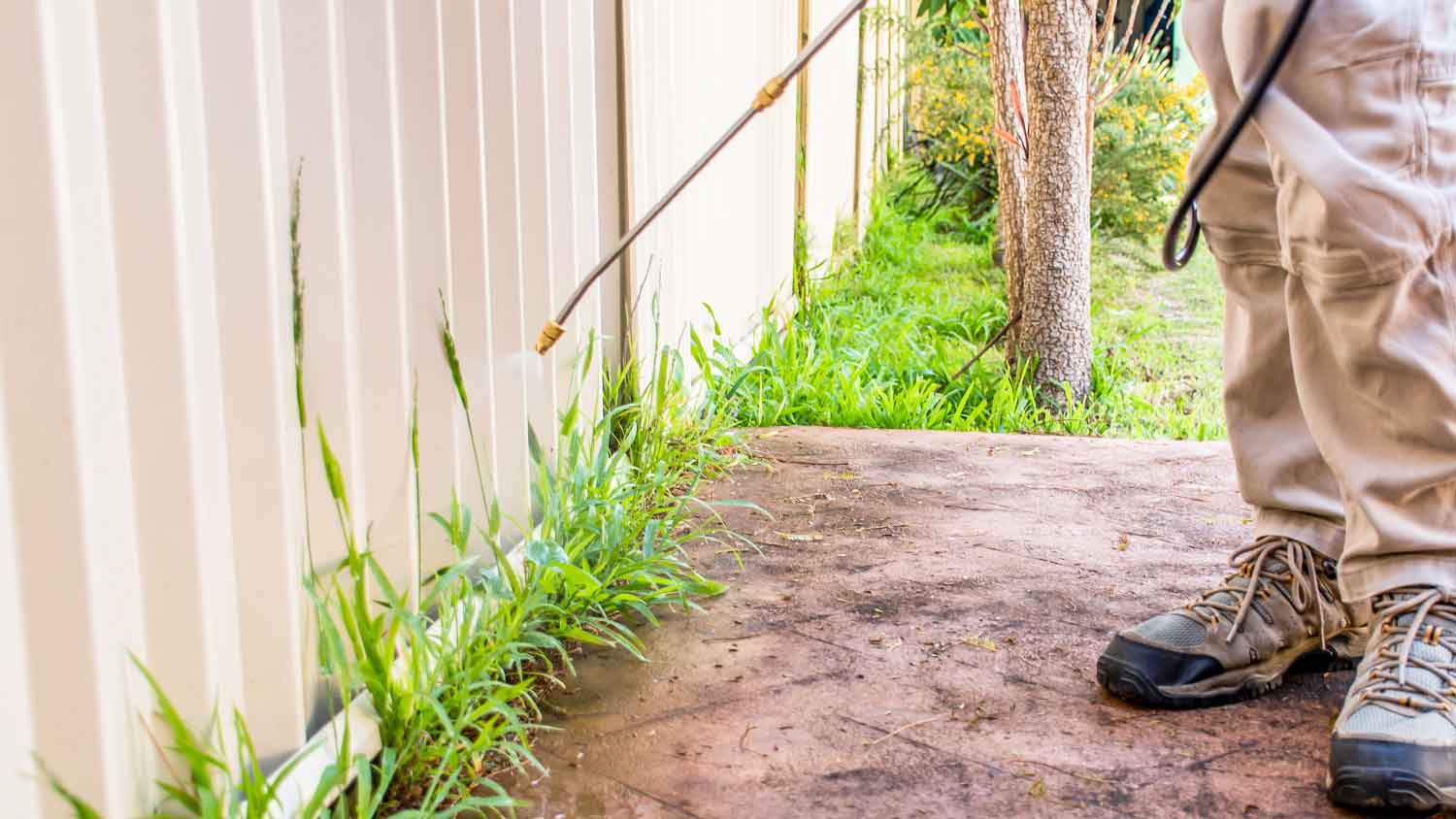
Will vinegar kill grass and weeds? Get the scoop on what vinegar does to grass, when to use it, and things to consider.
A little vinegar, patience, and elbow grease go a long way in killing mold and mildew

Vinegar killing mildew and mold works when your infestation stays at surface level, requiring at least 4% acetic acid and about an hour to eliminate growth.
Expect to pay $1,125 to $3,345 for professional mold remediation, with costs depending on the infestation's location and square footage throughout your home.
You prevent mold by fixing leaks quickly, running exhaust fans in bathrooms and kitchens, and maintaining humidity levels with dehumidifiers in damp areas.
Hiring a local mold removal professional provides expert help when your infestation exceeds 10 square feet or you notice persistent musty odors without visible growth.
Vinegar is an affordable, effective, and less toxic way to get rid of mold and mildew in your home. In many ways, vinegar is a natural mold killer, and it also stifles the growth of a wide assortment of fungi and other microorganisms. Learn more about how to use vinegar to kill mold and mildew, and when it’s time to call in a pro.
Yes, vinegar will kill mild mold infestations typically found at a surface level. To be effective, vinegar must have an acetic acid level of at least 4-4.2%. Cleaning vinegar has about 6% acetic acid. For comparison, the distilled white vinegar found in the typical grocery store is about 5% acetic acid and 95% water.
Vinegar is slow acting, as it takes about an hour to work. Even then, you may see discoloration and stains from the mold that may need more scrubbing with another stronger household cleaner. If the mold infestation goes beyond the surface level or you suspect there may be black mold, you’ll need to call a local pro for removal help.
Do not mix vinegar with hydrogen peroxide or bleach. Mixing vinegar with hydrogen peroxide creates a toxic chemical that can irritate your skin and eyes. Combining vinegar and bleach can create a toxic chlorine gas.


Knowing how to get rid of mold with vinegar is an affordable, effective way to kill mold, depending on the severity of your infestation. Be sure to perform a patch test first to ensure that the vinegar doesn’t damage the surface or item you’re trying to salvage. (This also allows you to test the mixture’s effectiveness.) When you’re ready to proceed, here’s how to use vinegar to kill mold and mildew:
Fill a spray bottle with undiluted white vinegar.
Spray the surface until it’s fully saturated.
Let the mixture sit for an hour before scrubbing.
Wipe the area with a damp cloth.
Allow the area to fully dry.
Examine the area to see if another household cleaner is needed.
Vinegar’s antibacterial and antifungal properties make it an effective cleaner on most surfaces. But there are some areas where you should not use vinegar to kill mold. When you’re looking into how to get rid of mildew and mold, avoid these surfaces when using vinegar to kill mold:
Stone countertops, including marble, granite and limestone. The acid in vinegar can wear down the sealants on these finishes, etching or marking the surface.
Hardwood flooring. Vinegar can break down hardwood flooring’s protective finish, making it susceptible to damage. Learn how to kill mold on wood in other, more effective ways.
Stainless steel, aluminum, and copper. Vinegar’s acidity has the potential to corrode certain types of metals.
Mold loves dark, damp areas, especially around pipes and windows. It typically pops up in attics, basements, underneath sinks, and in grout and caulking. The best way to keep mold at bay is to lessen the opportunity for moisture in your home. Here are some common ways to prevent mold and mildew growth in your home:
Quickly fix any leaks in your roof, walls, or plumbing.
Avoid using carpet in bathrooms and basements—anywhere that sees a lot of moisture.
Use fans in your kitchen and bathroom to promote good ventilation.
Maintain humidity levels by using a dehumidifier in damp areas.
Regularly inspect your home for water damage or visible signs of mold, as well as leaking windows.
Consider adding mold inhibitors to paint if you’re painting your home’s interior.
It’s best to remove mold in your home as soon as you discover it. A small, DIY-able outbreak of mold is considered anything under 10 square feet that’s localized to one area, according to the U.S. Department of Environmental Protection. If the area in question is larger than this, it’s time to seek expert help. But it’s not always visual: If there’s a persistent musty, mildew-like smell, a local mold removal service can help pinpoint the cause of the mold and mildew growth. Typically, mold remediation costs between $1,125 and $3,345. However, the final cost depends on several factors, such as the location and square footage of the infestation.
This service was great. My air conditioner went out during the heat spell that we had. My husband has health issues and they came out that night and at 9:30pm the air conditioner was fixed and running. We are sooo very thankful, this is the company I will be using from now on and would...
 Mr. Mechanical Ohio
I would recommend this company to anyone! He showed up on time, was friendly, completed a very difficult repair on our dryer vent cover, was responsive, and pricing was extremely fair and competitive. I would have him back to do any of our repairs or cleanings without hesitation!
 U.S.A. Dryer Vent, LLC
The technician was very professional and friendly. He answered all my questions and was very thorough. He left the fireplace area very clean . He inspected from the roof and advised me as to other work that might need to be done. There was no pressure there. I was very satisfied with the...
 Supreme brick & chimney
Ace Fireplace Services came to the rescue for my chimney repair. They were quick to pinpoint the issue and worked their magic to fix it. My chimney is now in excellent shape, and I'm a satisfied customer.
 Ace Fireplace Services
Professionalism, quality, and affordability - Custom Paint Jobs LLC checks all the boxes.
 Custom Paint Jobs, LLC
On time, clean and finished fast. Windows seem sturdy and the finish is good. Caulking was done with no smudges. Would recommend.
 Window Depot USA of Central Ohio
Great job...edging and pre clean up went well with a great job with seal coat. Friendly, efficient and professional.
 All Star Paving and Sealing
Scott did not get appropriate access to the property prior to the scheduled inspection which required us to come back later in the day to complete it. He also, unprofessionally, knocked on a neighbor?s door in his attempts to reach someone with access. His overall report was fine though the...
 Security First Home Inspections
Did a great job replacing the ice maker and water regulator on my refrigerator. He was quick and thorough, very friendly and professional. If I needed a heart transplant I'd want him to do it!!!
Scott checked our large crawl space for mold and water infiltration and recommended a viable solution. The crew was efficient and they cleaned up well after the job. The job was expensive but I am confident that I won't have to deal with the problem again. Highly recommend.
 AdvantaClean of Dublin
From average costs to expert advice, get all the answers you need to get your job done.
Will vinegar kill grass and weeds? Get the scoop on what vinegar does to grass, when to use it, and things to consider.
Does vinegar kill mold? Yes, but it’s not the only effective natural mold killer. Find out the best homemade and natural ways to kill mold.
Tree stumps can take a long time to die and become suitable for removal. You can help out by applying Epsom salt and vinegar, a homemade option that works with patience.

Mold on wood is a common problem that needs to be removed to prevent health hazards and structural damage. Use this guide to learn how to kill mold on wood.
Learning how to remove mold from wood furniture is a worthwhile DIY project because you can save your expensive wood pieces. Learn more about safely removing mold from wood furniture.

Got a moldy couch? You may not have to junk it. Learn how to remove mold from fabric furniture and keep your upholstery looking new.