


•
Discover the average feng shui consultant cost, what impacts pricing, and how to save on your consultation.
The cost to replace trim is $788 on average, or between $326 and $1,249, depending on the type and material.


The cost to replace trim is $788 on average, with costs ranging from $326 to $1,249. While it can seem like a minor detail, trim can have a major impact on a room’s aesthetic. If your home’s trim is in rough shape, dated, or missing, replacing it can provide the perfect finishing touch. This guide will help you plan your budget for trim replacement.
These are the main factors that will impact your cost to replace trim. Consult a local trim and crown molding contractor to determine the pricing structure for your project.
The type of trim can have a significant impact on your budget. Basic door and window trim is on the lower end cost-wise, while crown molding and exterior trim can rise in price.
| Trim Type | Cost per Linear Foot |
|---|---|
| Door or window trim | $0.50–$6 |
| Window casing | $6–$20 |
| Window capping | $1–$2 |
| Crown molding | $4–$23 |
| Shoe molding (quarter round) | $2–$6.25 |
| Exterior trim | $9–$25 |
In general, the cost to replace trim varies anywhere from $0.50 to $10 per linear foot. If you’re only replacing a small section of trim, you may be able to keep costs for this project below $100, while large rooms or whole-home trim replacements can cost $1,000 or more.
The style of trim is another factor that can affect your final cost. Check out the average cost ranges for these popular styles of trim.
| Trim Style | Average Cost Range (Materials Only) |
|---|---|
| Bullnose | $1–$9 |
| Colonial | $1–$10 |
| Craftsperson | $1–$10 |
| Flat stock | $1–$8 |
| J-channel | $2–$8 |
| Provincial | $2–$10 |
| Ranch | $2–$10 |
| Scalloped | $2–$10 |
| Victorian | $3–$15 |
| Windsor | $2–$10 |
The price of trim materials ranges from $0.50 to $10 per linear foot, but prices can go as high as $30 per linear foot for high-end materials like steel and vinyl. Consider these average costs for the most common trim materials.
| Material | Average Cost per Linear Foot (Materials Only) |
|---|---|
| Aluminum | $2–$6 |
| Fiber cement | $0.70–$5.50 |
| Hardwood | $0.75–$10 |
| Medium-density fiberboard (MDF) | $0.60–$6 |
| Polyurethane | $2–$6 |
| Reclaimed wood | $1.25–$12 |
| Softwood | $0.60–$7 |
| Steel | $5–$20 |
| Vinyl | $0.80–$30 |
The cost of trim removal ranges from $0.60 to $1.20 per linear foot. If you currently have trim installed in your home, you or a professional will need to remove the old trim before installing the new version. Most professionals will account for this task in your initial quote.
Labor costs for trim repair and replacement range from $65 to $105 per hour. While rates can be pretty steep, this project is usually completed within a few hours with professional-grade and long-lasting results.
If your contractor went above and beyond, you have the option to tip (a good amount to stick to is around 10% to 15% of the total project cost). If you’re wondering when and how much to tip your contractor, know that tipping isn’t mandatory nor expected, but it can be a kind gesture to show your appreciation.
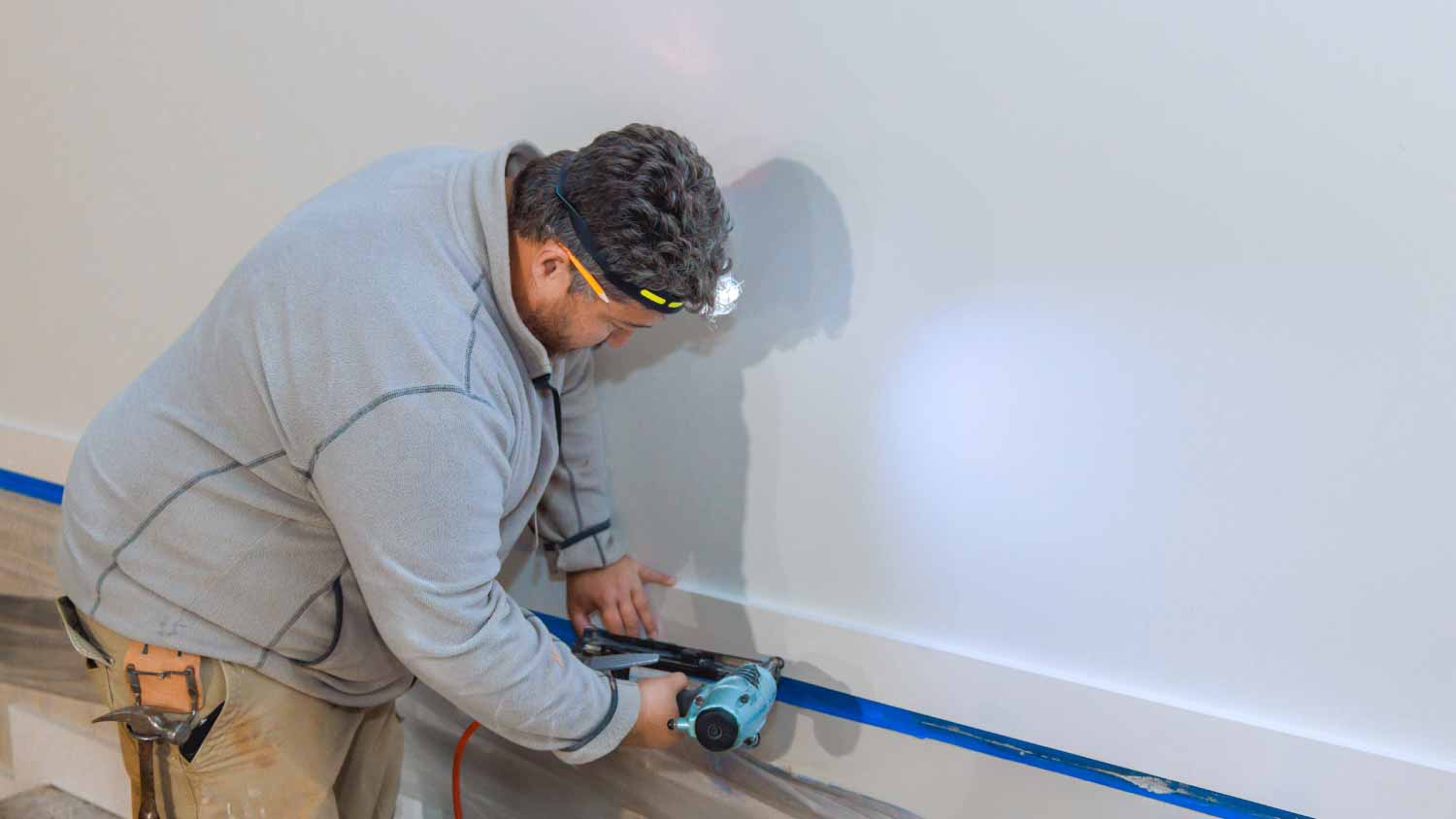
Aside from the initial project costs, here are a few additional ongoing expenses to factor into your budget.
Hiring a professional to stain or paint trim costs an average of $1 to $3 per linear foot. Along with the cost of having your trim stained or painted at the time of installation, you may want to budget for restaining or repainting if you decide to change up the color of your walls or flooring.
Replacing sections of trim costs between $0.50 and $10 per linear foot. Replacing small sections of trim is often relatively inexpensive and DIY-friendly. Note that custom or odd styles of trim may be unavailable by the time you need to have them replaced, so you may want to budget for new trim altogether.
It’s possible to install trim yourself, and doing so would save you hundreds or even thousands of dollars in some cases. However, trim is a finishing material, so even minor mistakes will stand out and detract from the look of your project. Hiring a professional trim installer near you is worthwhile to get the best look possible, especially if you’re installing exterior trim that will have a direct impact on your curb appeal and home value.
The labor cost to have a pro install trim can be quite high, but there are a few key reasons you should consider going with professional installation:
Pros have special tools to measure and cut precise angles that ensure a clean, professional finish.
Experts can install trim on imperfect surfaces without leaving noticeable gaps.
Hiring a pro for exterior trim could prevent you from having to get up on a ladder, which is inherently dangerous.
A professional may recognize unusually warped walls or ceilings and point out potential structural damage that you should address.
Handy homeowners who want to be involved in their trim replacement project can tackle these smaller tasks, which can also save some money on labor:
Remove any existing trim and haul away the debris.
Complete minor wall, ceiling, or siding repairs to prep the surface for your new trim.
Purchase new materials and paint or stain them prior to your professional arriving.
Remove any door or window hardware that could get in the way and reinstall it after the job is done.
If you have other projects to complete when replacing your trim, it’s a good idea to include these with your plans. Many pros will be happy to bundle services at a discount or refer you to a trusted subcontractor for a competitive rate. Here are a few add-on services to consider and their average costs:
Painting/staining trim costs: $1–$4 per linear foot
Cost to install shoe molding: $2–$6.25 per linear foot.
Cost to replace windowsill: $150–$700
Cost to install an interior door: $150–$2,500
Cost to install flooring: $1,530–$4,850
Cost to repair drywall: $300–$930
Baseboard replacement costs:$800–$2,250
Cost to paint a room: $2–$6 per square foot
Looking to keep your budget as trim as possible? Here are some of the best ways to be cost-savvy when planning out this project:
Look for sales, discounts, and bulk purchase options to save money on trim materials.
Consider using less expensive materials such as medium-density fiberboard, which is more cost-effective than traditional wood trim.
If you have the necessary skills and tools, consider doing the installation yourself.
When hiring a professional, shop around and get at least three quotes from different contractors to find the best deal.
Opt for standard trim profiles and sizes to avoid custom orders, which tend to be more expensive.
Measure and plan the project carefully to minimize waste and avoid over ordering materials.
Discuss trim styles and designs with your professional if they’re buying materials, or mention specific products you like.
Measure the linear feet of trim you need and provide individual measurements to your pro for an accurate estimate.
Make sure you let your pro know if they’ll be painting or staining your trim or if you prefer to handle that.
Discuss any add-on services you’d like, including window or door replacement, interior painting, or caulking around windows and doors.
Home is the most important place on earth, which is why Angi has helped more than 150 million homeowners transform their houses into homes they adore. To help homeowners with their next project, Angi provides readers with the most accurate cost data and upholds strict editorial standards. We’ve surveyed thousands of real Angi customers about their project costs to develop the pricing data you see, so you can make the best decisions for you and your home. We pair this data with research from reputable sources, including the U.S. Bureau of Labor Statistics, academic journals, market studies, and interviews with industry experts—all to ensure our prices reflect real-world projects.
Want to help us improve our cost data? Send us a recent project quote to [email protected]. Quotes and personal information will not be shared publicly.
From average costs to expert advice, get all the answers you need to get your job done.
Discover the average feng shui consultant cost, what impacts pricing, and how to save on your consultation.

Need a little extra room for clothes storage in your home? Learn about the average cost to build a closet, some cost factors to consider, and more.

How much does an interior designer cost? Discover average prices, cost factors, and tips to help you budget for your next home design project.
Discover the average cost of stretch ceiling installation, key price factors, and ways to save. Get transparent pricing to plan your stretch ceiling project.

Create a stunning and functional home or remodel with an interior designer. Follow these common interior design questions to prepare for working with a pro.
Discover the cost to install a built-in wardrobe. Learn about average prices, installation factors, and ways to save on your custom storage project.