

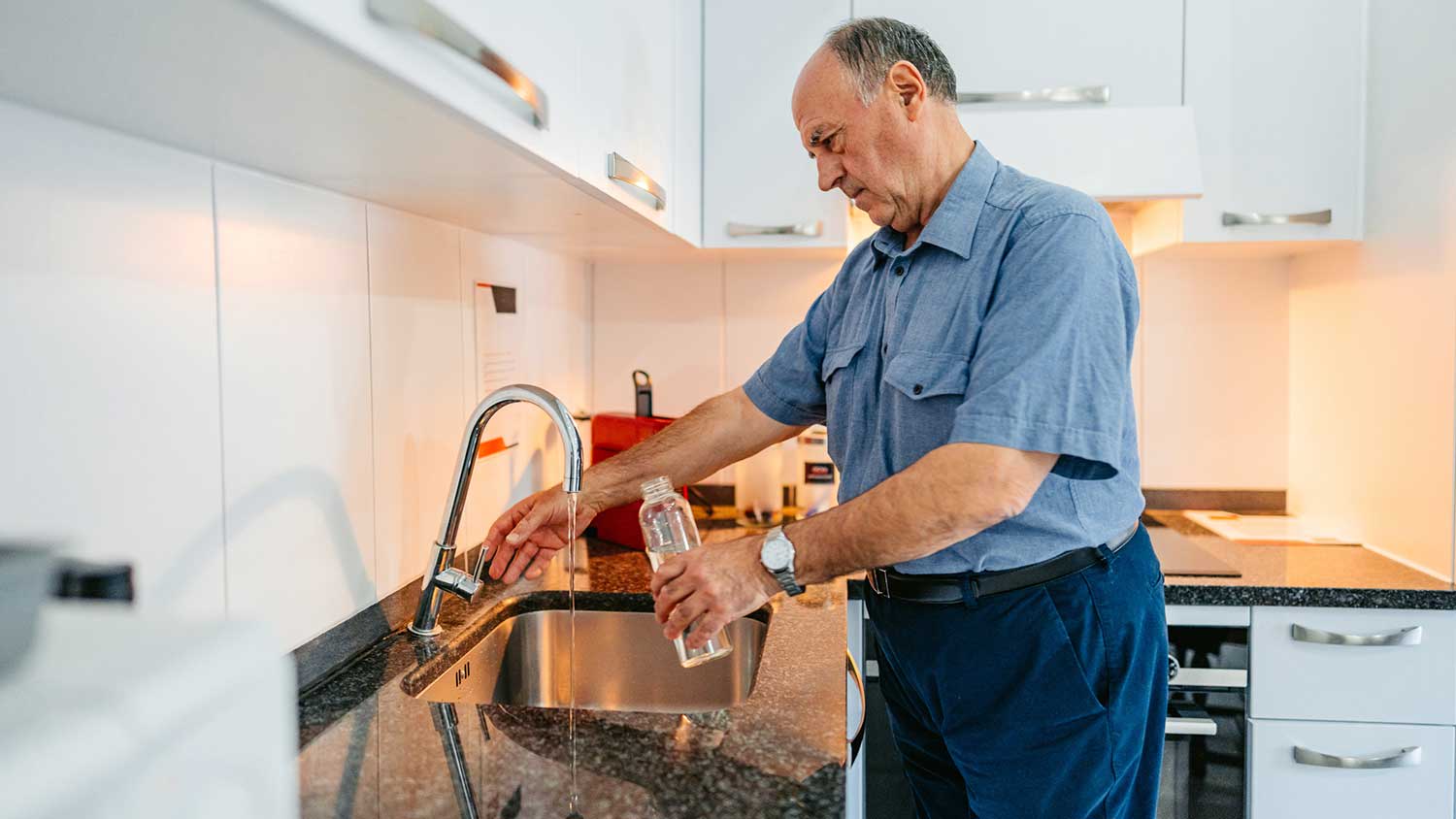
Shocking your well can help clear it of harmful bacteria like E. coli, and it’s a process you can do yourself with simple household bleach. Here’s how.
High levels of chlorine could mean bad news for your health and your appliances

Excess chlorine in drinking water above 4 milligrams per liter causes physical symptoms like dry skin, coughing, difficulty breathing, and irritated eyes.
Expect to pay $2,300 on average for a whole-house filtration system or $2,200 to $4,800 for reverse osmosis systems to remove chlorine.
You can remove chlorine from your water by installing a filtration system, boiling water for 15 minutes, or using potassium metabisulfite tablets.
Hiring a local water softener installation professional provides reliable water testing and expert recommendations for choosing the right whole-house filtration system for your home.
The symptoms of having too much chlorine in your water are unpleasant and can make you feel sick. They include eye, nose, and throat irritation, breathing problems, and skin redness. If you’re worried that some symptoms or signs you’re experiencing may point to overly chlorinated water, read on. Remember that calling a professional for an expert opinion is always a good idea, even if it turns out there’s nothing wrong with your water supply.
Recognizing early warning signs is important, but figuring out the right fix isn't always simple. Delaying professional help or attempting complex DIY repairs can lead to further damage and increased costs. With our network of local pros, you can hire a skilled professional to assess the issue and recommend the best solution.

Chlorine is useful for purifying a water supply, but too much of it can be bad for your health. The Centers for Disease Control and Prevention (CDC) states that chlorination is a useful disinfectant for killing parasites, bacteria, and viruses in drinking water, but chlorine levels in drinking water should never surpass 4 milligrams per liter.
Your local water authority should be conducting regular water tests to ensure the water supply stays within these limits, and you can request a water quality report if you suspect there’s too much chlorine. High amounts of chlorine in drinking water can cause uncomfortable physical symptoms and increased risk of health problems as well as damage to your home and plumbing.
Below are some of the symptoms you may experience from over-chlorinated tap water, according to the CDC:
Burns
Cough
Blisters
Dry skin
Dull hair
Brittle nails
Blurry vision
Skin redness
Chest tightness
Red, irritated eyes
Difficulty breathing
Sore throat and nose
Too much chlorine can also make other health problems worse, such as asthma, eczema, and food allergies. According to the CDC’s Agency for Toxic Substances and Disease Registry, chlorine produces a byproduct called bromodichloromethane (BDCM), which is considered a “probable human carcinogen” by the Environmental Protection Agency (EPA). Studies have shown tumor growth in lab animals exposed to BDCM from exceptionally high levels of chlorine.
However, water with more than the legal limit of 4 parts per million of chlorine is rarely found in the environment, and water with less than the legal limit of 4 parts per million of chlorine shouldn’t cause health problems.

In addition to physical symptoms, you may notice other signs around your home that there’s too much chlorine in your water.
A common sign of chlorine in tap water is a cloudy and yellow or brown color to the water.
You may notice a strong bleach, chlorine, or disinfectant-type smell coming from your water, and it may have a bitter, unpleasant taste.
Chlorine can fade or discolor clothing or cause spots and stains.
Rusty streaks in places where your tap water runs could also be a sign of too much chlorine in your water. Chlorine works as an oxidizing agent, which means it turns iron into rust.
Chlorine can dry out toilet flappers, rubber seals, and gaskets. This can result in damage to your appliances, including leaks and other expensive repairs. Look out for rubbery parts turning to mush or compromised water seals.
Your water heater, washing machine, dishwasher, and other water-using appliances will have a shorter life span if high amounts of chlorine are present in your water. Chlorine can corrode pipes, shortening the life span of your appliances.
If you’re experiencing physical symptoms and other signs you have too much chlorine in your water, it’s a good idea to have your water tested. In addition to requesting a report from your local water authority (if your water comes from a public supply), you can consult a local water softener specialist or water filtration expert to test your water and recommend a course of action, such as installing a whole-house water filtration system.
Because there is no government oversight of private wells, people relying on them are responsible for managing their own water quality to ensure it is safe (and enjoyable) to drink.
You can also test your water yourself with store-bought water testing kits. These come with test strips that let you test for chlorine as well as lead, copper, iron, and other contaminants. However, you’ll get more detailed information and precise results by hiring a water specialist.

If you have too much chlorine in your water, there are a few methods you can use to remove it.
Filtration system: You can install a whole-house filtration system as a long-term solution for removing chlorine. There are many types of water filters that can remove chlorine from your water.
Chemical neutralization: A potassium metabisulfite tablet dissolved in your tap water will neutralize chlorine.
Boiling: Boiling water for at least 15 minutes will remove chlorine from your tap water.
A whole-house filtration system is your best solution for removing chlorine from water. The cost of a whole-house water filtration system is $2,300 on average. The exact price depends on the type of system plus labor costs in your area. For example, a reverse osmosis water filtration system costs $2,200 on average but can go up to $4,800 for certain brands in areas with higher labor costs.
If you’re good people wanting to do business with good people, hire Matt. He is a consummate professional and utterly competent. He installed a water heater in my home at a price that beat competitors by hundreds of dollars with a promise to support the unit for its life (even after its 6 yr...
 Greene's Plumbing Services
As usual with ECO, tech Jordan was outstanding, very professional, very knowledgeable, and very thorough with repairs made to tankless water heaters. Very highly recommend ECO!!!
 Eco Plumbers, Electricians, and HVAC Technicians
Did a great job replacing the ice maker and water regulator on my refrigerator. He was quick and thorough, very friendly and professional. If I needed a heart transplant I'd want him to do it!!!
We had a gutter blockage that was causing water to sheet down the side of the house and ultimately it started to come in at a window (need mortar people next). Called around 7:30am, and he responded by 8am. He was able to come out the same morning and do a look over and clean out. He also...
Scott checked our large crawl space for mold and water infiltration and recommended a viable solution. The crew was efficient and they cleaned up well after the job. The job was expensive but I am confident that I won't have to deal with the problem again. Highly recommend.
 AdvantaClean of Dublin
They were the most through inspecting the water system in my house. Even going the extra mile to get the water professionally tested for contamination.
 Hague Water Conditioning, Inc.
It went very well. The drain is absorbing all the access water. I had other estimates a year earlier and Hughes was right on. I will use them, again.
 Hughes Construction Co
Very well. Have already used them again to fix hot water heater
 Service Olympians
The Paul Davis team was very professional and went the extra mile to take care of my water damage. The work was very high quality and done in a timely manner. I would highly recommend their services.
 Paul Davis Restoration
Honesty is hard to find in business today. GBR met me today at a 3 story building regarding my being told that I needed to tuckpoint the brick because of water leaks. The owners took the time to evaluate the situation and advised me that I did not need their service at all. They pointed me...
 GBR Masonry Inc
From average costs to expert advice, get all the answers you need to get your job done.
Shocking your well can help clear it of harmful bacteria like E. coli, and it’s a process you can do yourself with simple household bleach. Here’s how.
Is your water softener turning water gray? It would be a chlorine, mineral, rust, or bacteria issue. Click here to see how you can fix the problem.

Pools don’t hold chlorine if there’s organic matter, debris, or chemical imbalances. Keep reading to find out why your pool is not holding chlorine.
Are your pipes making noise when the water is turned off or do you have noisy water pipes? Learn what each sound means for your plumbing.

Understanding the most important chemical in your pool can help you feel more confident as a pool owner. This guide breaks down the basics of swimming pool chlorine.

Balancing pool chemicals is one of the most important parts of pool maintenance. This guide will show you how much chlorine to add to a pool and more.