
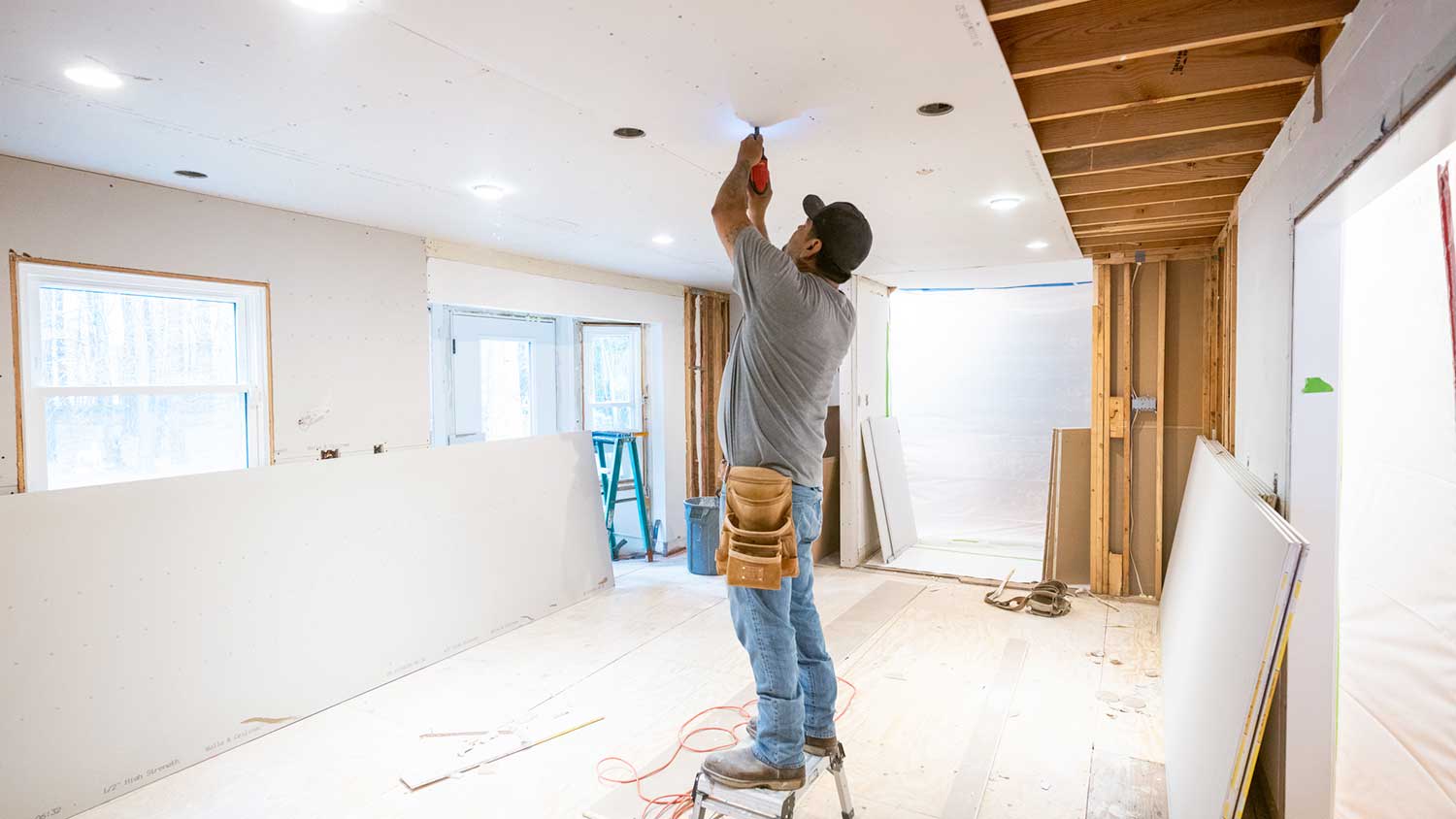
Not sure whether to install Trusscore’s PVC panels or drywall? Comparing the costs can help. Let’s take a look at the typical Trusscore versus drywall costs.
The type of interior wall materials can make a difference in the longevity of your home

Blueboard features moisture-resistant blue paper facing for wet areas like bathrooms, while drywall suits dry spaces and standard interior walls.
Drywall costs $0.30 to $0.50 per square foot for materials, while blueboard costs $0.50 to $0.80 per square foot for your project.
Blueboard offers greater durability in humid conditions and resists mold growth, while drywall provides easier installation and works well in moisture-free rooms.
Hiring a local drywall professional helps you choose the right material for your space and ensures proper installation that protects your walls long-term.
In the world of interior wall construction, the battle between blueboard vs drywall has raged on for years. Each material offers unique advantages and disadvantages, making it crucial for homeowners and builders to understand the differences before making a decision. Let’s dive into the key distinctions and help you make an informed choice about which material is right for you.
Blueboard and drywall are two common materials used for interior wall construction. The key difference lies in their moisture resistance. Blueboard, also known as plasterboard, is specifically designed for wet or high-humidity areas, making it ideal for bathrooms and kitchens. It has a special blue paper facing that inhibits moisture absorption. In contrast, traditional drywall is not moisture-resistant and is better suited for dry environments. While both materials share similarities in installation and appearance, choosing between them boils down to the specific needs of your space and the level of moisture resistance needed.
Blueboard, also known as plasterboard, is a type of building material commonly used for interior wall construction. Unlike standard drywall, blueboard is designed with enhanced moisture resistance, making it suitable for areas prone to high humidity or damp conditions.
| Pros | Cons |
|---|---|
| Moisture resistance | Cost |
| Durability | Specialized installation |
| Smooth finish | Weight |
| Paint adhesion | Limited availability |
| Design flexibility |
Best for:
Homes in areas with high humidity or damp conditions
Houses with pools, hot tubs, or indoor spas

Homeowners can generally enjoy the following advantages when they choose blueboard:
Moisture resistance: Blueboard's unique paper facing makes it highly resistant to moisture, preventing damage in wet environments like bathrooms and kitchens.
Durability: It is more durable in humid conditions, reducing the risk of mold or mildew growth and ensuring longevity.
Smooth finish: Blueboard's surface is designed for smoother finishing, making it easier to achieve a polished look for paint or texture applications.
Paint adhesion: Paint adheres well to blueboard, resulting in a professional and long-lasting finish.
Design flexibility: Blueboard is versatile, allowing for a variety of finishes, textures, and designs to suit your aesthetic preferences.
Of course, there are also some disadvantages associated with blueboard worth considering:
Cost: Blueboard can be more expensive than standard drywall, which may not be ideal for budget-conscious projects.
Specialized installation: Installing blueboard requires specific techniques and materials, which may demand more expertise.
Weight: It is heavier than regular drywall, necessitating careful consideration of load-bearing structures in some cases.
Limited availability: Availability can be limited in some regions, potentially affecting accessibility.

Drywall, also known as gypsum board or wallboard, is a widely used building material for interior wall construction. It consists of a core of gypsum plaster sandwiched between layers of paper or fiberglass. Drywall is known for its versatility and ease of installation, making it a popular choice in residential and commercial construction.
| Pros | Cons |
|---|---|
| Affordability | Limited moisture resistance |
| Ease of installation | Prone to impact damage |
| Smooth finish | Limited fire resistance |
| Sound insulation | Not ideal for humid environments |
| Versatility |
Best for:
Homes that share walls, like townhouses or condos
Houses in dry areas

These are some of the unique advantages that come with using drywall in your home:
Affordability: Drywall is cost-effective and readily available, making it a budget-friendly choice for a wide range of projects.
Ease of installation: Drywall installation is relatively straightforward, and it can be quickly erected by experienced professionals.
Smooth finish: Drywall provides a smooth, uniform surface that's suitable for painting, texturing, or wallpapering.
Sound insulation: It can provide moderate sound insulation, reducing noise transfer between rooms when used with proper insulation materials.
Before choosing to go the drywall route, consider these distinct disadvantages:
Limited moisture resistance: Standard drywall is not moisture-resistant and can be susceptible to damage in wet environments, necessitating special attention in such areas.
Prone to impact damage: Drywall is susceptible to dents, cracks, and holes from impacts, which may require repairs.
Fire resistance: While it offers some fire resistance, drywall can eventually succumb to high temperatures and flames. Special fire-resistant drywall is available for enhanced protection.
Not ideal for humid environments: In areas with high humidity or moisture, drywall may require additional moisture-resistant coatings or be replaced with more suitable materials like blueboard.
When it comes to choosing between drywall versus blueboard, which material is right for your home depends a lot on what qualities matter the most to you. Let’s take a closer look at what areas each of these families excel in.
| Blueboard | Drywall |
|---|---|
| Moisture resistant | Ease of installation |
| Smooth finish | Smooth finish |
| Durable | Sound resistant |
Drywall takes the lead in this category due to its flexibility and adaptability. You can easily cut, shape, and customize drywall panels to fit unique room layouts and designs. It also accepts a wide range of finishes, textures, and decorative elements, allowing for endless creative possibilities. There are also different types of drywall to choose from. Blueboard, while suitable for various finishes, may require more effort to customize to the same extent. A professional drywall installer near you can walk you through your customization options.
Blueboard wins in terms of durability, especially in moist or humid environments. Its moisture-resistant properties make it less susceptible to damage from water exposure, reducing the risk of mold or mildew growth. Drywall, while durable in standard conditions, may require additional moisture-resistant treatments or replacement in areas prone to high humidity or dampness.
Drywall is the cost-effective winner in this category. It's readily available and budget-friendly, making it an economical choice for most construction projects. Blueboard, with its specialized moisture-resistant features, tends to be more expensive, which can impact your project's overall cost. On average, the cost of drywall can range from $0.30 to $0.50 per square foot for the material itself, whereas the cost of blueboard can range from $0.50 to $0.80 per square foot for the material.
In terms of longevity, blueboard holds the advantage, particularly in moisture-prone areas. Its moisture-resistant properties contribute to a longer life span, reducing the likelihood of premature deterioration. Drywall, while durable, may require replacement sooner in environments with high humidity or water exposure.
Cancelled appointment two hours after they were supposed to come for drywall work.
 Hutch And Sons Drywall Services
Cole has been handling plumbing and general contracting for our four properties over the past three years, and he’s always done a great job. Most recently, he installed a sink and countertop in our retail store where none existed before, and it turned out exactly how we needed. He’s...
 ANB Renovations LLC
I would recommend this company to anyone! He showed up on time, was friendly, completed a very difficult repair on our dryer vent cover, was responsive, and pricing was extremely fair and competitive. I would have him back to do any of our repairs or cleanings without hesitation!
 U.S.A. Dryer Vent, LLC
I cant stop admiring my newly painted walls. Custom Paint Jobs LLC made my house feel brand new.
 Custom Paint Jobs, LLC
Excellent experience with hiring Tether House to Mount our 77’ Samsung TV in our bedroom. Fast, friendly, and knowledgeable. Highly recommend.
 Tether House
Excellent customer service and knowledge. I was recommend to him from my neighbour. My front door and window came in great and were installed beautifully perfectly, I m very satisfied with their excellent work, so decided to order one more big bow window for my living room. I cant wait for...
 Window Depot USA of Central Ohio
Would hire again. Wall looks great. Happy with job.
 Central Paving
Involved an extensive bathroom remodel, including removing tub & installing walk in shower, new drywall, custome tile work to ceiling, plumbing, etc. Overall, job was done on time and on budget. Nick & his team were very professional and had high attention to detail. Quality was great. Highly...
 Stamos Flooring and Remodeling LLC
We have had a great experience with Rising Height for the past five years on a number of miscellaneous renovation projects. They laid flooring for us and had a very good sub do the finish. Installed drywall for a vaulted ceiling, finished an attic/loft with new subfloor, framing and drywall,...
 Rising Height Unlimited
Mr. Lopez was super nice and professional. He repaired our drywall just as he described during the estimate phase. Our dining room wall looks great again! Thanks Mr. Lopez!
From average costs to expert advice, get all the answers you need to get your job done.
Not sure whether to install Trusscore’s PVC panels or drywall? Comparing the costs can help. Let’s take a look at the typical Trusscore versus drywall costs.
While both Type C vs Type X drywall are fire resistant—the two should not be used interchangeably. Use this guide to help you choose the drywall for your next project.
What drywall should you use in a shower? It depends on where you’re putting it. Some bathroom drywalls are more moisture-resistant than others.
The terms drywall and Sheetrock are often used interchangeably, but one is a brand and one is a specific product. Find out which one you need in this guide.

You're down to the nitty-gritty of drywall supplies and now you need to know if paper vs mesh drywall tape is the way to go. Here's how to choose.
Rounded vs square drywall corners—which one should you choose? Use this guide to understand the key differences, and decide which one is right for your project.