

Foundation cracks can be a sign of serious foundation damage. Learn what causes foundation cracks and when you should call a pro.
Some foundation settling is natural, but some settlement can lead to structural issues

Foundation settlement happens when your home sinks into the ground, and while some settling is normal after construction, excessive or uneven movement signals serious problems.
Foundation underpinning costs can exceed $15,000 when differential settlement causes structural damage, so addressing settlement issues early helps you avoid these higher repair expenses.
Hairline cracks in your foundation walls or floors indicate normal settling, but wide or uneven cracks mean you need immediate attention to prevent further damage.
Hiring a local foundation drain installation professional provides reliable support with drainage system installation and foundation stabilization, helping prevent settlement from worsening or recurring.
After home construction, the foundation and the structure above put a lot of pressure on the soil and gradually sink into the ground. This process is called foundation settlement, and it’s perfectly natural and expected. Unfortunately, settlement can progress beyond this point and cause foundation damage and structural instability in your home. In this guide, we’ll discuss what foundation settlement is, why it happens, and when you need to be concerned.
Foundation settlement is the downward movement of your foundation into the soil below. Minimal settlement naturally occurs as the soil adjusts to and compacts under new construction, but it can progress beyond that point due to specific soil types, moisture conditions in the soil, and natural disasters that cause movements in the earth.
Identifying the reasons why your foundation settlement is happening can help you prevent any structural issues that can pop up as a result of rapid or excessive movement.


There are a handful of factors that cause settling under your home’s foundation, and the underlying cause of the settlement often indicates how severe the movement is.
All foundations settle, so some natural settlement is normal and expected under every new home foundation. Natural settlement is usually minimal and occurs when the home builder properly compacts the soil to prevent excessive movement.
In most cases, the only sign of normal foundation settlement will be hairline cracks in your foundation floor or foundation walls. These cracks are less than 1/8 inch wide and are even from side to side, so any repairs are usually cosmetic. They rarely let water or moisture in, and they don’t indicate structural instability.
During dry summer months, the soil around your foundation may begin to dry. Clay soils, in particular, shrink when they dry, creating a void between the structure and the soil. When this happens, your foundation can lose support from the soil, resulting in structural damage or additional foundation sinking.
When home builders construct a new foundation for a home, lot prep is a big part of the job. Whether the builder is excavating to dig out a basement or crawl space or laying a slab foundation with footings directly on the soil, a crucial part of the land preparation is soil compaction. If the builder doesn’t compact the soil properly, it won’t give the foundation adequate support, leading to foundation settlement issues.
The type of soil around your foundation plays a big role in how it supports the building over time. For example, clay soil is expansive, meaning it expands and contracts as the moisture content changes. The cyclical expansion and contraction can cause excessive settlement or even foundation sinking, followed by excessive pressure on the concrete that can cause structural issues.
Sandy soils consist of large particles that drain water rapidly rather than trapping it and expanding. Sandy soils won’t cause problems with expansion and contraction, but they erode more easily, which can leave voids under your home that can cause rapid and potentially damaging settlement.
Loamy soils sit somewhere in the middle and tend to have the fewest issues with settlement.
Excessive foundation settlement or differential settlement happens when builders don’t pay attention to the soil composition, so they don’t prep the soil and build the foundation based on the type of soil underneath it.
When the soil under a foundation is saturated with water and freezes, it expands. This causes an upward pressure on the foundation called frost heave, and if it’s significant enough, the thawing process can lead to additional settlement. The moisture that causes frost heave can come from heavy rain, flooding, a plumbing leak, or a raised groundwater table.
Frost heave is a big reason why proper site drainage is essential, as this ensures the subsoils maintain as close to uniform moisture content as possible throughout the year, especially during the colder seasons. Special foundation styles, like raised foundations, have gained popularity in areas where frost heave is an issue.

Plants, trees, or any other types of vegetation near your home can cause foundation settlement as well. Trees, shrubs, and small plants near your home's foundation will naturally trap moisture in their roots and hold it in the soil next to your home. This can cause soil expansion and contraction, which can lead to unnatural settlement if the moist-dry cycle continues.
Additionally, if you cut down trees on your property that had roots growing under your foundation, they will rot over time and cause the soil above to sink. If the sinking is excessive, your foundation could lose support from underneath, leading to differential settlement and potential structural issues.
It can take several decades before this type of problem becomes visible, and settlement is more likely to happen with shallow foundations than basement-level or deeper piers extending down many feet.
The vibration of the soil from seismic activity can cause sudden shifts in the soil around your foundation, which can leave portions of the home unsupported. Eventually, the weight of the structure will cause your foundation to sink down to meet the soil once again.
Home foundations can also lose support from underneath if there are sinkholes under your home. Sinkholes typically occur in areas with a karst landscape, which means the bedrock in the area is predominantly limestone or dolomite. These minerals degrade in the presence of groundwater, eventually creating channels or voids under homes that can collapse and create unsupportive areas below your foundation. Over time, the foundation will settle into the ground that has collapsed.
There are three different kinds of foundation settlement in terms of soil movement, plus three kinds of settlement that pertain to how the structure above moves.
Immediate settlement refers to how the soil responds in the moment when a home builder constructs a foundation and a home on top of it. The soil naturally compacts, regardless of what kind of soil it is, although this settlement is usually more severe with clay soils.
Immediate settlement is natural and expected, and provided the builder compacts the soil properly beforehand, it should be minimal.
Consolidation settlement results from the water in the soil under the foundation squeezing out of it, which causes additional compaction. Consolidation settlement can begin immediately with the pouring of the foundation, but it continues for some time after the structure is complete. Again, with proper ground prep, consolidation settlement should be minimal.
Creep settlement refers to any normal, downward movement of the foundation that occurs after consolidation settlement is no longer an issue. Creep settlement will vary based on soil conditions and the weight of the structure above, and it’s the most common cause of hairline cracks in a foundation.
Uniform settlement is any of the above types of settlement that occur uniformly under the entire foundation. Uniform settlement rarely creates structural issues because the entire foundation still gets even and level support from underneath.
Uniform settlement occurs under most foundations and usually isn’t a result of poor soil compaction or a specific soil issue.
Differential settlement is when one part of the foundation—usually a side or corner—loses support from underneath and sinks into the ground, cracking away from the rest of the foundation. Differential settlement commonly causes structural issues because it leaves the home without even support underneath.
Unlike uniform settlement, differential settlement is the result of some underlying problem, like poor drainage on one area of your property, rotting tree roots, or soil erosion.
Curve settlement is the same as differential settlement, but the settling occurs at different rates across the structure. You might see one side of the foundation maintaining its support, the middle sinking at a faster rate, and the other side sinking at the fastest rate.
Curve settlement usually results in structural damage and is indicative of some underlying problem, like poor drainage or sinkholes.
Since your home’s foundation provides support for the rest of your home, there are many different things you can find throughout your underhome area and living space that can indicate foundation settlement and resulting structural damage.
Hairline cracks are the most common symptom of foundation settlement, and they’ll appear on your slab and/or foundation walls whether your home has seen normal, minimal settlement or severe settling issues.
Hairline cracks are less than 1/8 inch wide, and both sides of the cracks are even with one another. In most cases, you can seal this as a part of your normal foundation maintenance to prevent moisture intrusion and never worry about them again. These typically form within the first year or so after construction and don’t get wider or longer over time.
If the cracks in your foundation floor or walls widen to 1/8 inch or more or if one side rises above the other, then you likely have a more severe settlement that isn’t natural. For this issue and all the additional problems below, we recommend contacting a foundation repair specialist to carry out a permanent solution, like foundation refacing, underpinning, or some other stabilization or sealing method.
Stair-step cracks on a concrete block wall usually form when a portion of the wall loses support from underneath due to settlement and sinks into the ground. These cracks are often indicative of structural damage and require an extensive repair technique called underpinning. Foundation underpinning costs can be in excess of $15,000.
The floors in your living area can slope downward or become uneven or wavy if they lose the support they need from your foundation as a result of settlement. You might notice severe movement in your daily routine, or you could use a level to check for unevenness that isn’t normally detectable.
If multiple nails pop out of the drywall in your living area, your foundation has likely sunk in one area and is no longer providing even support to the structure above. Some nail pops are unavoidable, but multiple nails pushing through could indicate significant foundation settlement.
You might notice windows and doors sticking throughout your home if the structure has suffered from differential foundation settlement. This causes the frames to fall out of square, which makes the doors and windows difficult to open or close.
Cabinets and countertops in your kitchen and bathroom pulling away from the wall can be a sign of unusual foundation settlement. This is a result of the framing behind the walls falling out of plumb with the floor below, all as a result of differential or curve settlement.
Finally, cracks around the corners of the wall openings in your home can indicate differential settlement, as the frame shifts out of square and puts excess pressure on the rigid drywall.
When you start seeing signs of foundation problems, you need to address them ASAP.
Dealing with a settling foundation quickly is the best way to save the structural integrity of your home and allow it to stay in good condition for many years to come. If you don’t address the problem, it will very likely get worse, causing further damage in the process.
We recommend you call in a professional foundation repair company to carry out any foundation stabilization you might need for your home, and then a foundation drain installation company near you to install a preventive foundation drainage system to stop the issue from getting worse or happening again.
Some other repair options you can consider for foundation settlement include:
Push piers
Structural repairs
New beams
Beam replacement
Supports and reinforcements
Positive experience. As previously stated, the replacement/repair could not be completed (no fault of the plumbing tech) b/c misinformation was rec?d by property management maintenance. Thanks to the plumbing tech for your efforts. Appreciate you!
 The Waterworks
Carpet repair done well. Scheduling was easy. Showed up on time.
 BR Flooring Installation
I would recommend this company to anyone! He showed up on time, was friendly, completed a very difficult repair on our dryer vent cover, was responsive, and pricing was extremely fair and competitive. I would have him back to do any of our repairs or cleanings without hesitation!
 U.S.A. Dryer Vent, LLC
Everything from initial contact to completion was absolutely top notch. We contacted the business during off hours to leave a message, and the owner still reached out to feel out the issue within minutes. We were scheduled and repaired within 48 hours. I cannot say enough about the...
 Supreme brick & chimney
Ace Fireplace Services came to the rescue for my chimney repair. They were quick to pinpoint the issue and worked their magic to fix it. My chimney is now in excellent shape, and I'm a satisfied customer.
 Ace Fireplace Services
On Sunday 2/26 I requested quotes via Angi from 4 refrigerator repair businesses. Northwest Appliance responded to me Monday morning (2/27) and my refrigerator was repaired by noon the same day. Great communication, they did everything they said they would. The technician had the parts on...
Great experience all together. Dog friendly, courteous, great results and honest with recommendations. Will certainly be using Cardinal in the future for any carpet repairs
 Cardinal Carpet Care & Repair
Description says they handle window repair including rotten hardwood - they called me back right away but didnâ t leave a voicemail. I followed up 3 days later and they said they donâ t do that kind of work.
 Window-Gurus
Chaz, the owner, was very responsive and he communicated with us throughout the entire process. The overall cost was in the middle compared to the three estimates we received. The installation crew was very professional. Chaz was considerate enough to send a crew back to our home to repair...
 Unique Hardwood Floor LLC
Great guys. Spend a lot of time repairing and prepping our walls before doing the new paint. Home looks great now.
From average costs to expert advice, get all the answers you need to get your job done.
Foundation cracks can be a sign of serious foundation damage. Learn what causes foundation cracks and when you should call a pro.
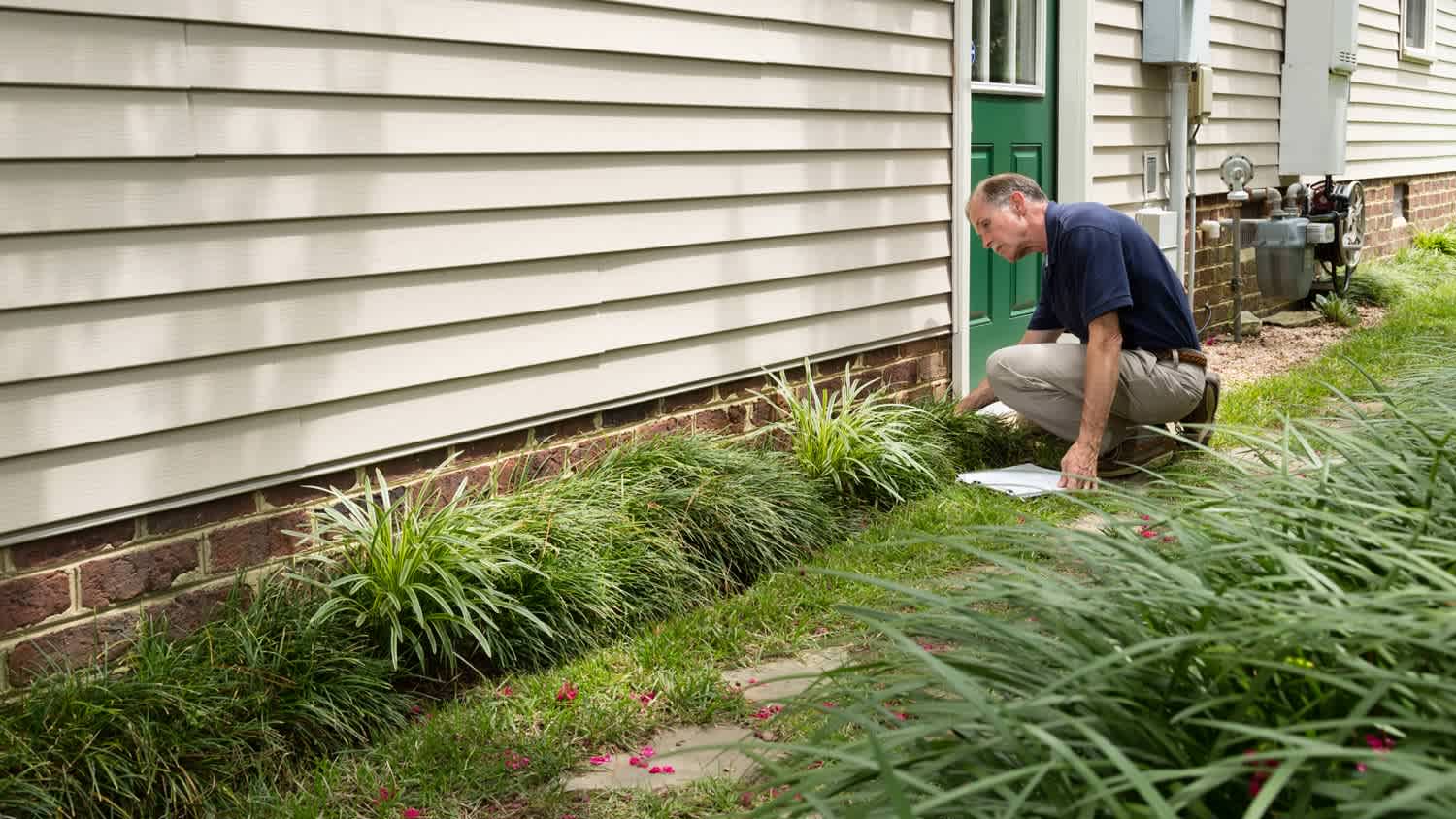
Need foundation repair but not sure if insurance will cover the damage? Learn why it’s complicated and how to know when your foundation repairs are covered.
Learn how to identify a horizontal foundation crack, what to do about them, and who to call for help if you find one in your home's basement or crawlspace.

Not sure if your foundation is damaged or just settling? Learn about foundation problems versus settling and how to tell the difference in this homeowner’s guide.
Can tree roots damage a foundation? Learn what kind of problems tree roots can cause and the best way to prevent and repair foundation damage.

A bowing foundation wall can quickly become a major structural problem for your home. Learn why your wall is bowing and what you can do to fix it.