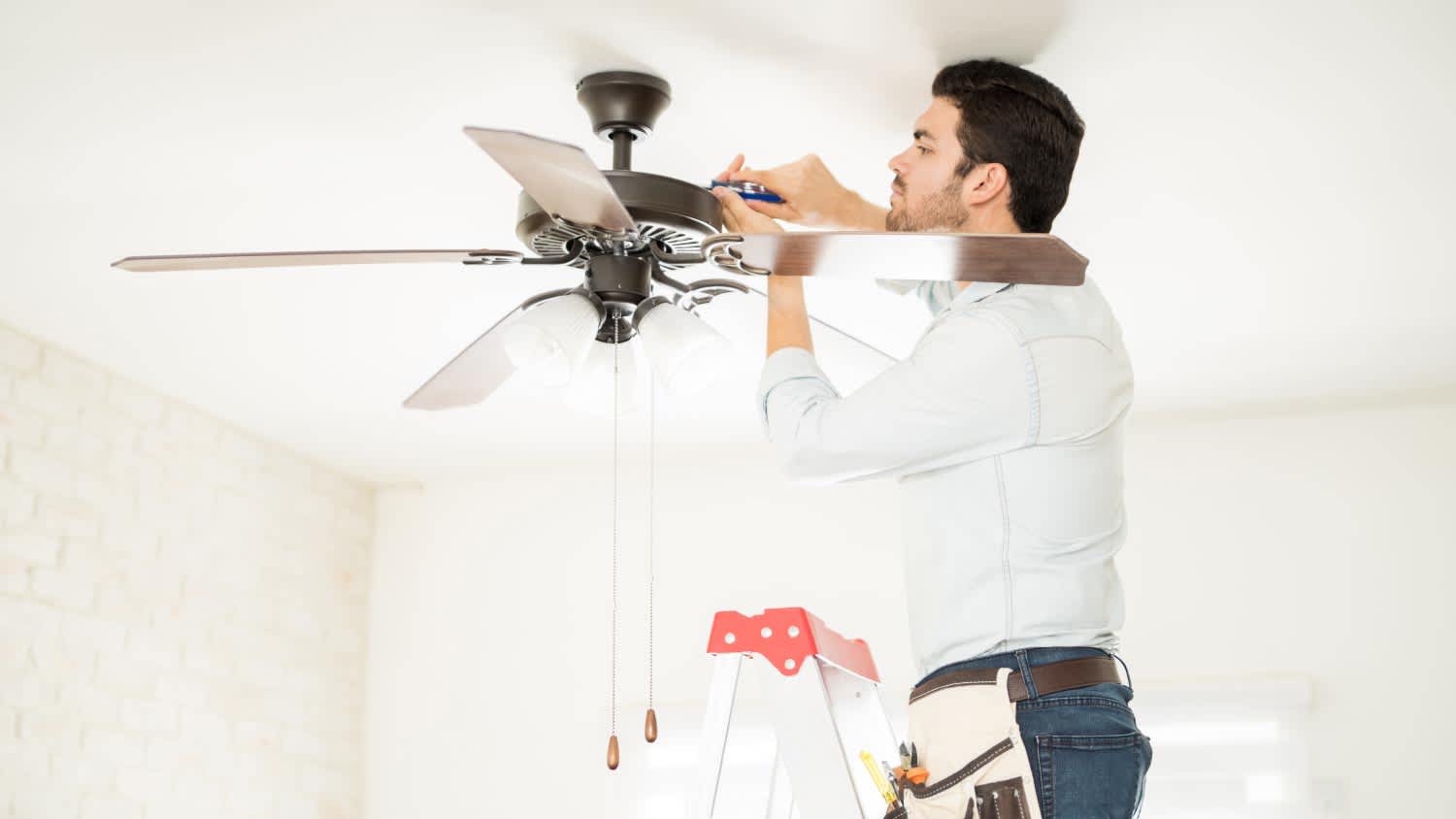






Top-rated ceiling fan pros.

Get matched with top ceiling fan pros in Holcombe, WI

Enter your zip and get matched with up to 5 pros

Need a pro for your ceiling fan service project in Holcombe, WI?

Select your specific project to find the pro for you.

Find Ceiling fan pros in Holcombe

Avatar for Nelson Home Repair LLC
Nelson Home Repair LLC
4.8(
18
)
Ceiling Fan - Repair

Serving Holcombe, WI and surrounding areas

Approved

In business since 2009

Free estimates

Emergency services offered

With 12 years of experience serving Chippwea Falls, and surrounding area, Nelson Home Repair is your solution for all your home improvement needs. I take great pride in my extreme professionalism, timeliness, and superior customer service on every job. I make sure to develop a lasting relationship, so that the next time service is needed, there will be no question on who to call. Satisfaction guaranteed!

Before
After
Before
After
Response time3 hrs
Response rate93%
Recommended by64%of homeowners

Avatar for American Home Shield – Home Warranty
American Home Shield – Home Warranty
3.5(
5,688
)
Ceiling Fan - InstallCeiling Fan - Repair

Serving Holcombe, WI and surrounding areas

In business since 1971

Credit card accepted

"I love American Shield.  I love American Shield.  I love them. We have 2 homes; this home is 30 years old, our home in California is twenty years old and we have used them in both places.
A, number 1, plus, plus!"
Additional Photos
Additional Photos
Additional Photos
Additional Photos
Additional Photos

+2

Recommended by65%of homeowners
Ceiling Fans questions, answered by experts

The direction your ceiling fan spins helps create comfortable airflow in your home and can also help cut down on energy costs. 

During summer, your ceiling fan should spin counterclockwise. This will push cooler air downward in a column and help lower your room’s air temperature. In the winter, set your ceiling fan to spin clockwise and at the lowest speed setting. This will pull cool air upwards, displacing the warm air that pools towards the top of your ceiling and bringing it down towards the floor.

Many ceiling fan-rated electrical boxes tend to be made of metal. However, some electrical boxes may also be made of heavy-duty plastic that is reinforced with metal support structures. It may also have an attachment that connects directly to a ceiling joist. If you are ever ensure, consult with a licensed professional to get their insight on best practices and whether the installation is a safe one.

If you’re removing a ceiling fan without visible screws, start by locating the fan canopy—a round cover placed above the fan blades and motor. There should be a thin ring that can be turned counterclockwise to remove the canopy and reveal the screws. After unscrewing the fan, you can disconnect the wires and remove the entire fan from the mounting hardware. For safety, make sure the fan switch is turned off before you remove the canopy. It may be easier to remove the fan blades first, too.

Though possible, installing a ceiling fan yourself requires electrical knowledge and confidence working with home wiring. Following the manufacturer's instructions carefully and observing safety precautions are crucial components of a DIY installation.

Many ceiling fan mounts feature a design that can accommodate slight slopes by using a ball joint mechanism at the end of the downrod. If your ceiling has a steeper slope than your fan allows for, you can install a downrod that will allow your fan to safely hang below the slope.

The Holcombe, WI homeowners’ guide to ceiling fan services

From average costs to expert advice, get all the answers you need to get your job done.