






Top-rated bird control service pros.

Get matched with top bird control service pros in George, WA

Enter your zip and get matched with up to 5 pros

Need a pro for your bird control service project in George, WA?

Select your specific project to find the pro for you.

Find Bird control service pros in George

Wayland Pest Control LLC
New to Angi
Pest Control - Birds and BatsPest Control - Birds and Bats - For Business

Serving George, WA and surrounding areas

In business since 2021

Free estimates

Offers commercial services

We pride our company in performing high quality work and always use the highest quality of materials. At Wayland Pest Control, we service the greater Chelan County area, for all sorts of pest control and Handyman services. We know the anthropology of how bugs work, allowing us to provide effective long term service. We use higher quality products to ensure client satisfaction. Give us a call today at 509-699-5604 We look forward to working with you!

Give us a call today at 509-699-5604
Avatar for True North Pest Defense
True North Pest Defense
New to Angi
Pest Control - Birds and BatsPest Control - Birds and Bats - For Business

Serving George, WA and surrounding areas

Free estimates

Emergency services offered

Warranties offered

As a solo-operated business, there's no call center, no hand-off, and no runaround — when you call, you're talking to the person doing the work. If something's not right, I make it right, personally. That's not a policy. It's just how I do business.\n\nTo ensure complete peace of mind, services are fully backed by comprehensive general liability insurance and a straightforward service guarantee. Treatments begin with a thorough inspection to identify and treat the root cause to target current pests and prevent future outbreaks. If pests return between scheduled maintenance visits, True North returns to address the issue at no additional charge.

Bird Control questions, answered by experts

When woodpeckers start banging on your walls or roof, they are probably looking for insects to eat, storing nuts for winter, drilling a hole to make a nest, or communicating with other birds to establish territory or find a mate.

The size of the hole can help determine the reason for the pecking. Small irregular holes are a result of insect hunts. Acorn holes are more consistently sized and often fitted with a nut in the middle. Nest holes are large and have rounded edges. If the bird is pecking to mark its territory or attract a mate, it may leave dents rather than holes, and the noise will stop when the mating season starts in spring.

DIY animal removal is rarely a good idea and is not advised for many reasons. First, these types of animals can carry diseases and, therefore, pose a health risk to you, your family, and your pets if mishandled. Second, depending on your city or municipality, it may be illegal to remove or handle wildlife yourself. 

Sealing your home against these animals yourself is also a bad idea. Trapping an animal under your house will cause odor and insect problems when it passes away. 

Strong scents like peppermint, rosemary, lavender, citronella, and others can repel woodpeckers—as pungent smells can overpower their senses. For that reason, you might consider making a homemade spray with one or a combination of these scents to spritz around areas of your home where woodpeckers frequent.

No, you shouldn’t have to worry about bats in your yard as long as they don’t make their way inside your house. Typically, bats hang around backyards in order to consume bugs, especially if they’re located in the U.S. Bats that are native to North America can consume more than 500 bugs per hour, so they may actually benefit your yard if mosquitoes are prevalent.

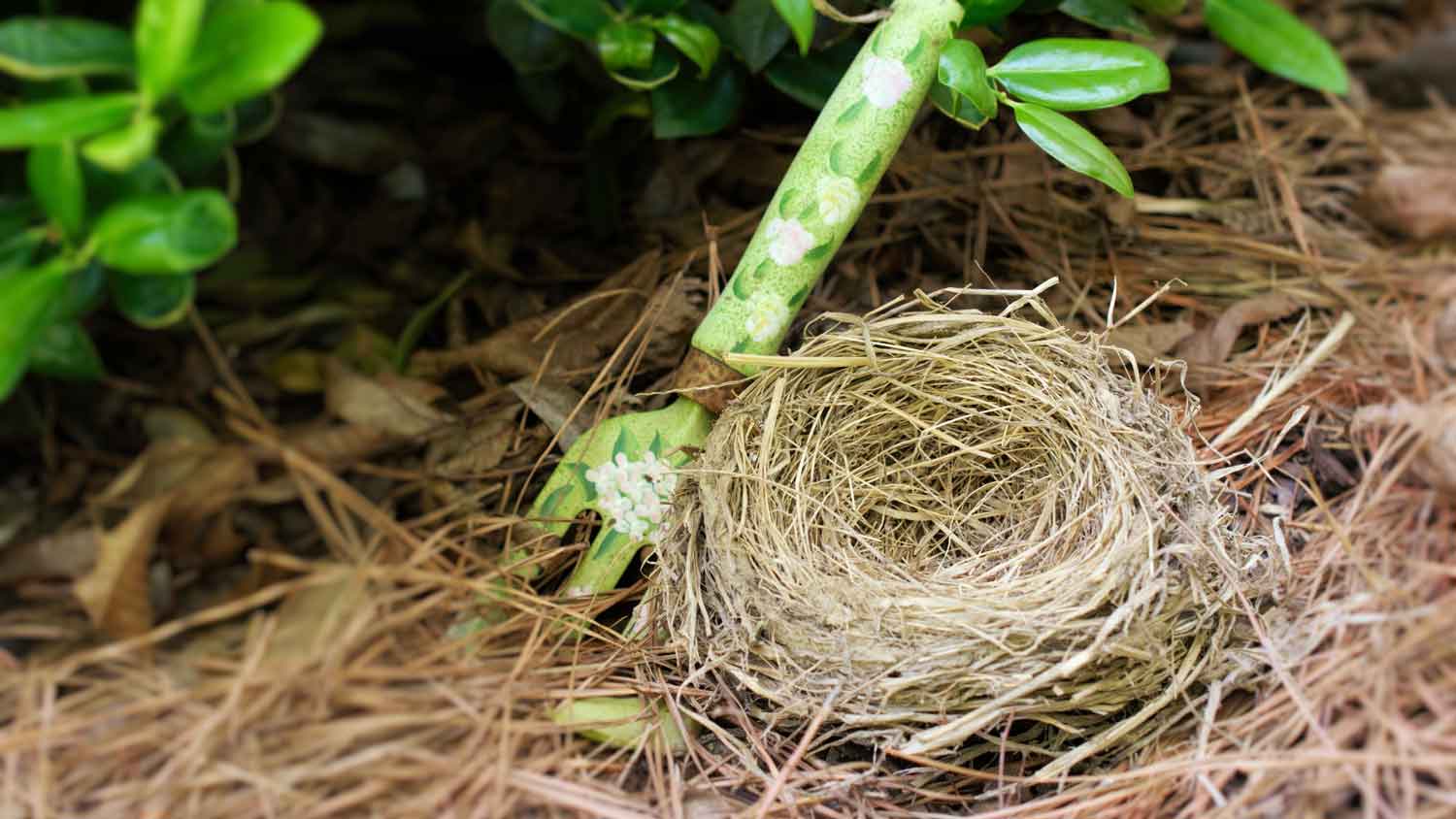
The lifespan of a bird's nest depends on the species. The building process can take from two days to three weeks. Once built, the nesting period for baby birds can last from two to ten weeks before they leave the nest. While most young birds are ready in two to six weeks, some predatory species may need up to two and a half months. Some species nest four to five times per year, so a nest could remain in use for several months. For specific information about a particular nest's longevity, it is best to consult a wildlife professional.

The George, WA homeowners’ guide to bird control services

From average costs to expert advice, get all the answers you need to get your job done.