



Top-rated excavation pros.

Get matched with top excavation pros in Derby Line, VT

Enter your zip and get matched with up to 5 pros

Need a pro for your excavation project in Derby Line, VT?

Select your specific project to find the pro for you.

Find Excavation pros in Derby Line

Avatar for P H Landscapes and Construction
P H Landscapes and Construction
5.0(
2
)
Building Site - Preparation and ClearingExcavation - Major Grading or ReslopingBuilding Site - Preparation and Clearing - For Business+2 more

Serving Derby Line, VT and surrounding areas

Approved

In business since 1997

Free estimates

Credit card accepted

We pride our company on reliability, great communication, integrity, and quality work. We are experts in our trade and will do our best to keep you as educated as we can on your particular task or project. We look forward to earning your business!\n

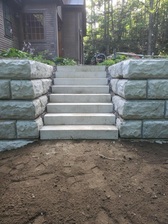
Retaining Walls
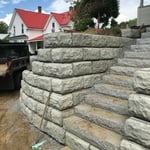
Retaining Walls
Retaining Walls
Retaining Walls
Retaining Walls

+28

Response time3 days
13 neighbors recently requested a quote
Recommended by100%of homeowners

C&L Cass Construction
2.8(
2
)
Building Site - Preparation and ClearingExcavation - Major Grading or Resloping

Serving Derby Line, VT and surrounding areas

Approved

Small jobs welcome

Offers commercial services

Customers say: Quick response

"Chris worked with my schedule to get a foundation in and also fixed up my driveways, made great suggestions. He showed up and completed the work exactly as he promised and kept the site tidy all through the project. A pleasure to work with!"
8 neighbors recently requested a quote
Recommended by100%of homeowners

Liberty Landscaping
New to Angi
Landscape - Minor Grading or Resloping

Serving Derby Line, VT and surrounding areas

Approved

In business since 2023

Free estimates

Small jobs welcome

Liberty landscaping is committed to excellence in every aspect of our business. We uphold a standard of integrity bound by fairness, honesty and personal responsibility. Our distinction is the quality of service we bring to our customers. Accurate knowledge of our trade combined with ability is what makes us true professionals. Above all, we are watchful of our customers interests, and make their concerns the basis of our business.

1 neighbors recently requested a quote
Showing 1-10 of 42
Excavating questions, answered by experts

We recommend removing the stump, and grinding is a popular way to do it. You can also dig out small stumps or stumps that have fully decayed instead of grinding them. However, don’t try using acids or fire for killing a tree stump, which is a fire hazard and illegal in many areas.

Leaving the stump alone invites eventual problems, including attracting termites, mold, and fungi.

As a general rule, the protected area should be about 1½ times as wide as the canopy of the tree’s leaves. This digging measurement can vary by tree species and the age of the tree. Of course, that can be a lot of fencing for larger trees, which is why our first step is about making difficult decisions on which trees to save.

The best method for digging a trench depends on the scope of the project. For a short, shallow trench (less than 2 feet deep) in light, soft soil, digging by hand may be sufficient. However, digging by hand is labor-intensive, so consider the effort required. A machine trencher is the better option for longer trenches (over 100 feet), deeper ones, or when dealing with difficult soil conditions, such as rocky or hard ground, or obstructions like tree roots. A machine can save significant time and energy in these situations.

Most residential basements are 8 to 10 feet deep. You can dig deeper depending on building codes, but it does become more difficult. You’ll likely need to install stronger foundation walls and additional supports to handle the increased load. Depending on the water table, you may also need a water management system. Clay soil can support a deeper foundation than sandy soil. A structural engineer will be able to tell you the maximum, feasible depth.

A trench that is less than 5 feet deep often doesn't require a protective system. Most residential trenches will not go this deep (the typical residential drainage trench is just 18 inches deep). In the event that an excavator needs to dig more than 5 feet beneath the surface, a protective system is required unless the excavation is in entirely stable rock.

The Derby Line, VT homeowners’ guide to excavation services

From average costs to expert advice, get all the answers you need to get your job done.