
Top-rated excavation pros.

Get matched with top excavation pros in Barre, VT

Enter your zip and get matched with up to 5 pros

Need a pro for your excavation project in Barre, VT?

Select your specific project to find the pro for you.

TRUSTED BY BARRE, VT HOMEOWNERS

  • Average homeowner rating star icon5
    Average homeowner rating
  • Verified reviews icon13
    Verified excavation services reviews

Find Excavation pros in Barre

Avatar for Isaacs Excavating and Construction
Isaacs Excavating and Construction
5.0(
2
)
Excavation - Major Grading or ReslopingBuilding Site - Preparation and ClearingBuilding Site - Preparation and Clearing - For Business+2 more

Serving Barre, VT and surrounding areas

Approved

In business since 2022

Free estimates

Emergency services offered

"On time, on budget, competent, well equipped, and easy to work with. What's not to like? Bent over backwards to accommodate my unconventional requests with no apparent effort. The guy's a veritable microsurgeon with an excavator. Highly recommend!"
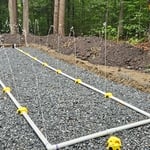
distribution mound
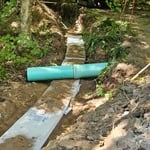
force main pipe
concrete footing
camp footing
camp upgrade

+20

5 neighbors recently requested a quote
Recommended by50%of homeowners

Avatar for Insulation By Foam Pro, Inc
Insulation By Foam Pro, Inc
3.6(
8
)
Excavation - Major Grading or Resloping

Serving Barre, VT and surrounding areas

Approved

In business since 2004

Free estimates

Customers say: Quick response

"We needed the crawlspace under a section of our house insulated and Nate got the job done. He was very informative, thorough and fast. What a difference it made in that section of the house. I wouldn’t hesitate to use Nate again!"
Response time2 days
5 neighbors recently requested a quote
Recommended by33%of homeowners
C&L Cass Construction
2.8(
2
)
Building Site - Preparation and ClearingExcavation - Major Grading or Resloping

Serving Barre, VT and surrounding areas

Approved

Small jobs welcome

Offers commercial services

Customers say: Quick response

"Chris worked with my schedule to get a foundation in and also fixed up my driveways, made great suggestions. He showed up and completed the work exactly as he promised and kept the site tidy all through the project. A pleasure to work with!"
9 neighbors recently requested a quote
Recommended by100%of homeowners
...
Showing 1-10 of 79
Excavating questions, answered by experts

Most residential basements are 8 to 10 feet deep. You can dig deeper depending on building codes, but it does become more difficult. You’ll likely need to install stronger foundation walls and additional supports to handle the increased load. Depending on the water table, you may also need a water management system. Clay soil can support a deeper foundation than sandy soil. A structural engineer will be able to tell you the maximum, feasible depth.

The rules and regulations regarding groundwater use vary between states. To find out if you can dig a well on your property, you’ll have to consult these regulations, address any compliance requirements, and get the appropriate permits. It’s also important to check that your intended location has the right geology and water table to support a well.

A walk-behind trencher can cut through roots as long as they’re not too thick, making a project much easier than digging with a shovel and other hand tools. Assess your terrain and the number of trees in the surrounding area to determine if a walk-behind trencher will ease the job. Digging a trench by hand is much more time-consuming and labor-intensive. 

The best way to protect tree roots is to avoid the roots entirely by excavating outside the root radius of the tree. For nearby projects, it’s a good idea to construct a temporary retaining wall. But that’s not always possible, depending on the project and the root system. In these cases, consider using alternative equipment like an auger to tunnel under the ground.

Remember, tree roots can damage nearby cement foundations as they grow. If a tree is close enough to interfere with large excavations, it may be better to remove the tree than risk future problems.

Sewer lines can be buried anywhere from 18 inches to 8 feet deep, with a common average depth between 18 and 30 inches. The exact depth depends on local factors like climate and soil type. In colder regions, pipes must be buried deeper (below the frost line) to prevent freezing, sometimes as deep as 8 feet. The digging depth can also impact the cost of sewer line replacement. To find the specific depth for your property, you can check the building plans for your system, which should be on file with your city or local sanitation department since permits are required for installation.

The Barre, VT homeowners’ guide to excavation services

From average costs to expert advice, get all the answers you need to get your job done.