At Bulldog Electric, we take great pride in our experience, expertise, quality and customer service that we provide to meet the consumers needs. It is our mission to provide excellent workmanship and complete customer satisfaction from start to completion of a project. Call us today!
"Kenny Ferguson is very responsive to customer requests. He communicates well to the customer and to his men. Fernado and Mike were very careful in their work and aimed to please the customer. The lights and painted ceiling looked great. They were very pleasant and yet professional in their attitude and work. They cleaned up everything when they were done. I have another job waiting for Kenny and his team to install an attic fan. I have confidence that they will do good work as they have done in the past. "
"Cougar Development did an excellent job creating a living space out of an addition to a home built in 1918. The drywall work was excellent as was the placing of needed electrical outlets and ceiling fan/lighting. Closet space is extremely hard to come by in our neighborhood and Cougar was able to build a 30 sq ft closet that our growing family is able to take advantage of. This room was just a storage space and is now a usable living area after Cougar was done with it. The quality of work for the price I paid was amazing! I have already recommended Cougar to those in my neighborhood and will continue to do so!"
"The furnace took 4 days to get approved( not counting a Sunday) the others were quick but the water heater had to be ordered so without hot water for a week. One ceiling fan was easy but within a year their policy changed and They would not install the one I purchased and had to get a new one approved and then ordered online and took several weeks to get straightened out. Not sure who was at fault, AHS, installer or scheduling with renter. Fee is usually $75 per visit"
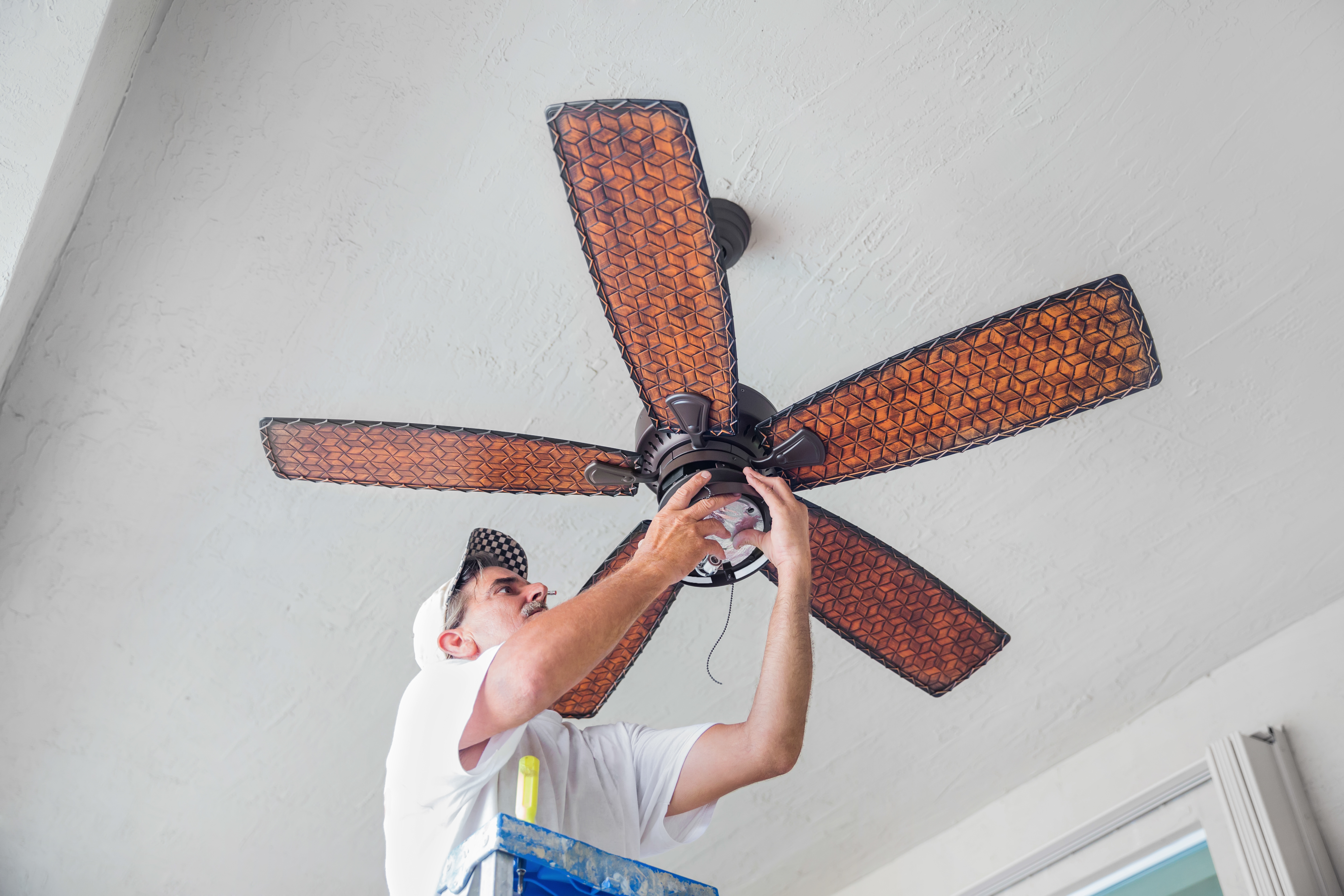
A typical fan installation takes between two and six hours. The exact timeframe can be influenced by factors such as the home's structure, existing electrical characteristics, ease of attic access, and whether complex wiring or additional attic ventilation work is required.
The square footage of your room will dictate the correct ceiling fan blade size. For example:
Rooms smaller than 75 square feet require a fan that is 29 to 36 inches.
Rooms up to 175 square feet require 42- to 48-inch fans.
Rooms up to 350 square feet require 52- to 56-inch fans.
Expansive spaces over 350 square feet need a fan larger than 60 inches.
There’s no reason why you can’t install a ceiling fan anywhere in your home, such as in living rooms, offices, bedrooms, and dining areas. Most bathrooms already have ventilation and don’t need a ceiling fan. For safety purposes, avoid installing a ceiling fan where the blades will be less than eight feet from the floor, near bunk beds, or anywhere else they may hit nearby objects.
Identifying the source of noises is your first step to soundproofing a room without overspending. Generally, sound comes from inside or outside of the house. Inside noises include creaking floors, living noises like TVs in the living room, cooking sounds, or kids being kids. External noises generally include incremental weather, disturbing neighbors, and street traffic. Inside noises require you to soundproof floors, ceilings, and doors, whereas outside noises may require you to soundproof your attic, windows, and walls facing the streets.
In short, no. You can use the square footage range chart in this article to determine the right size ceiling fan for both indoor and outdoor spaces. However, weather elements can damage types of ceiling fans that aren't designed for outdoor use, so your ceiling fan should be weather-resistant if you plan to install it outside.
The Vansant, VA homeowners’ guide to ceiling fan services
From average costs to expert advice, get all the answers you need to get your job done.
Discover the cost to install a ceiling fan, including labor, materials, and tips to save. Learn what impacts your price and how to budget for your project.
Ceiling fans cool down your home while stylishly accenting your space. With a variety of types of ceiling fan on the market to choose from, you can’t go wrong.
Although the risk is low, there are a few telltale signs that a ceiling fan will fall off your ceiling. This guide explains when to worry (and when not to).