"Ian was great to work with. We had a problem with our lights from shoddy construction (DR Horton built our home), and Ian came to help us diagnose the issue. He was very thorough."
At Sparky S Electric, we take great pride in our experience, expertise, quality and customer service that we provide to meet the consumer's needs. It is our mission to provide excellent workmanship and complete customer satisfaction from start to completion of a project. In order to understand the needs and expectations of our customers, we take great care to work and communicate with every customer in a professional manner. Our reputation is based on service, safety and quality, regardless of how large or small the job.
"they made one awesome family room. I never had such a great time with a company before. they really take care if a customer and knows how to make a house a home."
At Virgil Morgan we pride our company on reliability, great communication, integrity, and quality work. We are experts in our trade and will do our best to keep you as educated as we can on your particular task or project. We look forward to earning your business!
With proper maintenance, a whole-house generator can last between 20 and 40 years. The specific lifespan depends on how often and for how long the generator is used, and some models may have their life expectancy rated in hours of operation. To maximize its lifespan, expect to spend around $150 to $300 per year for annual maintenance checks from a qualified technician. During these checks, a technician will inspect the engine filter, starting mechanism, fuel, lubrication, and coolant levels. Consulting your installer and choosing a low-impact fuel like natural gas or diesel can also help ensure your generator lasts as long as possible.
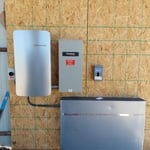
Generally, you’ll want to keep between 60 and 70 feet between the generator and the transfer switch. There are a few reasons for this, including:
The distance reduces the noise coming from the generator into your home.
It increases efficiency because you won’t have a voltage drop from this short of a distance.
Prevents carbon monoxide poisoning: keep at least 15 feet between your generator and an open window.
Portable generators provide backup power for essential appliances during outages and are easy to relocate.
In many cases, yes. There are models called dual-fuel generators and fuel switches, but only between certain types of fuel. For example, with the right setup you can convert a generator from natural gas to propane. Some allow switching between diesel and gasoline. There are even tri-fuel generators available in some cases, which adds a large layer of security if you are worried about fuel availability in times of crisis. Always check your generator capabilities and manual instructions before trying to switch fuels. Some generators can use another fuel but may need a fuel conversion kit to prep them first.
Homeowners can often access federal tax credits, such as the Investment Tax Credit (ITC), which covers a percentage of installation costs. Many states and utilities offer additional rebates, grants, or performance-based incentives. These programs can significantly lower your upfront investment. Check the Database of State Incentives for Renewables and Efficiency (DSIRE) or contact your local energy office for current offers.
The Halls Crossing, UT homeowners’ guide to generator installs
From average costs to expert advice, get all the answers you need to get your job done.
Natural gas generators are whole-home standby generators that are connected to your home’s natural gas line. The average cost for a natural gas generator is $12,000.
Generators should give you peace of mind, but you’ll only get that if your installer knows what they’re doing. Learn how to hire a pro and what red flags to look for.
Thinking about a generator installation? Learn about backup power options, costs to expect, and how to hire the right local pro to keep your home running.