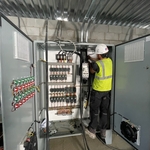
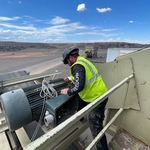
At Sparky S Electric, we take great pride in our experience, expertise, quality and customer service that we provide to meet the consumer's needs. It is our mission to provide excellent workmanship and complete customer satisfaction from start to completion of a project. In order to understand the needs and expectations of our customers, we take great care to work and communicate with every customer in a professional manner. Our reputation is based on service, safety and quality, regardless of how large or small the job.
We take great pride in our experience, expertise, quality, and customer service that we provide to meet the consumer's needs. It is our mission to provide excellent workmanship and complete customer satisfaction from start to completion of a project. In order to understand the needs and expectations of our customers, we take great care to work and communicate with every customer in a professional manner. Our reputation is based on service, safety, and quality, regardless of how large or small the job.
At Virgil Morgan we pride our company on reliability, great communication, integrity, and quality work. We are experts in our trade and will do our best to keep you as educated as we can on your particular task or project. We look forward to earning your business!
Yes, in most municipalities, you will need a permit to install a permanent home generator, including emergency backup, partial-home, and whole-home models. Because these installations involve significant alterations to your home's electrical system and produce exhaust fumes, local governments often require a permit or inspection for safety purposes. A generator permit typically costs between $50 and $250, depending on your location. Your electrician or certified installer can usually handle the permitting process for you, but you will be responsible for the cost. It's a good practice to confirm with your installer that they will pull all necessary permits before work begins.
Generators are usually sized by running watts and starting watts. Ideally, you’ll want a generator that can offer both the necessary running watts and starting watts for everything you need to power without going beyond 90% of its capacity. Calculate your home’s electrical load based on the breakers in your home or adding up the appliance and lighting needs of connected rooms.
To power a central air system during a power outage, the whole-house generator will need to be at least 5,000 watts, and this number will significantly increase for larger units. Check the specific wattage requirements of your AC unit to choose the right generator size. Consider consulting a generator installer to ensure your whole-house generator meets your electrical load needs.
A 10,000-watt generator can run a small to mid-sized central AC unit (typically up to 3 tons or 36,000 BTU) along with a few other appliances. However, larger AC units or additional loads will require a bigger generator. Consult a local generator installer to ensure you add the correct size generator to your home.
Homeowners can often access federal tax credits, such as the Investment Tax Credit (ITC), which covers a percentage of installation costs. Many states and utilities offer additional rebates, grants, or performance-based incentives. These programs can significantly lower your upfront investment. Check the Database of State Incentives for Renewables and Efficiency (DSIRE) or contact your local energy office for current offers.
The Rock Point, AZ homeowners’ guide to generator installs
From average costs to expert advice, get all the answers you need to get your job done.
Natural gas generators are whole-home standby generators that are connected to your home’s natural gas line. The average cost for a natural gas generator is $12,000.
Generators should give you peace of mind, but you’ll only get that if your installer knows what they’re doing. Learn how to hire a pro and what red flags to look for.