



Top-rated deck maintenance specialists.

Get matched with top deck maintenance specialists in Beaver, UT

Enter your zip and get matched with up to 5 pros

Need a pro for your deck maintenance project in Beaver, UT?

Select your specific project to find the pro for you.

Find Deck maintenance specialists in Beaver

Deck Maintenance questions, answered by experts

Ideally, a gate should be able to swing both in and out. However, if it can only open in one direction, it is generally best for it to swing inward. This is often the safest option, especially for deck gates near steps, as you'll want the gate to swing away from the stairs. An inward swing also prevents the gate from opening into a public space, like a sidewalk, and can be more convenient when carrying heavy items like a wheelbarrow into a garden.

There are exceptions, however. The layout of your property may require a different approach. For example, if your property is on a slope, the gate may not be able to swing inward. You should also ensure the gate can open fully without colliding with any objects or blocking access to other areas. For a backyard garden gate where public access isn't a concern, the direction it swings is largely a matter of personal preference. Finally, always check your local building codes, as they may have specific requirements for which way a gate must swing.

To flatten a cupped deck board, start by ensuring it’s dry. Then, try flipping the board over so the cupped side faces down and reattach it. If that’s not possible, you can use screws to pull it tighter to the joists or plane the edges slightly to reduce the cup. It’s best to replace severely cupped boards.

Both composite and PVC decking are excellent alternatives to wood. However, while composite is moderately priced and lasts around 30 years, PVC costs more and lasts longer. PVC is also more durable, though both materials are more durable than wood decking. Ultimately, the choice between composite and PVC decking will come down to your budget and preferences.

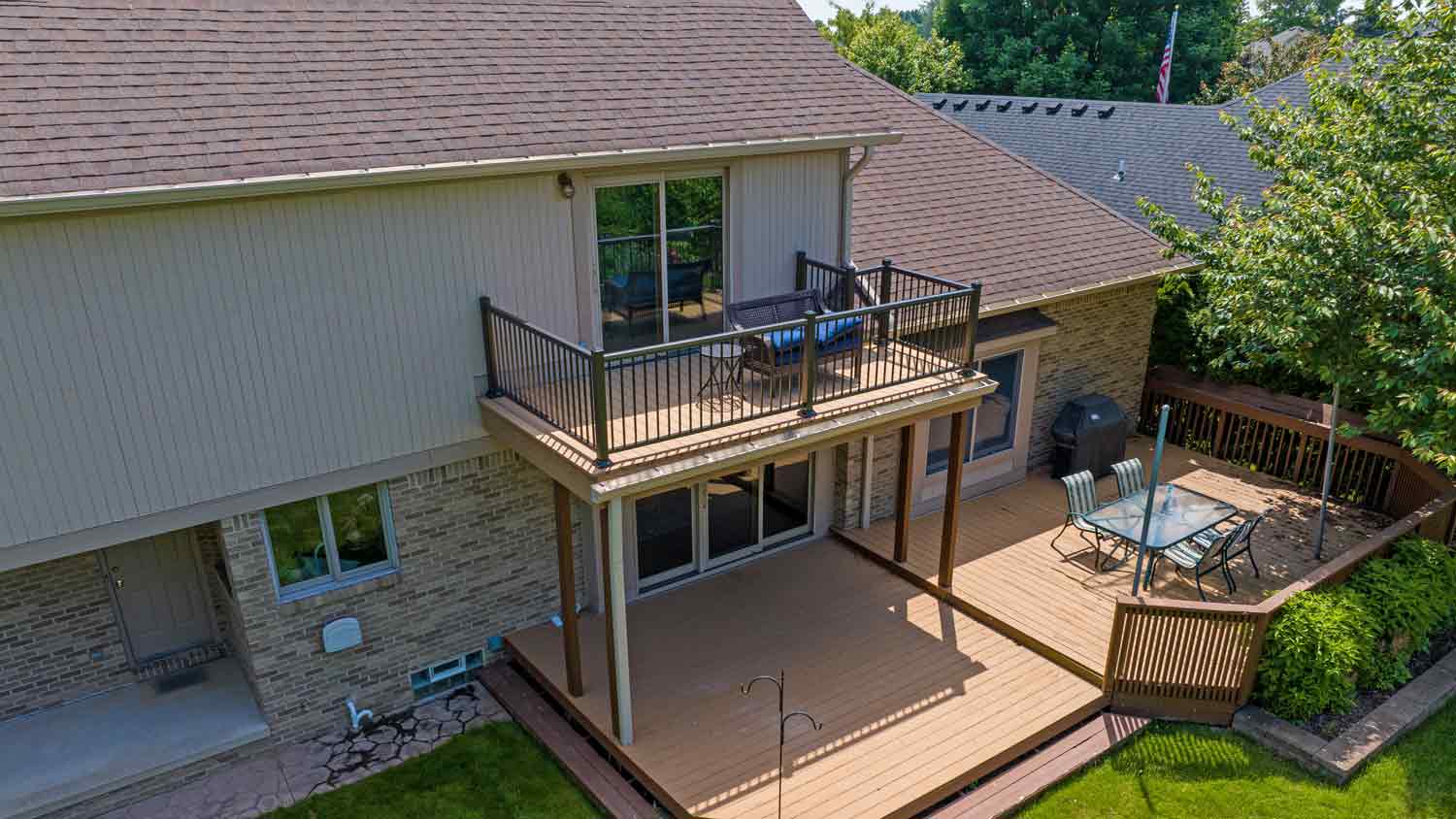
Building codes for deck railings can vary by location, so it's important to consult your local regulations before construction. Generally, a guardrail is required for any deck that is more than 30 inches above the ground.

For residential properties, the standard minimum height for a deck railing is 36 inches. However, some states and municipalities have stricter requirements; for example, California and Washington mandate railings that are at least 42 inches high. Therefore, a 42-inch railing is not considered too high and may be required in your area or chosen voluntarily for additional safety.

In addition to height requirements, codes also specify other safety features, such as the maximum spacing between balusters to ensure they are close enough to prevent a child from squeezing through.

Decks are generally more expensive to build because they require elevating and railings. The difference between decks and patios is that decks are elevated, while patios are usually on the ground level. Plus, decks are usually made of wood and need more maintenance than most patios. However, decks and patios serve the same purpose, providing outdoor space for you to enjoy.

The Beaver, UT homeowners’ guide to deck maintenance services

From average costs to expert advice, get all the answers you need to get your job done.