





Top-rated excavation pros.

Best excavation pros near San Saba, TX

Enter your zip and get matched with up to 5 pros

Need a pro for your excavation project in San Saba, TX?

Select your specific project to find the pro for you.

Top-Rated Excavation pros in San Saba - Updated Nov 2026

Avatar for ESC Services
ESC Services
5.0(
1
)
Landscape - Minor Grading or Resloping

Serving San Saba, TX and surrounding areas

Approved

Free estimates

Emergency services offered

Small jobs welcome

ESC Services is your lifetime property solution partner. We offer a wide range of services for your property from material removal and demolition to land clearing and site prep. We welcome all projects big or small.

7 neighbors recently requested a quote
Avatar for Triple Deuce LLC
Triple Deuce LLC
New to Angi
Building Site - Preparation and ClearingBuilding Site - Preparation and Clearing - For BusinessExcavation - Major Grading or Resloping+1 more

Serving San Saba, TX and surrounding areas

Approved

In business since 2020

Free estimates

Credit card accepted

We take great pride in our experience, expertise, quality, and customer service that we provide to meet the consumer's custom needs. It is our mission to provide excellent workmanship and complete customer satisfaction from start to completion of a project. In order to understand the needs and expectations of our customers, we take great care to work and communicate with every customer in a professional manner. Our reputation is based on service, safety, and quality, regardless of how large or small the job. \n

Pond Build
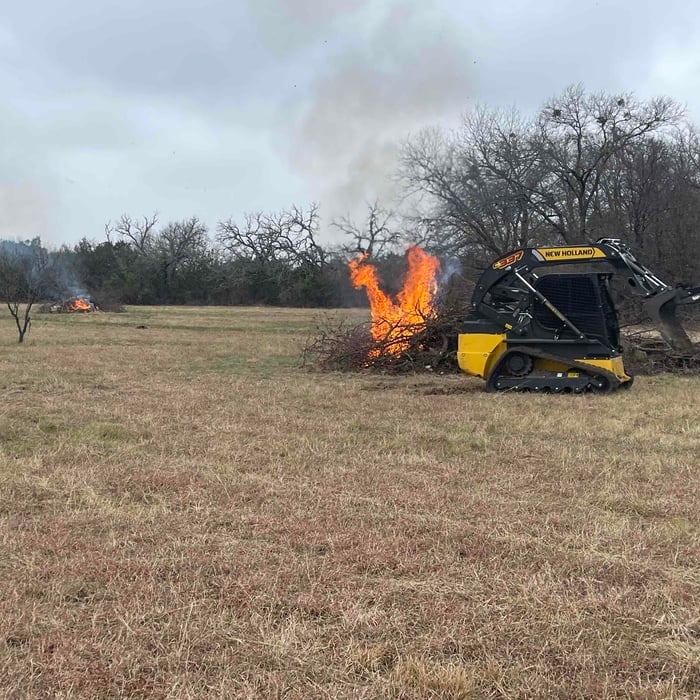
Land Clearing
Land Clearing
Land Clearing
Land Clearing

+1

3As Construction and Septics
New to Angi
Building Site - Preparation and ClearingBuilding Site - Preparation and Clearing - For Business

Serving San Saba, TX and surrounding areas

Approved

In business since 2009

Free estimates

Credit card accepted

We take great pride in our experience, expertise, quality, and customer service that we provide to meet the consumer’s needs. It is our mission to provide excellent workmanship and complete customer satisfaction from start to completion of a project. In order to understand the needs and expectations of our customers, we take great care to work and communicate with every customer in a professional manner. Our reputation is based on service, safety, and quality, regardless of how large or small the job. \n

12 neighbors recently requested a quote
...
Showing 1-10 of 56
Excavating FAQs, answered by experts

As a general rule, the protected area should be about 1½ times as wide as the canopy of the tree’s leaves. This digging measurement can vary by tree species and the age of the tree. Of course, that can be a lot of fencing for larger trees, which is why our first step is about making difficult decisions on which trees to save.

Above ground pools are not buried in the ground. Typically, above ground pools are semi-permanent. One reason they’re more affordable is that you don’t have to dig for an inground pool and pour concrete or another material. However, you can choose to install a semi inground pool, which is a hybrid between the two.

Trenches are typically 12 to 24 inches deep and 8 inches wide. However, the required depth depends on the specific project and local ordinances. For example, a French drain may need to be 18 inches deep, while a water pipe might require a depth of 24 inches and a drainage pipe 36 inches. Your city or county may have specific regulations, so it's wise to consult with an excavation professional to determine the correct depth for your project.

Depth is not a qualifying component of evacuation. Any human-made cut, cavity, or depression in the earth’s surface is considered excavation. The hole from excavation can be any size, shape, or depth. Excavation is used to create foundations, reservoirs, drainage ditches, and roads. Long, narrow excavations are called trenches and are often used for underground utilities.

A trench that is less than 5 feet deep often doesn't require a protective system. Most residential trenches will not go this deep (the typical residential drainage trench is just 18 inches deep). In the event that an excavator needs to dig more than 5 feet beneath the surface, a protective system is required unless the excavation is in entirely stable rock.

The San Saba, TX homeowners’ guide to excavation services

From average costs to expert advice, get all the answers you need to get your job done.