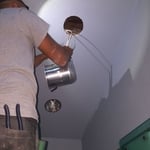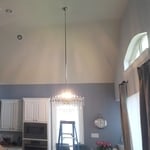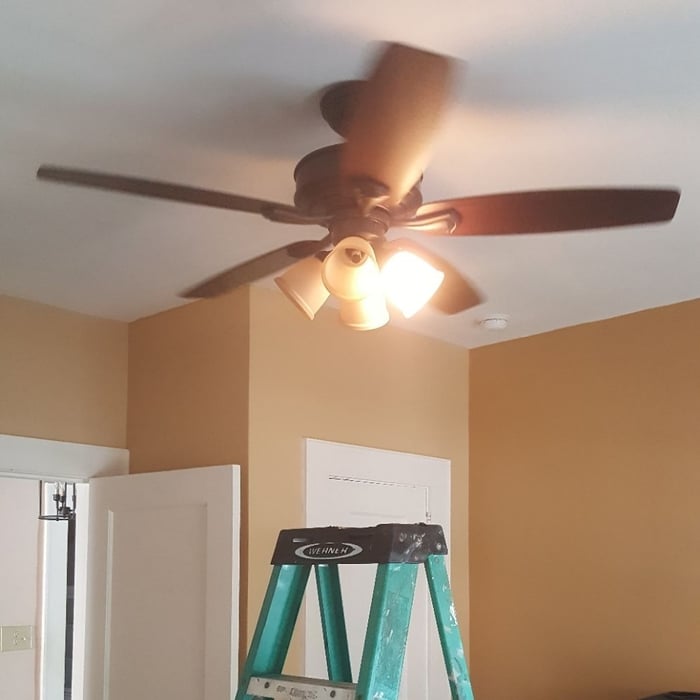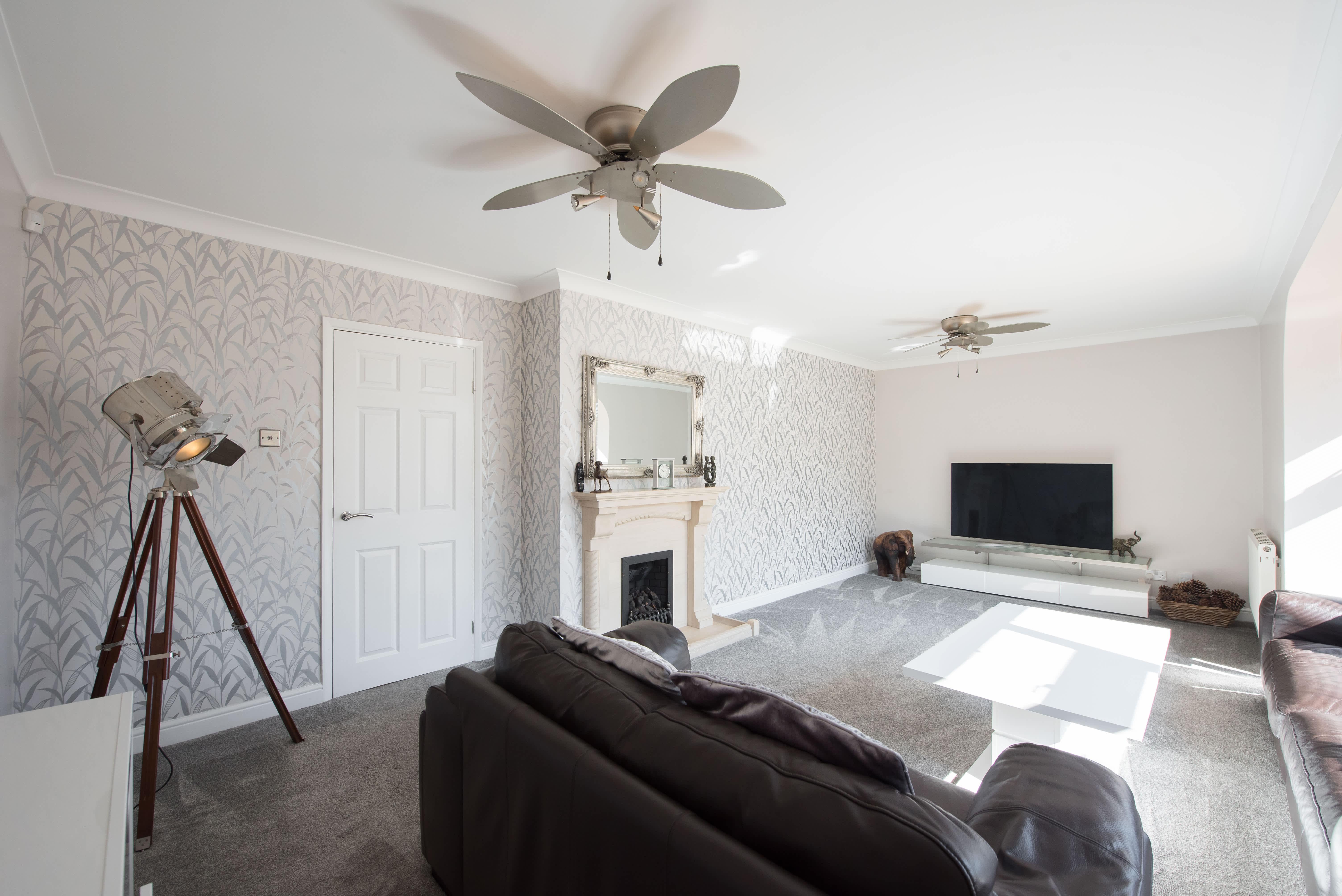
"I needed to see a ceiling fan installed and the floor to ceiling height was 19.5 feet. Kyle is just awesome. He's very thorough and does what he says he will do. He is VERY straightforward. He helps keep the work area clean. He has no problem with DIY. Old man, asking a bunch of questions. He listened, and has no issue with explaining anything. If there's an adjustment to be made, he will make it right. He's more than happy to come back out at no additional cost .Nice that no additional call, and adjust things as needed. You can't go wrong with Jade electric. THEY ARE my electric repair go to."
"It took a while to nail down a date, but once Roger came out to the house, he did a great job. He came out in the morning and got everything on my list completed. He installed recessed lights throughout the house, removed lighting fixtures from two ceiling fans, removed ceiling speakers, installed LED lighting in hall, laundry room, closet and front porch, changed out switches and added dimmers. It was a pleasure working with Roger, and I would definitely use him again. I highly recommend Freedom Electric."
"I engaged McBride to install two ceiling fans at my house. The installer, Justin, did an excellent job on both and I'm very pleased with Justin and the work he did for me. For my next electrical project I will be calling McBride."
"Their services were priced average. On the whole, HR Phoenix did a good job in replacing my bathroom fan. They were prompt and professional the entire time, explaining everything they did in detail without resorting to jargon. I’d hire them again."
"Got the ceiling fans installed quickly. Hayden installed two fans in two rooms and showed us how the remote works. Very speedy and respectful. Love the installed fans."
Ramiro Delacruz Jr is committed to excellence in every aspect of our business. We uphold a standard of integrity bound by fairness, honesty, and personal responsibility. Our distinction is the quality of service we bring to our customers. Accurate knowledge of our trade combined with ability is what makes us true professionals. Above all, we are watchful of our customers' interests, and make their concerns the basis of our business.


Here at Max Air & Plumbing, we're excited to earn your business! Locally owned and operated, we're known in the area for our prompt service and attention to detail. Customer satisfaction is always our primary concern, so be sure to give us a call today!
Straight Up Electrical, prides itself on giving every possible solution to a problem, we take pride in our work and use flat rate prices so we can slow down and take our time to make sure all work is done right, with almost 2 decades of experience no job is too big or small.
Stainless steel or aluminum fans are long-lasting and have less air resistance. They are best for outdoor use as their durability helps them withstand unpleasant weather conditions. Their heavy weight requires a stronger motor, which leads to more noise than other blade materials.
Wooden fan blades are a classic, durable option. They are much quieter than metal fans and feature a wide range of styles and finishes to choose from. However, they can be damaged by moisture if not covered with plastic.
Plastic fan blades are lightweight, easy to clean, and versatile. There are various shapes and styles to choose from as plastic is easily molded and dyed. They will also deteriorate slower than other materials as they aren’t as susceptible to humidity and moisture.
Fan power is measured by CFM, or cubic feet per minute. For every 1,000 feet of square footage in your attic, you need a minimum of 700 CFM. Steeper roofs may need larger fans or about 840 CFM. You can figure the size of attic fan you need by multiplying the square footage of your attic floor by 0.7. (multiply by 1.2 for a steep roof and 1.15 for a dark roof). That number is the CFM required for your fan to run efficiently.
Generally, a ceiling fan should be mounted at least seven feet from the floor in the center of your room with a wall clearance of around 18 inches. If your ceiling is more than eight feet high, it’s recommended by experts that the ceiling fan be mounted around eight to nine feet from the ground. This helps ensure a better quality of circulated airflow.
Hiring an electrician to install a new ceiling fan may be the best course of action. Installing a ceiling fan requires basic electrical and mechanical knowledge. It also requires holding it up with one hand and in an awkward position, making the installation even more difficult. If you’re uncomfortable with these circumstances, your best bet is to hire a professional.
Whether you can install a ceiling fan yourself depends on if you're replacing an existing fixture or installing one where no wiring exists. If you are replacing an existing fan, an experienced DIYer may be able to do the job, which can save on labor costs. This work typically doesn’t require a permit, but there’s always a safety risk when dealing with electrical components, so hiring a pro is still a good idea, especially if you aren't handy. Keep in mind you may need a special ladder for high or vaulted ceilings. However, if you are installing a new ceiling fan where there is no current fixture, you must hire a licensed electrician. In most areas, it is required by law that a professional runs new wiring and pulls the necessary permits. Attempting to install wiring yourself can be dangerous and a code violation.
The Keller, TX homeowners’ guide to ceiling fan services
From average costs to expert advice, get all the answers you need to get your job done.
Find out the average cost to install a ceiling fan in Dallas, TX. Learn what you can expect to pay for local ceiling fan installation and get free estimates.
Discover the cost to install a ceiling fan, including labor, materials, and tips to save. Learn what impacts your price and how to budget for your project.
Ceiling fans cool down your home while stylishly accenting your space. With a variety of types of ceiling fan on the market to choose from, you can’t go wrong.
Although the risk is low, there are a few telltale signs that a ceiling fan will fall off your ceiling. This guide explains when to worry (and when not to).