




Top-rated bird control service pros.

Best bird control service pros near Falfurrias, TX

Enter your zip and get matched with up to 5 pros

Need a pro for your bird control service project in Falfurrias, TX?

Select your specific project to find the pro for you.

Top-Rated Bird control service pros in Falfurrias - Updated Nov 2026

Alpha Pest Control, LLC
New to Angi
Pest Control - Birds and BatsPest Control - Birds and Bats - For Business

Serving Falfurrias, TX and surrounding areas

In business since 2021

Free estimates

Credit card accepted

Family Owned and Operated \n \nAlpha Pest Control LLC is committed to excellence in every aspect of our business. We uphold a standard of integrity bound by fairness, honesty, and personal responsibility. Our distinction is the quality of service we bring to our customers. Accurate knowledge of our trade combined with ability is what makes us true professionals. Above all, we are watchful of our customers interests and make their concerns the basis of our business. \n \n \nwww.facebook.com/alphapcllc

Bird Control FAQs, answered by experts

The cost of pest control services depends on various factors, but the average homeowner pays around $175, with a typical range of $100 to $500. Your final cost will be influenced by the type of pest, the size and severity of the infestation, and the number of treatments needed.

Service costs also vary by frequency:

  • One-time service: $300–$550

  • Initial visit for ongoing service: $150–$300

  • Monthly visits: $40–$70

  • Quarterly visits: $100–$300

  • Annual visits: $300–$550

For specific pest examples, getting rid of spiders typically costs between $100 and $300, whereas a termite infestation can cost from $230 to $2,500 or more, depending on the extent of the damage.

Depending on the size of your home and accessibility, expect professional pest inspections to take between 30 and 60 minutes. If you have a large property or limited accessibility, pest inspections may take longer. 

When woodpeckers start banging on your walls or roof, they are probably looking for insects to eat, storing nuts for winter, drilling a hole to make a nest, or communicating with other birds to establish territory or find a mate.

The size of the hole can help determine the reason for the pecking. Small irregular holes are a result of insect hunts. Acorn holes are more consistently sized and often fitted with a nut in the middle. Nest holes are large and have rounded edges. If the bird is pecking to mark its territory or attract a mate, it may leave dents rather than holes, and the noise will stop when the mating season starts in spring.

Numerous predators kill hornets, including frogs, birds, lizards, bats, spiders, and hedgehogs. Some larger predators, including rats, skunks, and racoons, will occasionally attack a hornet nest in order to eat the larvae inside. These natural predators typically don’t eat enough hornets to make them an effective form of hornet control. 

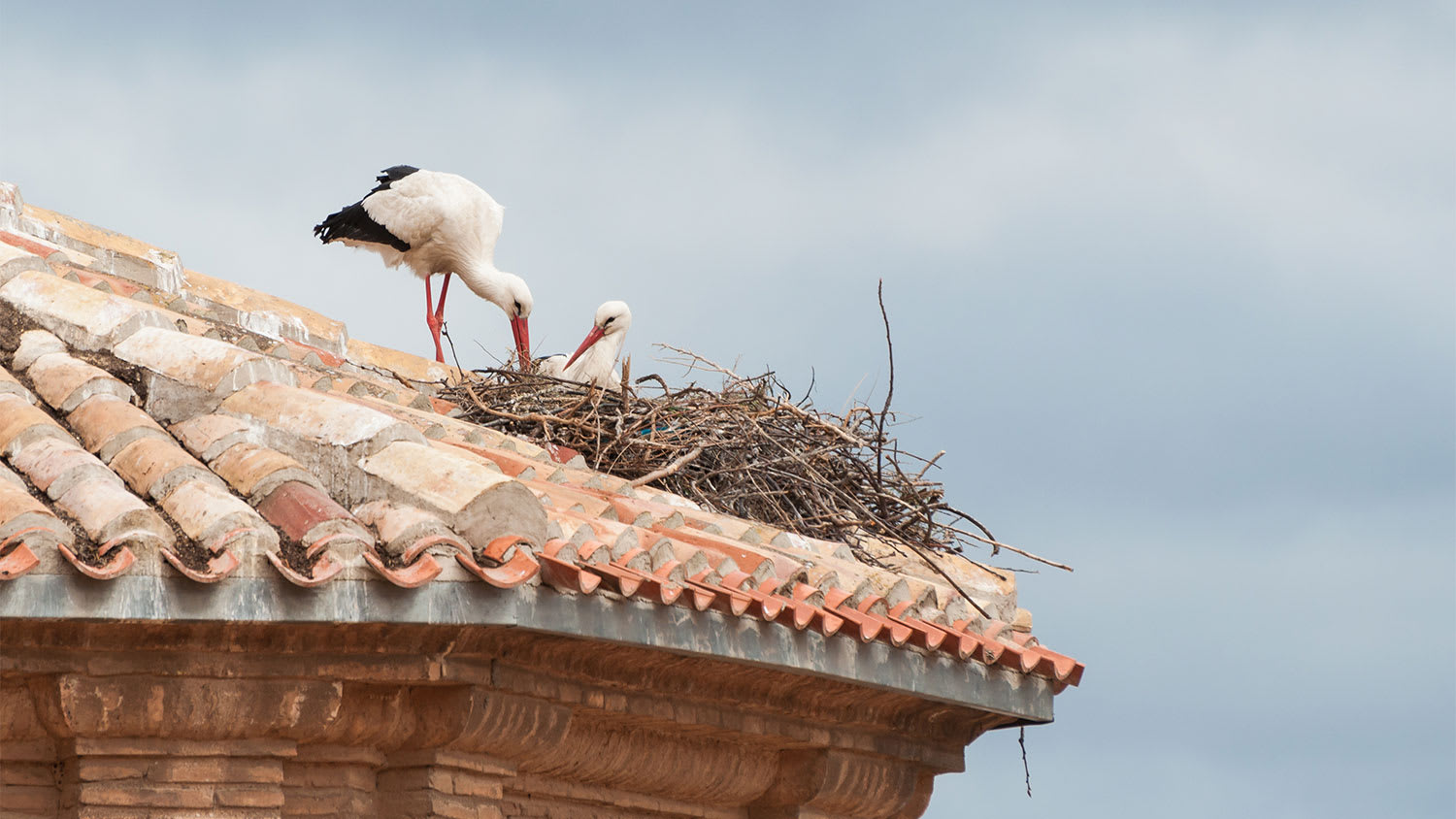
Both spikes and loose nets can be installed over nest sites to prevent the bird from returning, but nets are not a humane option since birds and other wildlife can get tangled in them. 

Spikes are a humane alternative that deter nesting without harming the birds. In small areas, like vents, a very fine mesh net can be installed to prevent the bird from returning. These nets don't generally pose a risk to the birds.

The Falfurrias, TX homeowners’ guide to bird control services

From average costs to expert advice, get all the answers you need to get your job done.