




Top-rated lawn care providers.

Best lawn care providers near Bellview, TX

Enter your zip and get matched with up to 5 pros

Need a pro for your lawn service project in Bellview, TX?

Select your specific project to find the pro for you.

TRUSTED BY BELLVIEW, TX HOMEOWNERS

  • Average homeowner rating star icon4.3
    Average homeowner rating
  • Verified reviews icon47
    Verified lawn services reviews

Top-Rated Lawn care providers in Bellview - Updated Nov 2026

Best Choice Lawn Aeration
4.8(
164
)
Lawn Care - Aerate a LawnLawn Care - Aerate a Lawn - For Business

Serving Bellview, TX and surrounding areas

Approved

In business since 2009

Free estimates

Customers say: Quick response

"Unlike most contractors of all types, "Best Choice Lawn Aeration" was ON TIME and did a good job. I could not ask for anything more. I felt like they performed a job for a good price and I was happy when the job was done."

 Lawn care
  Lawn care
  Lawn care
  Lawn care
  Lawn care

+5

Response time2 hrs
Response rate100%
Recommended by98%of homeowners

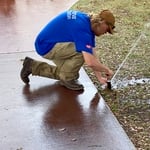
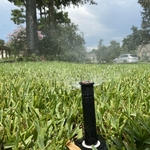
Irrigation & Landscaping Specialists
4.9(
16
)
Sprinkler System for Lawn and Garden - Winterize or ActivateLawn and Garden Sprinkler System - Winterize or Activate - For Business

Serving Bellview, TX and surrounding areas

Approved

In business since 2013

Free estimates

Credit card accepted

"Benny is very knowledgable. He is a licensed irrigator. He explains everything very well and gives good advice where to put the sprinkler system and how it effects the drainage. He's very responsive when you contact him. He came back a few times and helped with other issues that I had. I am very satisfied with his work and I would highly recommend him."
Sprinkler System Installa

+7

Response time1 day
3 neighbors recently requested a quote
Recommended by100%of homeowners

Avatar for TruGreen
TruGreen
3.1(
2,962
)
Lawn Care - Aerate a LawnLawn Care - Fertilize or Treat a Lawn

Serving Bellview, TX and surrounding areas

Approved

In business since 1974

Free estimates

Warranties offered

"I think they treated the wrong lawn. The note they sent me via text message referenced trees and shrubs in my yard, I have none. They also did not leave a yard marker showing they had been there. Otherwise, this would have been a 5 star review."
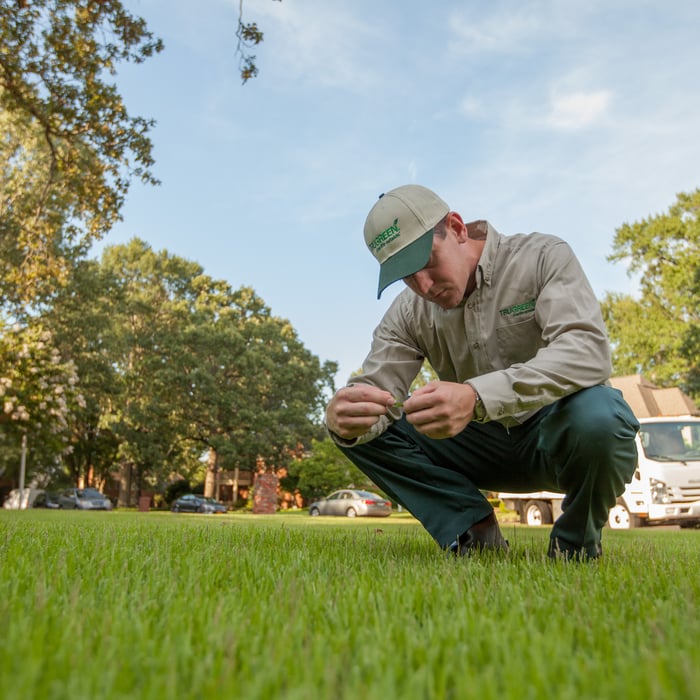
TruGreen Treated vs Non-Treated
Enjoy Your Lawn at it's Fullest Potential
TruGreen Treated vs Non-Treated
TruGreen Lawn
TruGreen Healthy Lawn Analysis

+4

Recommended by76%of homeowners
...
Showing 1-10 of 250
Lawns FAQs, answered by experts

Foxtail grass is not native to the United States, so it is considered an invasive plant. Giant foxtail originated in eastern Asia, Green foxtail is native to Europe, and Yellow foxtail is native to Eurasia. This grass variety is one of many common invasive plant species that you should keep out of your yard and garden beds as much as possible.

Digging a bush up by the roots is the most natural DIY method for removing a bush stump. Start by identifying the shrub type and revealing its roots. Cut the shrub to its base and loosen the soil, ensuring no utility lines are nearby. Optionally, treat the base with herbicide, then dig around the roots and cut a circle around the shrub using various tools. Dig a trench, cut the base of the root ball, and finally fill the hole to prevent regrowth. This thorough process ensures complete removal without damaging surrounding areas.

A standard home lawn mower with sharp blades can handle a thin layer of leaves without issue. You may need to make a couple of passes within several days to mulch leaves down, but your mower shouldn’t struggle. If your mower comes with a mulching kit, like an attachment to blow leaves out the side, that’s a good sign it’s ready for fall leaves. Set your mower to the highest or near-highest height for this project so it focuses on the leaves rather than the grass below.

The easiest way to remove bushes is first to cut the bush down. You may need to use a handsaw, pruning shears, or a chainsaw for thicker branches. Once you’ve removed most of the branches, you can then cut the base of the shrub as low to the ground as you can get. Then, with a shovel, dig around until you expose the roots. Dig out the roots, being careful not to leave any roots in the soil.

It can be bad to leave a dead stump in the ground. A stump becomes a hefty piece of dead wood in time and eventually (especially with the help of rain) starts to rot. That makes it a locus point for diseases and pesky insects, as well as a bit of an eyesore. It’s best to remove a tree stump completely before it starts to decay, especially before it starts to fall apart. If the tree was removed because of disease, it’s even more important to fully remove the stump if possible.

The Bellview, TX homeowners’ guide to lawn services

From average costs to expert advice, get all the answers you need to get your job done.