"The furnace took 4 days to get approved( not counting a Sunday) the others were quick but the water heater had to be ordered so without hot water for a week. One ceiling fan was easy but within a year their policy changed and They would not install the one I purchased and had to get a new one approved and then ordered online and took several weeks to get straightened out. Not sure who was at fault, AHS, installer or scheduling with renter. Fee is usually $75 per visit"
P.Hein Electric is an electrical service company owned by Patrick Hein, who grew up in Winner and graduated from Winner High School in 1988. He left home after graduating and joined the Army to get some training and funding for school. He was given several months of electronics theory and repair in Ft. Gordon, Ga. After graduating from training, he became an Electronics and Telecommunications technician. During his tours he received three Army Achievement Medals for his hard work and ability to solve workshop problems. He even developed a test for equipment repair and single-handedly brought his unit to 100% operational, which had never been done before.
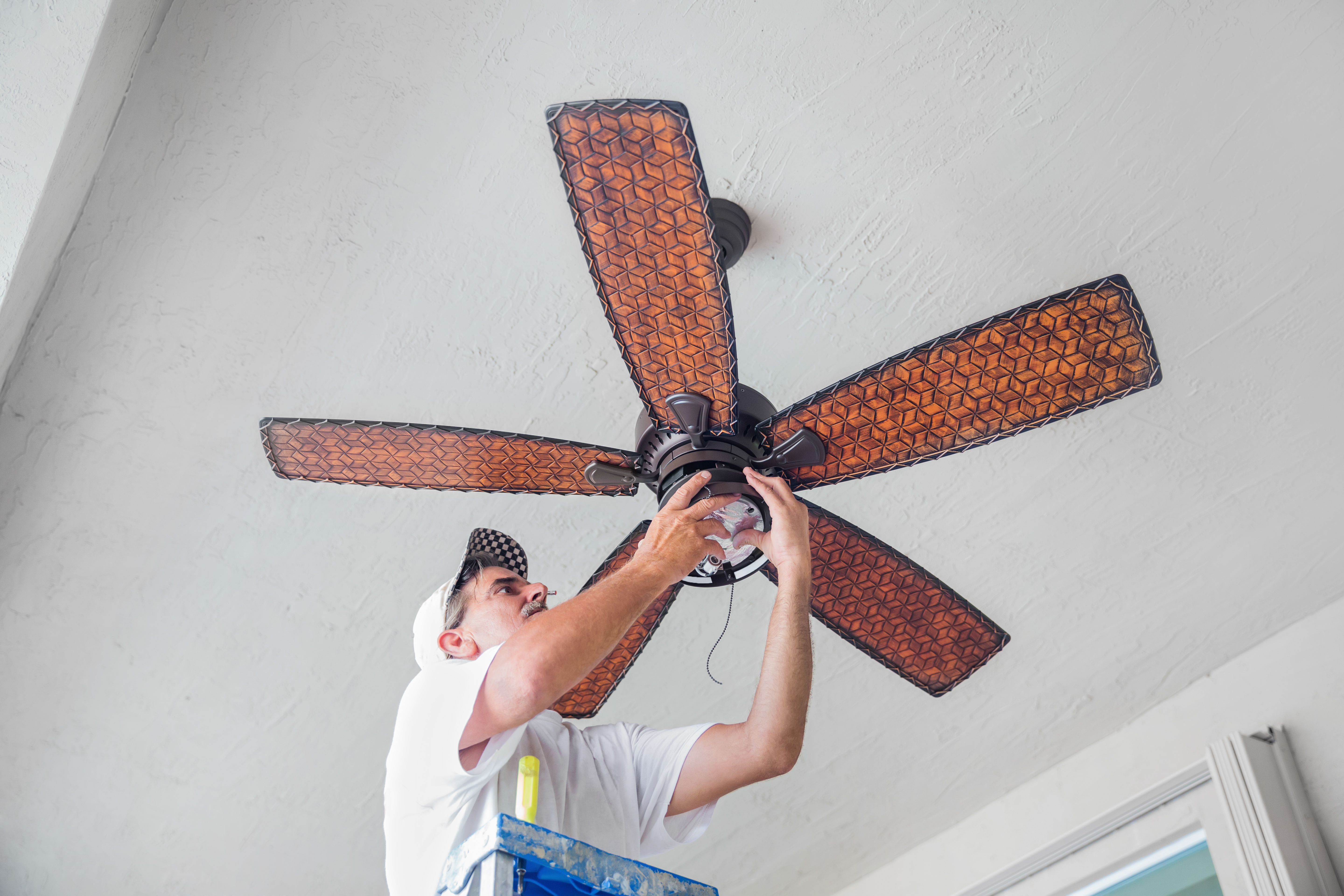
Hiring an electrician to install a new ceiling fan may be the best course of action. Installing a ceiling fan requires basic electrical and mechanical knowledge. It also requires holding it up with one hand and in an awkward position, making the installation even more difficult. If you’re uncomfortable with these circumstances, your best bet is to hire a professional.
When choosing a mounting bracket, you have the option between flush mounts and downrod mounts. Flush mounts are the better option for low ceilings as they feature a lower profile. Downrod mounts are the optimal choice for rooms with high ceilings as they offer a pole that adjusts the height of the fan.
Though possible, installing a ceiling fan yourself requires electrical knowledge and confidence working with home wiring. Following the manufacturer's instructions carefully and observing safety precautions are crucial components of a DIY installation.
Ceiling fans can be a great way to cool your home without the expensive utility bill of running an air conditioner. Plus, ceiling fans can sometimes run in both directions, pushing hot air down in winter and pulling cold air up in summer. With that said, air conditioning might be the only thing that helps if you live in a very warm climate.
The direction you want your ceiling fan to move in depends on the season you’re in. During summer, you want it to move counterclockwise to produce a cooling downdraft. During winter, you want it to move clockwise to circulate warm air throughout the room.
The Rosebud, SD homeowners’ guide to ceiling fan services
From average costs to expert advice, get all the answers you need to get your job done.
Discover the cost to install a ceiling fan, including labor, materials, and tips to save. Learn what impacts your price and how to budget for your project.
Ceiling fans cool down your home while stylishly accenting your space. With a variety of types of ceiling fan on the market to choose from, you can’t go wrong.
Although the risk is low, there are a few telltale signs that a ceiling fan will fall off your ceiling. This guide explains when to worry (and when not to).
With the right size, ceiling fans are an energy-efficient way to cool a room. Use this ceiling fan size guide to find the perfect model for your space.