"Colton did a great job with welding up my dump trailer. Overtime it developed some issues and without hesitation, he came and picked up my dump trailer for me and immediately got to work and got it back to need fixed as I requested within about a day and a half."
"Not only great prices, but the service was great, fast, and extremely professional. No pun intended. Kevin, my installer, was super nice and he had to come back because I setup the fence over my property line, and he did a wonderful, fast job then, too. I have already recommended Xtreme Fence to everyone who asks about mine. Thank you."
We take great pride in our experience, expertise, quality, and customer service that we provide to meet the consumer's needs. It is our mission to provide excellent workmanship and complete customer satisfaction from start to completion of a project. In order to understand the needs and expectations of our customers, we take great care to work and communicate with every customer in a professional manner. Our reputation is based on service, safety, and quality, regardless of how large or small the job.
Posts for a horizontal fence should be no more than 6 feet apart. Wood pickets are not as strong when mounted horizontally as when mounted vertically. As such, the fence panels on a horizontal fence can’t cover the same span between posts as a vertical fence can. If you install the posts further apart on a horizontal fence, the fence will lose stability, making the boards more likely to sag.
A horizontal fence is typically more expensive to build than a vertical fence, often costing between 10% and 20% more. The higher cost is due to the need for a higher grade of lumber and more posts to prevent the boards from sagging, which increases both material and labor expenses. Despite the higher price, horizontal fences tend to be more durable and offer a more distinct, modern look compared to the more common vertical picket style. However, they may not be the best option for privacy, as there can be slight gaps between the horizontal rails.
There are many types of fences available to homeowners, including wood, chain link, wire, concrete, brick, corrugated metal, and more. Some fences offer practical solutions for pets and wild animal deterrents, while others offer aesthetics that boost curb appeal. Consider what you’re looking for in a fence to help you decide which is best for your home.
You don't need gravel under metal fence posts, but it's always a good idea to add it in. Adding about six inches of gravel before you pour concrete will provide better water drainage, which can help to prolong the lifespan of your new fence and maximize its stability.
Installing a fence when the ground is frozen presents challenges, but it's possible with the right approach. First, mark and measure the fence line accurately. Use a power auger or manual post-hole digger to create holes in the frozen ground, ideally when it's less rigid during warmer parts of the day. Consider using pre-made fence post anchors or driving metal posts into the ground. Ensure posts are secure with concrete for stability. Allow extra time for the concrete to cure. Additionally, be cautious of frost heave, which may affect post-alignment. Installing in milder winter conditions is often more manageable.
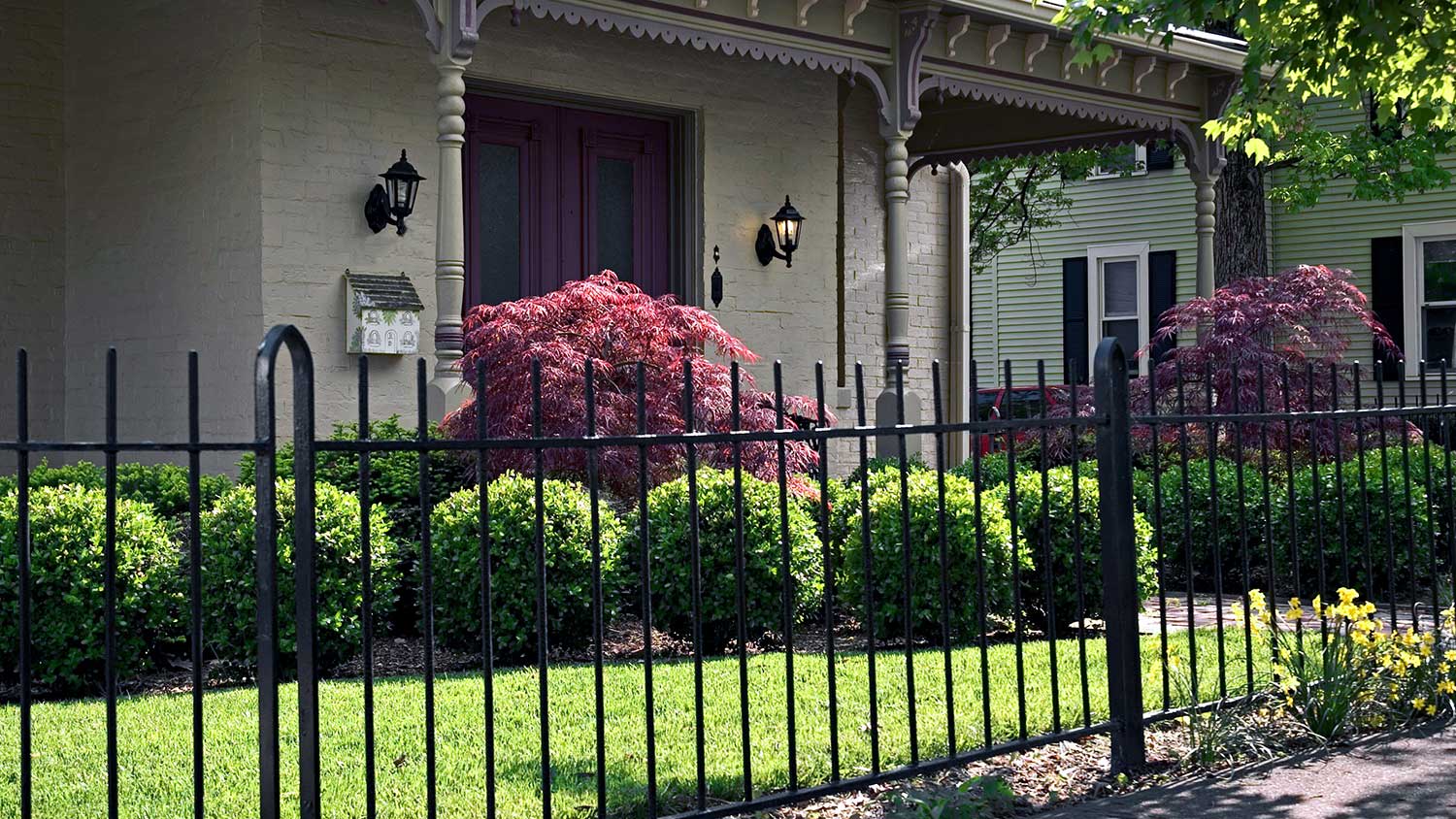
The Presho, SD homeowners’ guide to wrought iron services
From average costs to expert advice, get all the answers you need to get your job done.
Unsure who to hire to install a wrought iron fence? Compare fence contractors and ornamental iron pros, see how installation works, and choose confidently.