"The furnace took 4 days to get approved( not counting a Sunday) the others were quick but the water heater had to be ordered so without hot water for a week. One ceiling fan was easy but within a year their policy changed and They would not install the one I purchased and had to get a new one approved and then ordered online and took several weeks to get straightened out. Not sure who was at fault, AHS, installer or scheduling with renter. Fee is usually $75 per visit"
Here at North Plains Electrical with over 15 years of experience we take great pride in our experience, expertise, quality, and customer service that we provide to meet the consumers needs. It is our mission to provide excellent workmanship and complete customer satisfaction from start to completion of a project. In order to understand the needs and expectations of our customers, we take great care to work and communicate with every customer in a professional manner. Our reputation is based on service, safety, and quality, regardless of how large or small the job. Call us today!
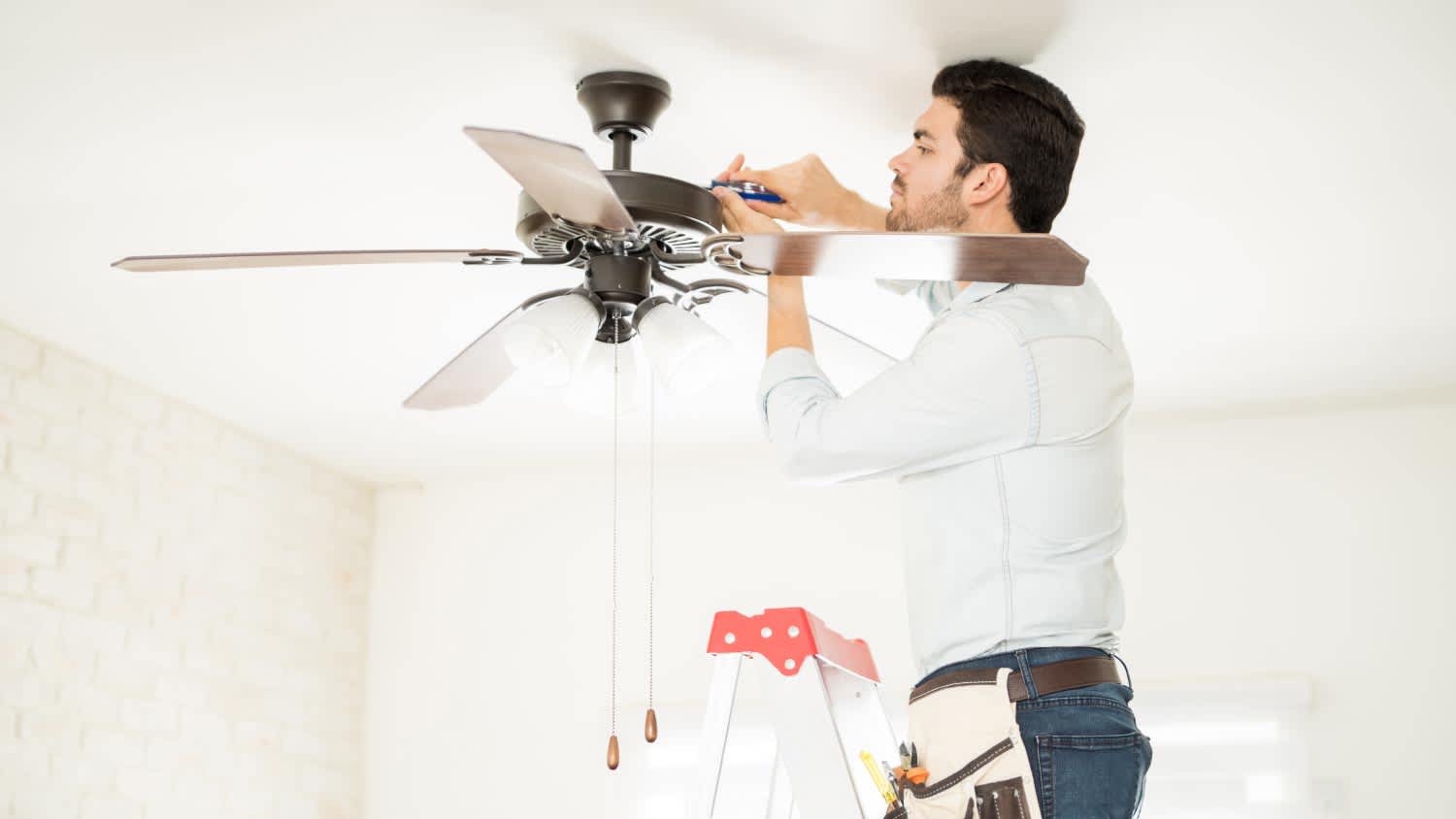
Since the cost of installing a ceiling fan is $250 for most homeowners, it might be beneficial to replace your existing fan if you are experiencing a significant repair issue, like a broken motor. However, for less expensive repairs, like a fan blade replacement, you’ll likely spend less on the repair than a complete fan replacement. Of course, if you’re looking for an upgrade or a new style fan, replacing it altogether is always an option.
Ceiling fans are very often worth the investment because they improve comfort in your living space and help reduce utility bills. In the late spring and early fall—and even in the summer in some areas—homeowners with ceiling fans can often get away with open windows and fans, which can cut down on cooling bills and also reduce wear and tear on the HVAC system. Over time, ceiling fans can pay for themselves by saving you money on electric bills and air conditioner repair and maintenance.
If your home already has wires for a ceiling fan (and optional light kit), then it’s quite safe to wire and install it yourself. Always be very careful to shut off the power before you begin, and confirm that the power is safely off with a non-contact voltage tester before touching anything. It’s also highly recommended to use eye protection, rubberized gloves, and tools with rubber handles to keep yourself safe from electric shock.
Many ceiling fan-rated electrical boxes tend to be made of metal. However, some electrical boxes may also be made of heavy-duty plastic that is reinforced with metal support structures. It may also have an attachment that connects directly to a ceiling joist. If you are ever ensure, consult with a licensed professional to get their insight on best practices and whether the installation is a safe one.
Identifying the source of noises is your first step to soundproofing a room without overspending. Generally, sound comes from inside or outside of the house. Inside noises include creaking floors, living noises like TVs in the living room, cooking sounds, or kids being kids. External noises generally include incremental weather, disturbing neighbors, and street traffic. Inside noises require you to soundproof floors, ceilings, and doors, whereas outside noises may require you to soundproof your attic, windows, and walls facing the streets.
The Mina, SD homeowners’ guide to ceiling fan services
From average costs to expert advice, get all the answers you need to get your job done.
Discover the cost to install a ceiling fan, including labor, materials, and tips to save. Learn what impacts your price and how to budget for your project.
Ceiling fans cool down your home while stylishly accenting your space. With a variety of types of ceiling fan on the market to choose from, you can’t go wrong.
Although the risk is low, there are a few telltale signs that a ceiling fan will fall off your ceiling. This guide explains when to worry (and when not to).