"The furnace took 4 days to get approved( not counting a Sunday) the others were quick but the water heater had to be ordered so without hot water for a week. One ceiling fan was easy but within a year their policy changed and They would not install the one I purchased and had to get a new one approved and then ordered online and took several weeks to get straightened out. Not sure who was at fault, AHS, installer or scheduling with renter. Fee is usually $75 per visit"
Here at North Plains Electrical with over 15 years of experience we take great pride in our experience, expertise, quality, and customer service that we provide to meet the consumers needs. It is our mission to provide excellent workmanship and complete customer satisfaction from start to completion of a project. In order to understand the needs and expectations of our customers, we take great care to work and communicate with every customer in a professional manner. Our reputation is based on service, safety, and quality, regardless of how large or small the job. Call us today!
The more surface area that a ceiling fan blade has, the more effective it will be at producing airflow. Therefore, a longer ceiling fan blade is the better option if you’re looking for more wind. However, a longer blade will consume more energy than a shorter blade.
To convert a ceiling fan to wireless, you’ll need to install a canopy module to access the lighting and fan controls. Many options are available, all of which help you control specific elements of your ceiling fan, so you have plenty of choices depending on your needs.
Many ceiling fan mounts feature a design that can accommodate slight slopes by using a ball joint mechanism at the end of the downrod. If your ceiling has a steeper slope than your fan allows for, you can install a downrod that will allow your fan to safely hang below the slope.
Most ceiling fans have a lifespan of anywhere from five to 15 years or 10 years on average. Just how long your ceiling fan lasts depends on the quality of the parts, how much it’s used, and how well you maintain it. A fan with a weak motor that runs on the medium setting nonstop is likely to have a shorter lifespan compared to a fan with a powerful motor that runs on the slowest setting for air circulation.
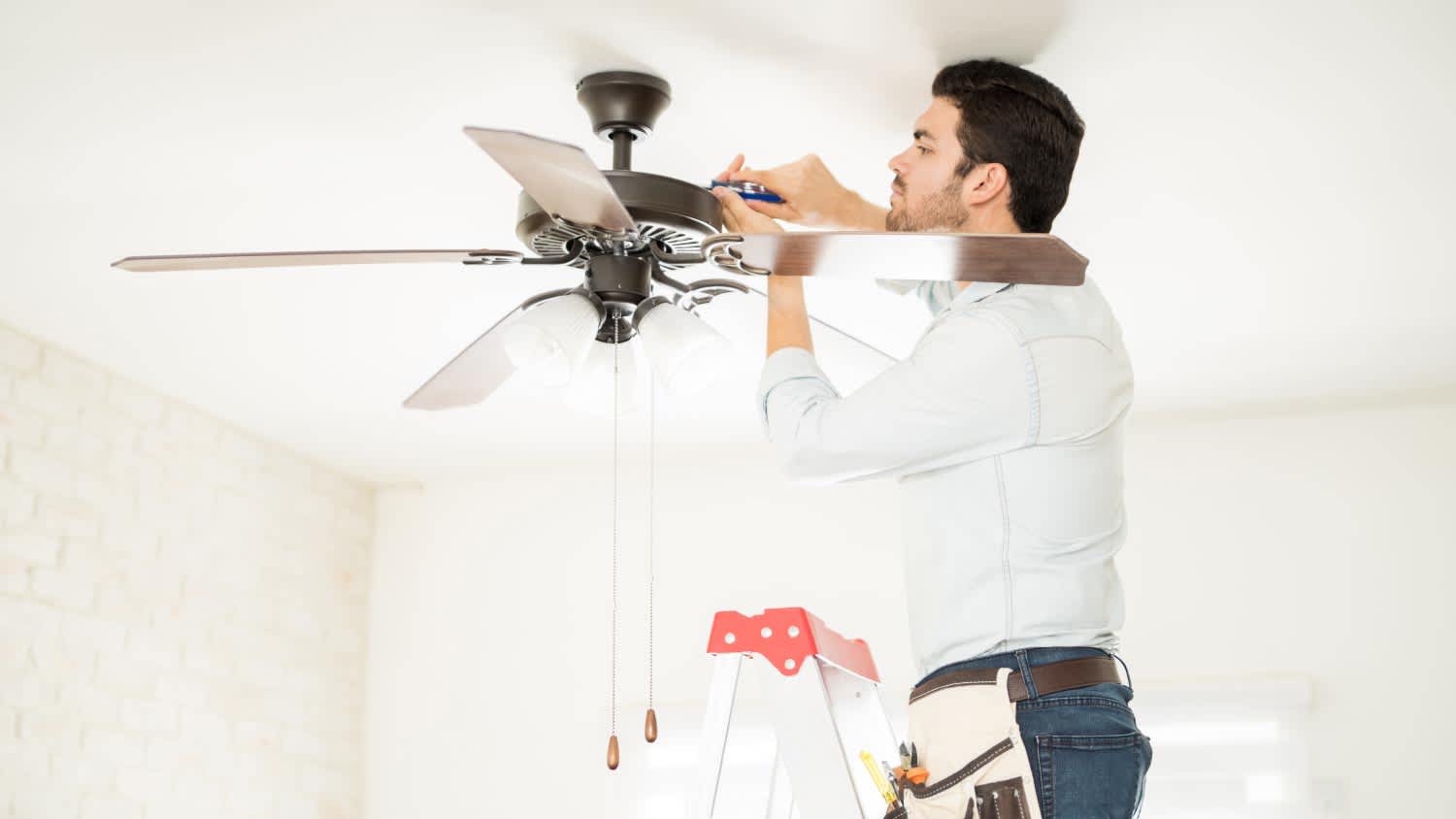
A typical fan installation takes between two and six hours. The exact timeframe can be influenced by factors such as the home's structure, existing electrical characteristics, ease of attic access, and whether complex wiring or additional attic ventilation work is required.
The Mclaughlin, SD homeowners’ guide to ceiling fan services
From average costs to expert advice, get all the answers you need to get your job done.
Discover the cost to install a ceiling fan, including labor, materials, and tips to save. Learn what impacts your price and how to budget for your project.
Ceiling fans cool down your home while stylishly accenting your space. With a variety of types of ceiling fan on the market to choose from, you can’t go wrong.
Although the risk is low, there are a few telltale signs that a ceiling fan will fall off your ceiling. This guide explains when to worry (and when not to).