Clean Up Nice! LLC is committed to excellence in every aspect of our business. We uphold a standard of integrity bound by fairness, honesty, and personal responsibility. Our distinction is the quality of service we bring to our customers. Accurate knowledge of our trade combined with ability is what makes us true professionals. Above all, we are watchful of our customers' interests, and make their concerns the basis of our business.
First, ensure your clothes are clean before you pack them. When packing, make sure they’re folded and stored within the container with enough room to breathe. For extra protection, try using cedar chips or lavender sachets, which naturally repel bugs. Lastly, periodically checking in on your clothes will help you stay aware of their condition.
Anything that might have been exposed to fumigation chemicals should be washed before use. Wipe down and sanitize surfaces like countertops and tables, and wash all utensils (or take care to store them in an airtight box beforehand), as well as anything else that could find its way into someone’s mouth, like kid or pet toys.
The main categories of window coverings are shades, shutters, curtains, drapes, and blinds. However, consumers today have dozens of options within these categories when it comes to everything from materials to the technology behind how window coverings operate.
Yes, many providers offer removal, cleaning, and reinstallation services for added convenience.
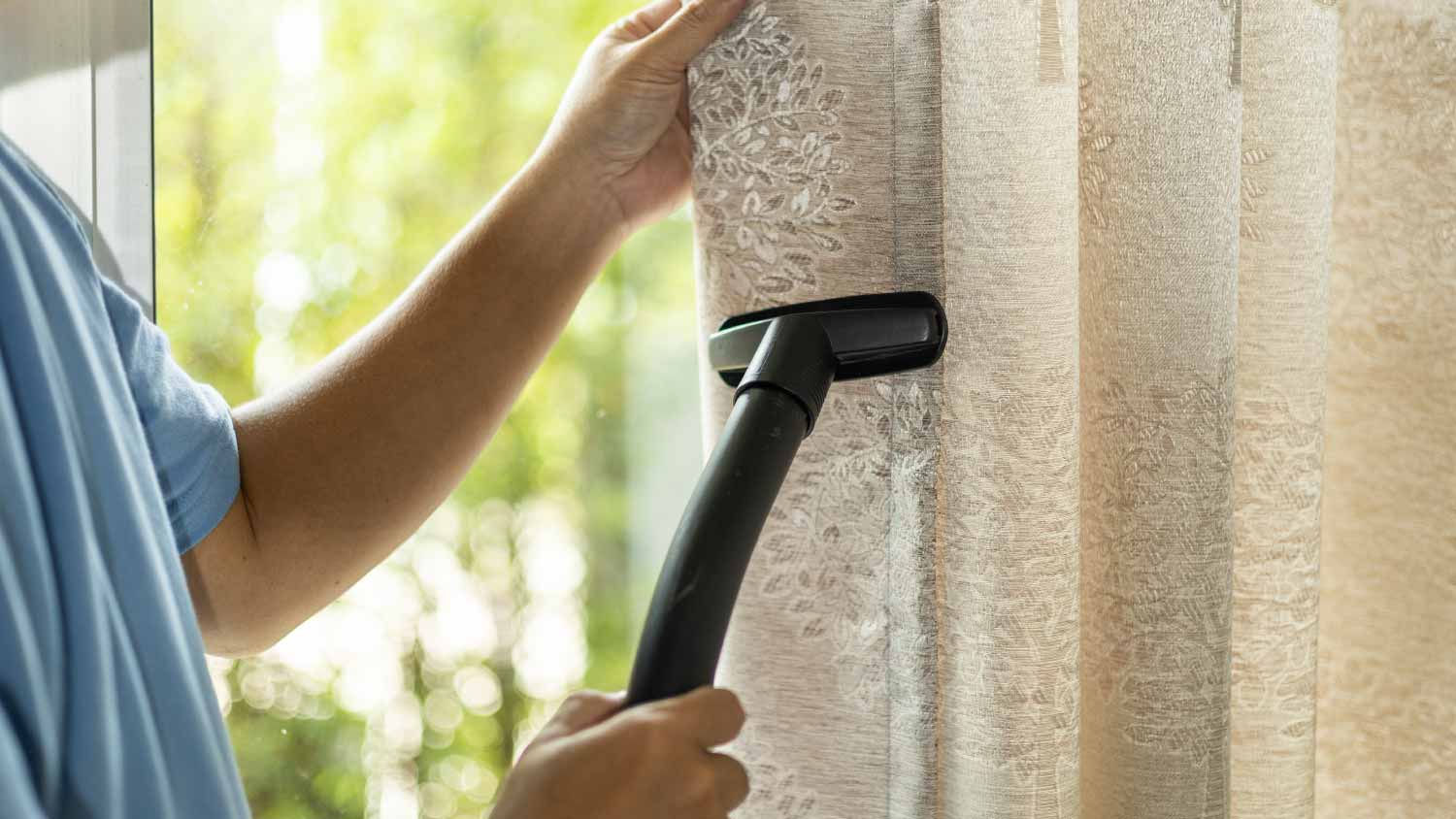
Professionals remove dust, allergens, and stains while preserving fabric integrity and enhancing the appearance of window treatments.
The Lemmon, SD homeowners’ guide to drapery cleaning services
From average costs to expert advice, get all the answers you need to get your job done.
Call in the professionals when your delicate drapes need a deep clean. Let's take a look at drapery cleaning costs and which factors can sway the price tag.
Cleaning window treatments can make a world of difference in how bright and clean your room looks. Use this guide on how to clean curtains to make a big impact.
Trying to decide whether curtains or blinds are best for your space? This article compares seven key features and gives you our choice for what’s best. While the ultimate decision is yours to make, we shed light on the pros and cons.