





Top-rated deck staining pros.

Best deck staining pros near North Charleston, SC

Enter your zip and get matched with up to 5 pros

Need a pro for your deck staining project in North Charleston, SC?

Select your specific project to find the pro for you.

TRUSTED BY NORTH CHARLESTON, SC HOMEOWNERS

  • Average homeowner rating star icon4.6
    Average homeowner rating
  • Verified reviews icon145
    Verified deck staining services reviews

Top-Rated Deck staining pros in North Charleston - Updated Nov 2026

Avatar for Groovy Hues Painting of Summerville
Groovy Hues Painting of Summerville
5.0(
4
)
Exterior Home or Structure - Paint or Stain: LargeExterior Home or Structure - Paint or Stain: MediumExterior Home or Structure - Paint or Stain

Serving North Charleston, SC and surrounding areas

Approved

Free estimates

Warranties offered

Credit card accepted

We are extremely passionate about the work that we do. You can depend on us to provide a high quality service at a fair and honest price. We understand that the future of our business depends upon our reputation and that is why customer service is by far our highest priority. If you are looking for a professional you can trust, please call today to schedule a no-obligation estimate!

Gallery
Gallery
Gallery
Gallery
Gallery

+8

33 neighbors recently requested a quote
...
Showing 1-10 of 296
Deck Staining FAQs, answered by experts

Limewash and whitewash are two techniques used to give brick a light, matte finish, but they differ in composition, application, and permanence. The best choice depends on your aesthetic goals and the specific surface.

Composition

  • Limewash: A natural and environmentally friendly option made from limestone, water, and sometimes pigments. It is breathable and soaks into porous surfaces like brick.

  • Whitewash: Traditionally made from lime, water, chalk, and binders, but a similar look can be achieved with watered-down white paint. It is paint-based and sits on top of the surface.

Appearance and Finish

  • Limewash: Provides a natural, textured appearance that allows the brick's character to show through. It offers a more traditional finish.
  • Whitewash: Creates a softer, more opaque finish, often used for a rustic or shabby-chic style.

Application and Permanence

  • Limewash: Is semi-permanent and can be removed, making it a good choice if you might want to change the look in the future. It requires more skill to apply and cannot be used on previously painted brick.

  • Whitewash: Is a more permanent solution. It is more forgiving to apply and can be used on painted brick. However, because it sits on the surface, it can trap moisture.

Ultimately, if you want a breathable, natural, and reversible finish for unpainted brick, limewash is a great option. If you need a more permanent, opaque coating that can be applied over painted surfaces, whitewash is the better choice. Whitewashing may also be more economical, costing approximately $1.40 to $4.20 per square foot.

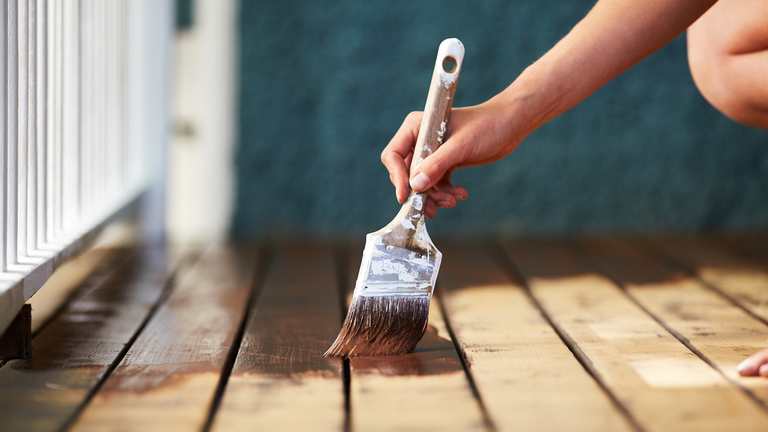
Staining a deck with a rag is typically a better option than using a brush, as it helps the stain penetrate deeper into the wood. However, both brushes and rags are best reserved for detailed work because using these tools on an entire deck can require tediously crawling around on your hands and knees. A pad applicator, sprayer, or roller are preferred alternatives to applying stain over the majority of a deck. Use a rag for railings and other detailed work, and let the wood soak up as much of the stain as possible before wiping away drips or pools.

Applying too much sealer to a deck might seem like extra protection, but it can cause more harm than good. Wood is a porous material with a limited capacity to absorb liquids. When you go overboard with sealer, the excess can't soak in and instead forms a film on the surface. This leftover layer is prone to peeling, cracking, and trapping moisture, ultimately defeating the purpose of sealing in the first place. 

Choosing the right product involves understanding deck material, desired finish, and local weather conditions. Opt for high-quality, weatherproof formulations ensuring long-term durability and appearance retention.

It is definitely worth sanding a deck to ensure the wood absorbs new stain. Sanding a deck removes the outer layers of aging wood, allowing the stain to penetrate. It also gives a fresh look to the entire surface as part of the deck refinishing process. Without sanding, your stain or sealant is less likely to absorb into the wood. While sanding a deck is a time-intensive project, the rewards are noticeable and long-lasting.


The North Charleston, SC homeowners’ guide to deck staining services

From average costs to expert advice, get all the answers you need to get your job done.