Top-rated welders.

Get matched with top welders in Crescent, PA

Enter your zip and get matched with up to 5 pros

Need a pro for your welding project in Crescent, PA?

Select your specific project to find the pro for you.

Find Welders in Crescent

Avatar for Wilson Fabrication & Repair
Wilson Fabrication & Repair
5.0(
5
)

Serving Crescent, PA and surrounding areas

Approved

In business since 2022

Free estimates

Small jobs welcome

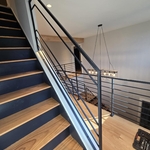
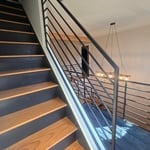
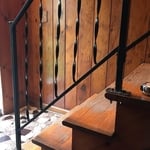
"I highly recommend Wilson Fabrication & Repair. Dillon was quick to respond and complete the task. He was also respectful of our home and our questions. Dillon repaired a broken metal railing in our home, and left us with a better product than we originally had. We will be calling this company for repairs in the future."
Railing Repair
Railing Repair
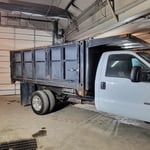
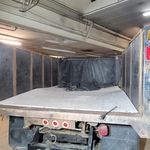
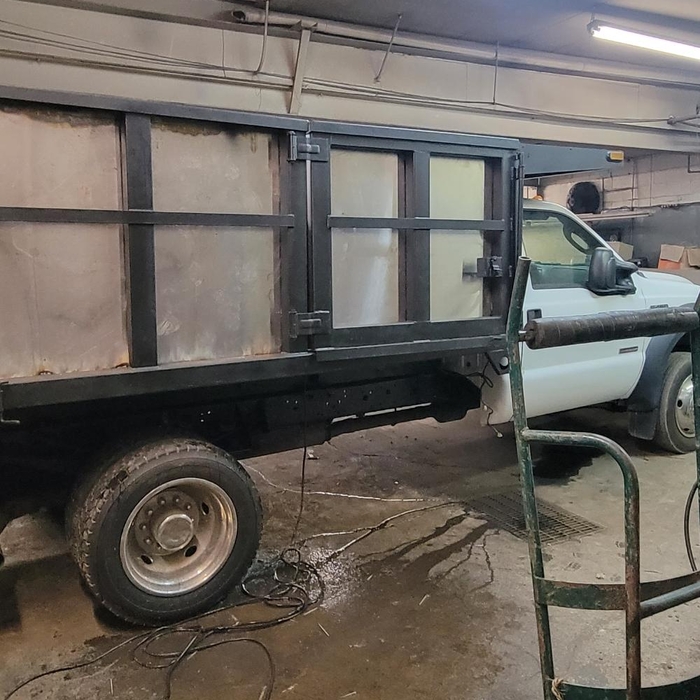
Dump Body Repairs
Dump Body Repairs
Dump Body Repairs

+7

Response time1 day
2 neighbors recently requested a quote
Recommended by60%of homeowners
Avatar for Randy's Mobile Welding
Randy's Mobile Welding
5.0(
9
)

Serving Crescent, PA and surrounding areas

In business since 2019

Free estimates

"He did a couple jobs for me. Started off with welding an automotive frame, and he did a great job so I had more work for him to do as well. I would definitely recommend Randy's Mobile Welding to anybody needing welding services."
Railing
Railing
Horse Hayfeeder
Horse Gate
Pipe Weld

+1

Response time1 day
Recommended by100%of homeowners
RICK HORN CONSTRUCTION, INC.
4.5(
119
)

Serving Crescent, PA and surrounding areas

In business since 1972

Free estimates

"Very well, Rick and his team are total professionals. They always arrived on time and they took care to address every concern that I had. If I had to knock them anywhere, there were a couple occasions where email communication criss-crossed and some messages were missed. But, I learned that voice contact was the best way to go. Rick is a really great guy to work with. While it was a bummer to have to give him money every time I saw him, it was always nice to meet with him and catch up on things. Good people."
Recommended by90%of homeowners
...
Showing 1-10 of 57
Welding questions, answered by experts

Cutting round ductwork requires precision and the right tools. A duct cutter, specifically designed for circular ducts, is ideal. First, mark the cutting line on the duct using a measuring tape and pencil. Then, position the duct cutter's blade on the marked line. Apply steady pressure, rotating the cutter around the duct. The sharp blade creates a clean, precise cut. Alternatively, a reciprocating saw with a metal-cutting blade can be used for larger round ducts. Ensure the duct is securely held in place while making the cut to prevent slips and maintain accuracy.

Welding is the process of using extreme heat—and, sometimes, pressure—to attach two pieces of metal. In contrast, metal fabrication is a more involved process that can include welding, sheet metal work, bending, and other forms of metal manipulation. Metal fabrication is a large-scale project that may or may not involve welding, while welding is more often a step in larger fabrication projects.

Cutting rectangular ductwork requires careful measurements and the right technique. Use a measuring tape and pencil to mark the cutting lines accurately. Tin snips are excellent for straight cuts on smaller ducts. For more extensive or thicker rectangular ducts, a reciprocating saw with a metal-cutting blade is effective. 

Ensure the duct is well-supported and secure while cutting to prevent wobbling and maintain precision. After cutting, use a metal file to smooth any sharp edges, ensuring safety during installation. 

Since water heaters are primarily made of metal, they’re commonly accepted by scrap yards and collectors. Don’t expect to fetch a high price, though—water heaters are mostly steel and aluminum, which aren’t high-value metals. Some components are made of more valuable metals, like brass and copper, but they’re a small portion of the heater and won’t affect the price much.

You should not do your own welding unless you have the proper training and experience. Most home electrical systems can only handle MIG welding, which creates weaker bonds than TIG welding and won’t work on certain metals or metal thicknesses. Both welding forms usually require the use of shielding gas, which can be dangerous to store at home. Additionally, welding machines create temperatures of over 3,000 degrees, and the sparks can blind you if you don’t have the proper equipment. As such, it’s usually better to hire a professional welder for your welding projects.

The Crescent, PA homeowners’ guide to welding services

From average costs to expert advice, get all the answers you need to get your job done.