





Top-rated energy efficiency auditors.

Best energy efficiency auditors near Mcloud, OK

Enter your zip and get matched with up to 5 pros

Need a pro for your energy efficiency auditing project in Mcloud, OK?

Select your specific project to find the pro for you.

Top-Rated Energy efficiency auditors in Mcloud - Updated Nov 2026

Avatar for Acadian home help and handyman services
Acadian home help and handyman services
4.9(
10
)
Energy Audit - For BusinessHome Energy Audit

Serving Mcloud, OK and surrounding areas

Free estimates

Emergency services offered

Credit card accepted

"Wry well. Andy was friendly and efficient. His recommendations were well thought out and functional. Quick worker without seeming “rushed.” At other visits, I even had Andy do some duct maintenance in the attic and some minor auto work."
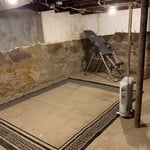
Basement is ready for sheet rock.
Me after I finished seal up basement
Additional Photos
Additional Photos
Additional Photos

+21

Recommended by100%of homeowners
Energy Auditing & Construction, LLC
New to Angi
Energy Audit - For BusinessHome Energy Audit

Serving Mcloud, OK and surrounding areas

In business since 2012

Free estimates

Credit card accepted

We are a locally owned and operated company that values honesty and integrity and treats your home as if it were our own. We offer a variety of General Contractor services that are customizable to each individual project. You will find us to be competitively priced, paying close attention to the details of each and every project that we are involved with. We look forward to building lasting relationships and guarantee your satisfaction!

Avatar for Skyline Construction and Renovation
Skyline Construction and Renovation
5.0(
3
)
Energy Audit - For BusinessHome Energy Audit

Serving Mcloud, OK and surrounding areas

In business since 2022

Free estimates

Credit card accepted

Skyline Construction and Renovation is committed to excellence in every aspect of our business. We uphold a standard of integrity bound by fairness, honesty, and personal responsibility. Our distinction is the quality of service we bring to our customers. Accurate knowledge of our trade combined with ability is what makes us true professionals. Above all, we are watchful of our customers' interests, and make their concerns the basis of our business. \n

Renovated Bathroom
Renovated Kitchen
Renovated Living Room
Response time10 mins
Response rate100%
Recommended by100%of homeowners
Showing 1-10 of 12
Energy Efficiency Auditing FAQs, answered by experts

Blower door tests are measured in a few different ways, but the most popular are air changes per hour (ACH) and cubic feet of air (CFM) moving through the house per hour. A good ACH score is less than 2ACH, but 1ACH is better. This means the house experiences a total air change within 60 minutes (for 1ACH). For 2ACH, there’s a complete change every 30 minutes, and so on. CFM scores are similar in that a lower score means less air change, and therefore less leakage.

A small sump pump running infrequently uses an average of 10 kilowatt-hours (kWh) of electricity per month. The average cost for electricity is $0.171 per kWh. The size and use frequency affect how much electricity it uses. Sump pumps average one-third to one horsepower (hp) motors. One hp is equal to 745.7 watts. Watts multiplied by the time your pump is running divided by 1,000 equals your average kWh. Multiply kWh by your average cost of electricity. In areas with high rain or a marsh basin, the average cost can be as high as $15-$25 a month.

An average, 400-square-foot electric heated driveways consume approximately $3 per hour in terms of electricity. The price may slightly fluctuate depending on your local energy cost. A simple formula to calculate your heated driveway’s total wattage consumption is by multiplying the square footage by 50 watts and then dividing it by 1,000 to get the kilowatt number. Multiply that with your local energy cost per hour and there you have the hourly operating cost.

There is no blanket figure for a residential home’s electrical load, since load varies by the size of the home, how many appliances are used, and the efficiency of their electrical systems. Typically, however, it’s safe to assume 40 to 60 amps is the average electrical load of a residential home. 

Dehumidifiers typically use 300 to 700 watts of electricity per hour, whereas portable dehumidifiers use about 40 watts per hour. The exact amount of electricity your dehumidifier will generate depends on its capacity and energy efficiency. Generally, higher-capacity dehumidifiers generate more electricity than lower-capacity units, but they also usually have better energy efficiency over the long run.

The Mcloud, OK homeowners’ guide to energy efficiency auditing services

From average costs to expert advice, get all the answers you need to get your job done.