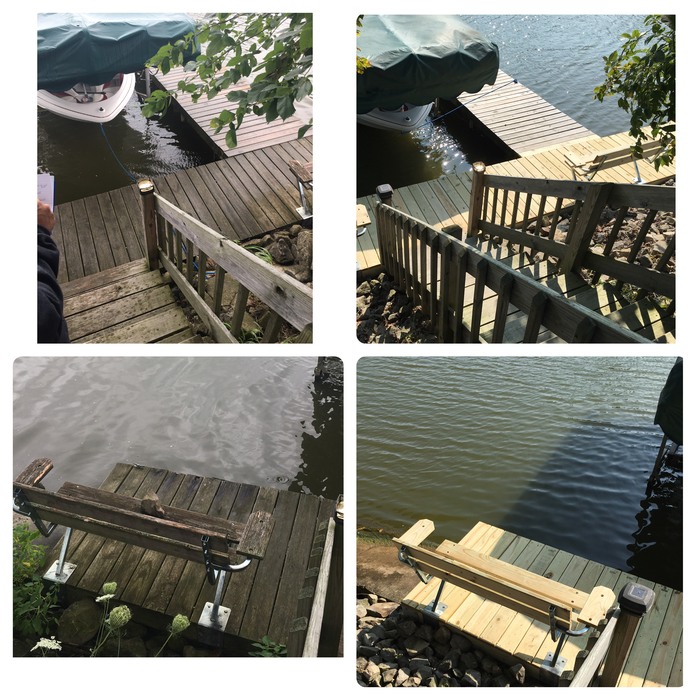
We are a family ran and owned business that covers the Central and Northeastern parts of Ohio. . We have been in this business for over 10 years, and specialize in everything under your roof, including but not limited to; drywall, painting, plumbing, electrical, flooring, hardwood refinishing, garage repair, sliding glass door repair, and much more. We also offer basic exterior work such as gutter cleaning, power washing, deck repairs, and stucco repair. We also offer a guarantee at 1 year minimum warranty on all work we have completed. We take pride in meeting our clients needs and schedules in order to make you need to do as little as possible. We guarantee that you are our number one priority all the way through job completion, will offer you high quality and the most competitive price and that we will go above and beyond to make sure no ends are left undone. We sincerely enjoy what we do, and we look forward to helping you with your next project!
K&A Tree Service is a locally owned and operated tree service. We are a family owned and operated business. We office superior customer service. We pride ourselves on customer service from start to finish. We take the time to educate as well as explain whatever questions you may have. We offer 24-hour emergency service. We offer a senior citizen and a veteran discount. We pride ourselves on integrity, and honesty. You will not be disappointed with the quality of work received from K&A Tree Service L.L.C. Communication is a quality that we pride ourselves with. You will always know what to expect, and a courtesy call. We as a tree service know how important your home is we have superior clean-up, and we take the same pride in your home when it comes to clean-up as we would our own yard. Respect and Professionalism is what to expect from us at K & A Tree Service L.L.C. Call Amanda today to schedule am estimate for all of your tree needs!
We take great pride in our experience, expertise, quality, and customer service that we provide to meet the consumer's needs. It is our mission to provide excellent workmanship and complete customer satisfaction from start to completion of a project. In order to understand the needs and expectations of our customers, we take great care to work and communicate with every customer in a professional manner. Our reputation is based on service, safety, and quality, regardless of how large or small the job. Call us today.
Top Notch Logging, LLC is dedicated to providing our customers with the best quality and craftsmanship. We are here to build relationships with our customers and communities and to provide our employees with a great place to work.
\n
\nTop Notch Logging, LLC is a leader in providing our customers with the highest quality products and craftsmanship in an honest, efficient, and professional way. Our pledge is to create successful relationships with our customers, employees and community by building trust, treating every project with the utmost integrity and exceeding expectations.
\n
\nWe look forward to working with you!
We are a locally owned and operated company that values honesty, integrity, and treats your home as if it were our own. We offer a variety of general contractor services that are customizable to each individual project. You will find us to be competitively priced, paying close attention to the details of each and every project that we are involved with. We look forward to building lasting relationships and guarantee your satisfaction!
At Mud Dawg Concrete, we deliver reliable, high-quality concrete work built to last. From residential improvements to commercial construction, our experienced team provides skilled craftsmanship, careful preparation, and dependable service on every project.\n\nWe specialize in concrete driveways, sidewalks, patios, foundations, footers, walls, slabs, and custom concrete projects. Whether you need a new driveway, durable foundation, or professionally finished patio, we provide solutions tailored to your property, needs, and budget.\n\nWe take pride in thorough site preparation, precise forming, quality materials, expert pouring, and clean finishing. Our customers can count on clear communication, dependable scheduling, and workmanship designed for strength, durability, and long-term value.\n\nAt Mud Dawg Concrete, our goal is simple: deliver solid work, honest service, and results you can rely on for years to come.
We take great pride in our experience, expertise, quality, and customer service that we provide to meet the consumer's needs. It is our mission to provide excellent workmanship and complete customer satisfaction from start to completion of a project. In order to understand the needs and expectations of our customers, we take great care to work and communicate with every customer in a professional manner. Our reputation is based on service, safety, and quality, regardless of how large or small the job.
We take great pride in our experience, expertise, quality, and customer service that we provide to meet the consumer's custom needs. It is our mission to provide excellent workmanship and complete customer satisfaction from start to completion of a project. In order to understand the needs and expectations of our customers, we take great care to work and communicate with every customer in a professional manner. Our reputation is based on service, safety, and quality, regardless of how large or small the job.
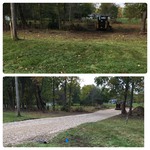
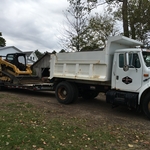
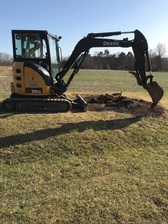
We specialize in site prep and demolition for small out buildings such as sheds, barns, or playground sets. We also offer dump trailer rentals and bulk material deliveries as well as French drain installation.
My name is Eric. I have been working in the construction/remodeling industry for 10+ years. Helping people fix things and bringing their visions to life is my passion.
If you’re planning to dig on your property, you’ll need to check for underground utility lines. Call the national call-before-you-dig 811 number. Once connected to an operator, you can schedule a site visit to mark underground lines. This way, you won’t accidentally dig into pipes and can cause major (read: costly) issues.
There are several methods to hollow out a tree stump, and the best one depends on your tools, experience, and priorities. Common methods include using a chisel and hammer, a chainsaw, or burning.
Chisel and Hammer: This is often considered the easiest approach for those with limited tools or experience, though it is the most time-consuming.
Chainsaw: Using a chainsaw is the fastest method, but it comes with significant safety risks, especially for inexperienced users.
Burning: This can be an effective method, but it is not recommended unless you can first drill holes into the stump. Without holes, the stump will be difficult to light and may not burn completely through.
A power drill with at least a ⅜-inch diameter bit can make the job quicker and easier, regardless of the primary method. While you can use a chisel or chainsaw without a drill, it will require more time and effort. Always wear protective goggles and thick gloves, as splinters are an inevitable risk.
How deep your septic system needs to be into the ground depends on several factors. In extremely cold environments, the tank needs to rest below the maximum frost line, which can be up to six or eight feet deep. The standard burying depth for most systems is between a few inches and four feet below ground level. Depth can also depend on the slope of the landscaping and other property variables.
A walk-behind trencher can cut through roots as long as they’re not too thick, making a project much easier than digging with a shovel and other hand tools. Assess your terrain and the number of trees in the surrounding area to determine if a walk-behind trencher will ease the job. Digging a trench by hand is much more time-consuming and labor-intensive.
The time it takes to build a pool—and dig out the area—varies based on the pool size and type. A professional excavator will take between four and eight hours to dig a pool. The process will take longer if they encounter large boulders or tree roots. Keep in mind that this is a small part of the process in the long run. You will need between eight and 12 weeks to build a pool from start to finish, including the time to apply for permits.
The Shiloh, OH homeowners’ guide to excavation services
From average costs to expert advice, get all the answers you need to get your job done.
Excavation costs $1,500 to $6,300 for most residential projects—but it depends on factors like the size of the area. This guide will help you plan a budget.
You can't have an in-ground pool without digging into the ground. How much does pool excavation cost, and can you take it on yourself? Our guide explains.
Picking the right pro can make or break your project. Learn how to hire an excavation pro with the qualifications and skillset to do the job efficiently.