


Top-rated excavation pros.

Get matched with top excavation pros in Paris, NY

Enter your zip and get matched with up to 5 pros

Need a pro for your excavation project in Paris, NY?

Select your specific project to find the pro for you.

Find Excavation pros in Paris

Avatar for Ames Tree Service, Inc.
Ames Tree Service, Inc.
4.9(
21
)
Building Site - Preparation and ClearingBuilding Site - Preparation and Clearing - For Business

Serving Paris, NY and surrounding areas

Approved

In business since 2015

Free estimates

Emergency services offered

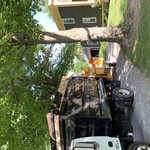
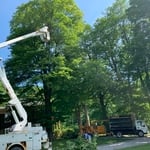
"We had a large group of very tall dead ash trees removed. The trees were located in a difficult location, but they did a fantastic job of removing all the trees, with everything cleaned up. Also, the price was reasonable, especially considering the magnitude of the job."
Tree trimming
Tree trimming
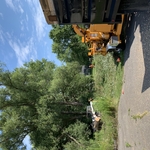
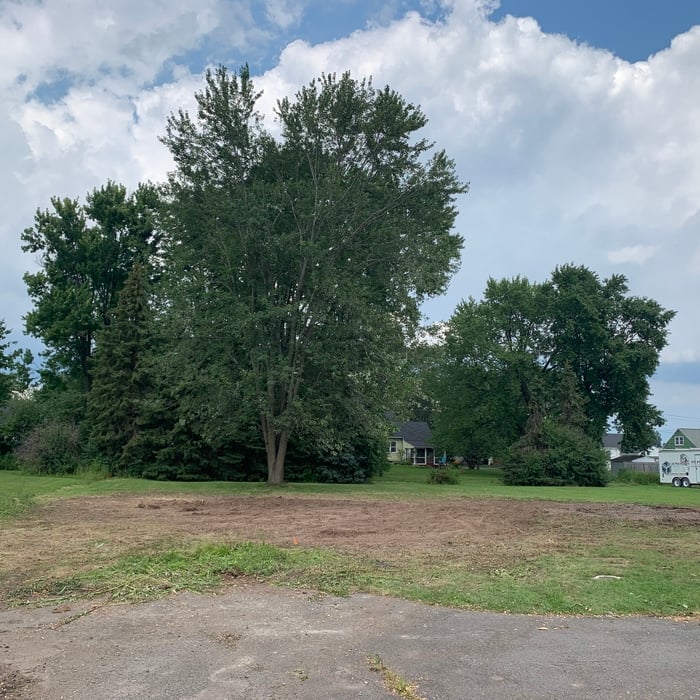
Lot clearing start
Lot clearing middle
Lot clearing finished

+17

Response time10 hrs
1 neighbors recently requested a quote
Recommended by100%of homeowners

Horton's Services, Inc.
New to Angi
Building Site - Preparation and Clearing - For Business

Serving Paris, NY and surrounding areas

Approved

In business since 2000

Free estimates

Offers commercial services

We take great pride in our experience, expertise, quality, and customer service that we provide to meet the consumer's needs. It is our mission to provide excellent workmanship and complete customer satisfaction from start to completion of a project. In order to understand the needs and expectations of our customers, we take great care to work and communicate with every customer in a professional manner. Our reputation is based on service, safety, and quality, regardless of how large or small the job.

Rail
Rail
Rail
Rail
Response time1 day
4 neighbors recently requested a quote
...
Showing 1-10 of 80
Excavating questions, answered by experts

Trenches are typically 12 to 24 inches deep and 8 inches wide. However, the required depth depends on the specific project and local ordinances. For example, a French drain may need to be 18 inches deep, while a water pipe might require a depth of 24 inches and a drainage pipe 36 inches. Your city or county may have specific regulations, so it's wise to consult with an excavation professional to determine the correct depth for your project.

Professional installers often include a deep layer of crushed gravel under permeable pavers to allow more runoff to soak through into the soil below. Many installations will include multiple layers of gravel, with coarser aggregate at the base and finer aggregate that sits on top of that bottom layer. Above the gravel, you’ll often find coarse sand that helps reduce paver shifting over time. Some permeable paver designs include a water collection system set into the gravel layer to route runoff to a safe area for disposal.

Prior to excavation, you should prepare the dig site and call 311 before you sign anything.

To get your site ready for excavation, you should move anything in the area that isn’t affixed to the land. You can save money on the excavation by removing hardscaping, including walkways, decks, concrete patios, and paver patios.

Before you carry out any digging, you should call 311 to confirm that there are no utility lines running through your excavation site. Skipping this step could lead to severe injury and property damage if your excavator hits a water, sewage, or gas line.

There are several methods to hollow out a tree stump, and the best one depends on your tools, experience, and priorities. Common methods include using a chisel and hammer, a chainsaw, or burning.

  • Chisel and Hammer: This is often considered the easiest approach for those with limited tools or experience, though it is the most time-consuming.

  • Chainsaw: Using a chainsaw is the fastest method, but it comes with significant safety risks, especially for inexperienced users.

  • Burning: This can be an effective method, but it is not recommended unless you can first drill holes into the stump. Without holes, the stump will be difficult to light and may not burn completely through.

A power drill with at least a ⅜-inch diameter bit can make the job quicker and easier, regardless of the primary method. While you can use a chisel or chainsaw without a drill, it will require more time and effort. Always wear protective goggles and thick gloves, as splinters are an inevitable risk.

After you successfully remove your boulder, you have a few options for what to do to get rid of it. You can rent a dumpster if your yard has many boulders or if you’re planning a larger project. You can even save the boulder and reuse it elsewhere on your property to save on landscaping costs. A few ideas include using the boulder as a natural, abstract statue, breaking it into smaller pieces to line your garden bed, or offering it to a landscaping company that could reuse it for another project.

The Paris, NY homeowners’ guide to excavation services

From average costs to expert advice, get all the answers you need to get your job done.