





Top-rated generator install pros.

Get matched with top generator install pros in Gerry, NY

Enter your zip and get matched with up to 5 pros

Need a pro for your generator install project in Gerry, NY?

Select your specific project to find the pro for you.

Find Generator install pros in Gerry

Avatar for Anderson Water & Power
Anderson Water & Power
4.4(
618
)
Fixed Generator - Install

Serving Gerry, NY and surrounding areas

Approved (Corporate)

Super Service Award Winner

In business since 1988

Free estimates

Emergency services offered

"We really like the professional job done by Paul, James III and Nate, they answered all our questions and explained everything to our understanding. They are no doubt well-trained in their field and dedicated to the reputation of the company. Kudos to our saleperson Tom, who also happens to be the president. We had on-location visits from 3 companies to have a whole-house generator installed and no doubt picked the best company."
Free Water Test!
Cummins
Cummins Install
Cummins
Transfer switch Cummins

+62

Response time2 days
189 neighbors recently requested a quote
Recommended by89%of homeowners

Curt Mcrae Electric
0.5(
1
)
Generator - Install - For BusinessGenerator - Repair - For BusinessPortable Generator - Install+1 more

Serving Gerry, NY and surrounding areas

In business since 1991

Free estimates

With over 30 years of experience serving New York, Mcrae Electrical is your solution for all your electrical needs. We take great pride in our extreme professionalism, timeliness and superior customer service on every job. We make sure to develop a lasting relationship so that the next time service is needed there will be no question on who to call. Satisfaction guaranteed!

Showing 1-10 of 16
Generator Install questions, answered by experts

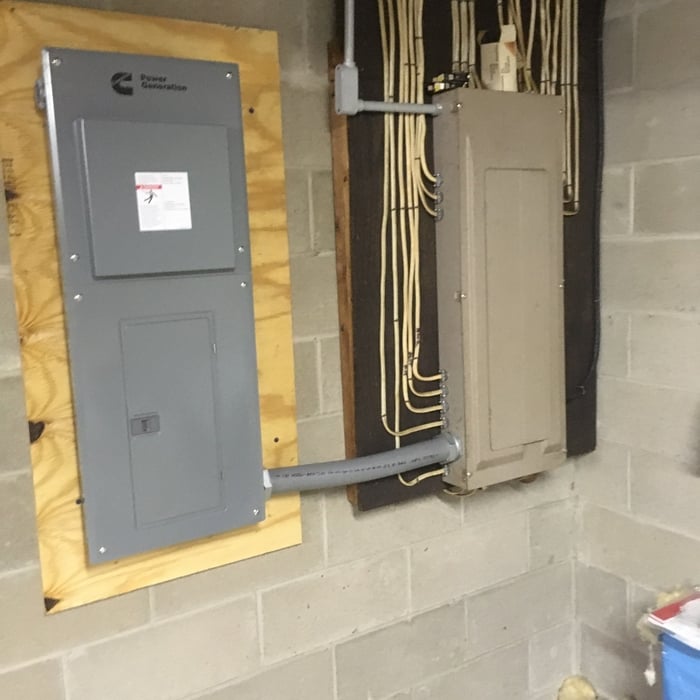
If you have a transfer switch properly installed, the generator and main electrical power cannot feed the system at the same time. However, you should still shut off the power at your main circuit breaker panel before activating the generator. If you do that, you’ll simply need to shut off the generator and reset your circuit breaker once the local power comes back on.

Here’s what you can run with different wattages and types of generators:

Portable generator:

  • 2,000 watts can handle a large appliance like a freezer or refrigerator, plus a few smaller items like phones or computer chargers. 

  • 4,000 watts will keep two large appliances operating and a few smaller devices.

  • 8,000 watts should power most essential appliances and other devices, including a sump pump, well pump, or your dishwasher.

Partial to whole-house generator:

  • 20,000 watts and above will make it seem like your home’s power is still on.

To determine the right size generator for your house, you should calculate the total wattage of the appliances and devices you want to power during an outage. List all essential items, note their start-up wattages, and add them together.

Here are some typical wattage requirements for common appliances:

  • Refrigerator: 600 watts

  • Large dehumidifier: 700 watts

  • Large window air conditioner: 1,400 watts

  • Water heater: 3,000 to 4,500 watts

  • Electric furnace: 5,000 to 25,000 watts

A 7,500-watt generator might be sufficient for essentials like a refrigerator, freezer, well pump, and lighting circuits. However, for high-demand items like a water heater or furnace, a whole-home generator is a better choice. A portable generator may be enough if you only need to power a few critical items.

While home square footage can offer a rough estimate, it is not always a reliable indicator. For reference, here are some typical generator sizes based on square footage:

  • 1,000 sq ft: 6–9 kW

  • 1,500 sq ft: 7–10 kW

  • 2,000 sq ft: 10–14 kW

  • 2,500 sq ft: 12–16 kW

  • 3,000 sq ft: 16–20 kW+

For the most accurate sizing, consult a professional who can calculate your home's peak and average power consumption and recommend the optimal generator.

A home that is 2,500 square feet will likely need a 20kW to 25kW generator. Consult your local generator installer to confirm the generator size needed to power your home before purchasing a new one. Be sure to consider how much power your necessary devices need to run.

No, you should never plug a generator directly into a wall outlet in your house. This practice is extremely dangerous, often illegal, and can cause "back-feeding," where power from the generator flows back into utility lines, creating a life-threatening hazard for utility workers. It can also damage your home's electrical system, including appliances like pumps and HVAC fans. If the main power is restored while the generator is connected, it can destroy the generator and cause an electrical fire. To safely connect a generator, you must use a professionally installed transfer switch or an interlocking kit, which prevents back-feeding by disconnecting your home from the utility grid before the generator provides power.

The Gerry, NY homeowners’ guide to generator installs

From average costs to expert advice, get all the answers you need to get your job done.