


Top-rated excavation pros.

Get matched with top excavation pros in Lyman, NH

Enter your zip and get matched with up to 5 pros

Need a pro for your excavation project in Lyman, NH?

Select your specific project to find the pro for you.

Find Excavation pros in Lyman

DBA Jory D Bailey
4.8(
13
)
Building Site - Preparation and ClearingBuilding Site - Preparation and Clearing - For BusinessExcavation - Major Grading or Resloping+2 more

Serving Lyman, NH and surrounding areas

Approved

In business since 2002

Free estimates

Credit card accepted

"They did an excellent job and I continue to use them. They are very knowledgeable and they were very responsive with solutions. We would highly recommend them to anyone."
Response time12 hrs
Response rate90%
Recommended by85%of homeowners
Avatar for Waterscapes of New England
Waterscapes of New England
3.9(
26
)
Excavation - Major Grading or ReslopingExcavation - Major Grading or Resloping - For Business

Serving Lyman, NH and surrounding areas

Approved

In business since 1985

Free estimates

Warranties offered

"This was a complex project with a lot of moving parts.
Several thousand square feet of patio, complicated pool coping and a significant amount of reconstruction. The land I gave Carl to work with was ugly and unstable.
I give Carl an A for time and price because of the value he brings to the table. Not because he's the cheapest or the fastest sprinter.
Some significant challenges materialized over the course of the job that added time and cost to the project. The great thing is Carl rolled with the punches, reacted fast, didn't compromise quality, and never asked for more money.
This was not an easy piece of land to work with. A 40 year old pool patio on shaky foundations.
His foreman/mason Eddie is the only person I trust to do anymore work on my hardscape/landscape. His ability, attention to detail and work ethic is unquestionable.
Carl brings 30 years of experience to the table; great design ideas, flexibility, problem solving, vision..........value!!
Additionally, Carl has a fantastic network of partners that are just as reliable.
I would be happy to provide a reference to all serious buyers.
"
Additional Photos
Additional Photos
Additional Photos
Additional Photos
Additional Photos

+9

3 neighbors recently requested a quote
Recommended by85%of homeowners
C&L Cass Construction
2.8(
2
)
Building Site - Preparation and ClearingExcavation - Major Grading or Resloping

Serving Lyman, NH and surrounding areas

Approved

Small jobs welcome

Offers commercial services

Customers say: Quick response

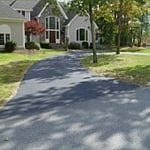
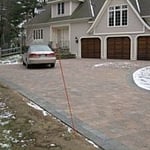
"Chris worked with my schedule to get a foundation in and also fixed up my driveways, made great suggestions. He showed up and completed the work exactly as he promised and kept the site tidy all through the project. A pleasure to work with!"
3 neighbors recently requested a quote
Recommended by100%of homeowners
...
Showing 1-10 of 51
Excavating questions, answered by experts

There is no standard depth for burying a septic tank; they are typically buried anywhere from 4 inches to 4 feet underground. The final depth depends on several factors, including the depth of your main sewer line, the height of the bedrock, soil type, local regulations, and the property's landscape. If you plan to grow grass or plants over the tank, a depth of at least 4 to 6 inches is recommended. Deeper tanks can be more difficult to locate, but a septic professional can help find it for you.

It takes one hour to dig a 10-foot trench by hand. Use a trenching shovel with a sharp tip and a long head. Plan for more time if your soil is heavy or rocky. Consider renting a trencher if you’re digging a long or deep trench or if you have challenging soil or terrain. 

Trenches are typically 12 to 24 inches deep and 8 inches wide. However, the required depth depends on the specific project and local ordinances. For example, a French drain may need to be 18 inches deep, while a water pipe might require a depth of 24 inches and a drainage pipe 36 inches. Your city or county may have specific regulations, so it's wise to consult with an excavation professional to determine the correct depth for your project.

Trenching and boring are two distinct methods for installing underground utilities. Trenching involves digging a channel using equipment like an excavator, trencher, backhoe, or shovel. While it is a simpler process, it causes significant disruption to the surface, landscaping, and surrounding ecosystems.

Boring, also known as directional boring, is a less invasive alternative that uses a drill to create a tunnel for utility lines without disturbing the surface. This method is more precise and is ideal for installations that need to go underneath buildings, roads, or bodies of water. Although boring is less disruptive, it is generally more expensive than trenching.

Call 811 to locate and mark the gas lines at least three days before digging. In many areas, you can dig within 18 inches of the lines, though in some locations, the distance may be further. Check local regulations, as you may need a utility company representative onsite when digging. Document your calls to 811 and precautions taken to avoid gas lines. A homeowner can be held liable for hitting a gas line in some cases, but contacting the proper authorities and following all guidelines can offer protection.

The Lyman, NH homeowners’ guide to excavation services

From average costs to expert advice, get all the answers you need to get your job done.