Evan Jones is a locally owned and operated company that values honesty and integrity in all aspects of our business. A expert for the last 15 years of hands on experience, to provide innovative ideas and suggestions tailored to your projects. Our services are customized to your individual needs, paying close attention to the details of each project that we are involved with. Please feel free to contact us today!
Power Moves Electric, LLC focuses on being top notch for all electrical projects no matter how big or small. You will find that we provide a variety of services with our expert services ranging from a simple panel swap to wiring a brand new home here at Power Moves Electric we pride ourselves on providing quality work and showing up when we say we are going to! Give us a call today at 603-481-0480 and let our work speak for itself thank you!
"It was so expensive I couldn't afford it. He wanted to fix the mold but he didn't want to repair the ceiling so I told him forget about it. He just wanted to go on the wall and then bathe them all and then leave. So I never called them back because I never want that. The responsiveness was good."
"Light fixture wobbles. The light switch, at first worked and now the fan speed cannot be adjusted and stays on high. Its wired wrong. He didn't balance fan and took the box it came in with him. I contacted him about the issues I was having and he said he would come out and fix it. Now he avoids me and will not return my calls.
UPDATE-10/28/14: Clark came back out today to correct the issues. It turns out that the ceiling fan I had purchased was of lower quality but he was able to fix the problem with the fan and also with the switch on the wall. Clark was excellent in the return and I'm glad we were able to address the problem."
"The furnace took 4 days to get approved( not counting a Sunday) the others were quick but the water heater had to be ordered so without hot water for a week. One ceiling fan was easy but within a year their policy changed and They would not install the one I purchased and had to get a new one approved and then ordered online and took several weeks to get straightened out. Not sure who was at fault, AHS, installer or scheduling with renter. Fee is usually $75 per visit"
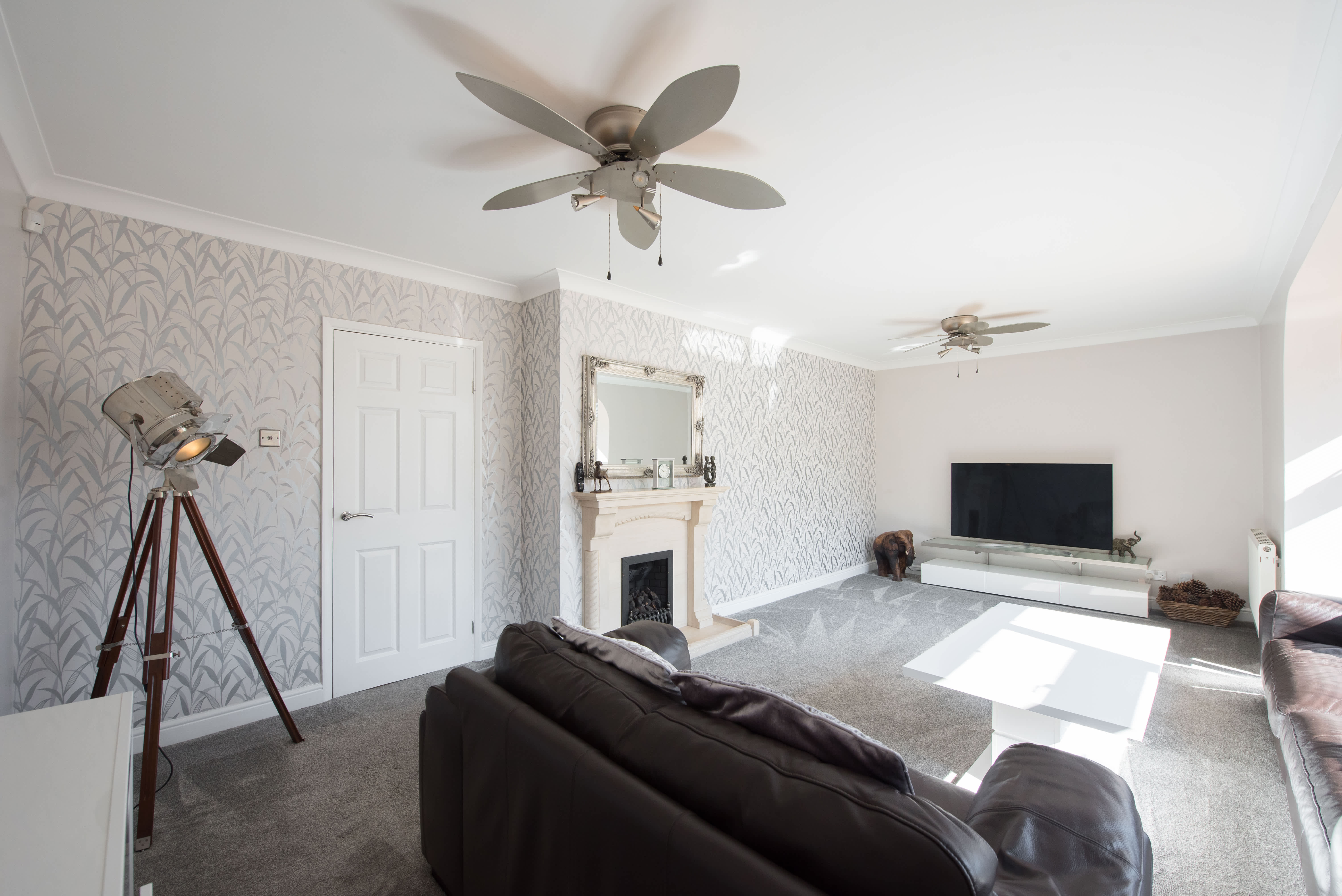
There are many types of ceiling fans, from self-automated smart ceiling fans to outdoor ceiling fans that provide additional comfort to your patio. What you choose all comes down to function and personal taste.
Consider your ceiling height when selecting a ceiling fan. Rooms with ceilings under eight feet high will do well with low-profile ceiling fans, also known as flush-mount or hugger ceiling fans. If your home has cathedral ceilings or ceilings between 10 and 25 feet high, you’ll need a large ceiling fan with a heavy-duty motor to get adequate air circulation.
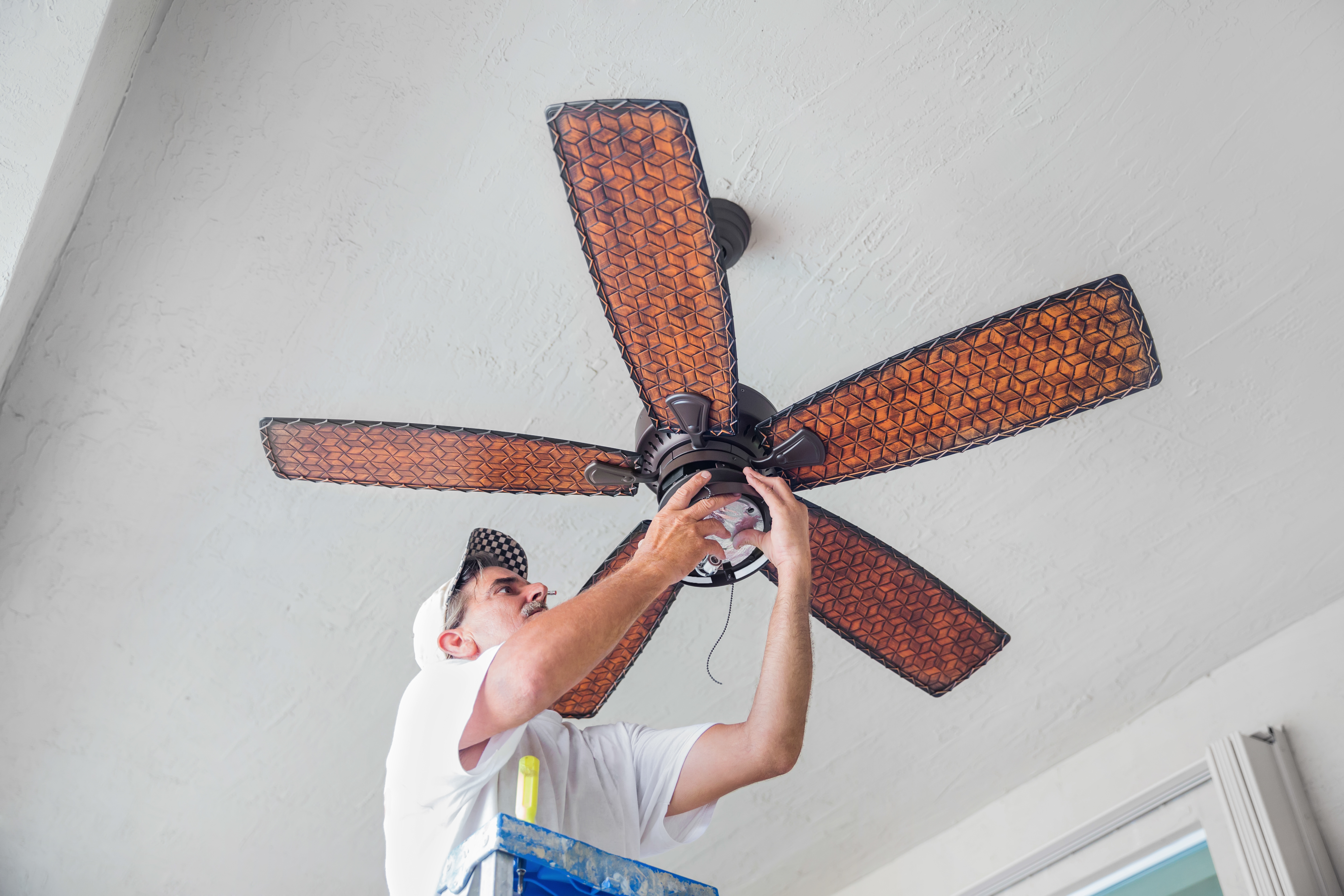
If you’re removing a ceiling fan without visible screws, start by locating the fan canopy—a round cover placed above the fan blades and motor. There should be a thin ring that can be turned counterclockwise to remove the canopy and reveal the screws. After unscrewing the fan, you can disconnect the wires and remove the entire fan from the mounting hardware. For safety, make sure the fan switch is turned off before you remove the canopy. It may be easier to remove the fan blades first, too.
Ceiling fans require periodic cleaning of blades to avoid dust accumulation, checking screws and connections for firmness, and occasional lubrication for components, keeping the fan running smoothly and quietly over time.
Most ceiling fans have a lifespan of anywhere from five to 15 years or 10 years on average. Just how long your ceiling fan lasts depends on the quality of the parts, how much it’s used, and how well you maintain it. A fan with a weak motor that runs on the medium setting nonstop is likely to have a shorter lifespan compared to a fan with a powerful motor that runs on the slowest setting for air circulation.
The square footage of your room will dictate the correct ceiling fan blade size. For example:
Rooms smaller than 75 square feet require a fan that is 29 to 36 inches.
Rooms up to 175 square feet require 42- to 48-inch fans.
Rooms up to 350 square feet require 52- to 56-inch fans.
Expansive spaces over 350 square feet need a fan larger than 60 inches.
The Berlin, NH homeowners’ guide to ceiling fan services
From average costs to expert advice, get all the answers you need to get your job done.
Discover the cost to install a ceiling fan, including labor, materials, and tips to save. Learn what impacts your price and how to budget for your project.
Ceiling fans cool down your home while stylishly accenting your space. With a variety of types of ceiling fan on the market to choose from, you can’t go wrong.
Although the risk is low, there are a few telltale signs that a ceiling fan will fall off your ceiling. This guide explains when to worry (and when not to).