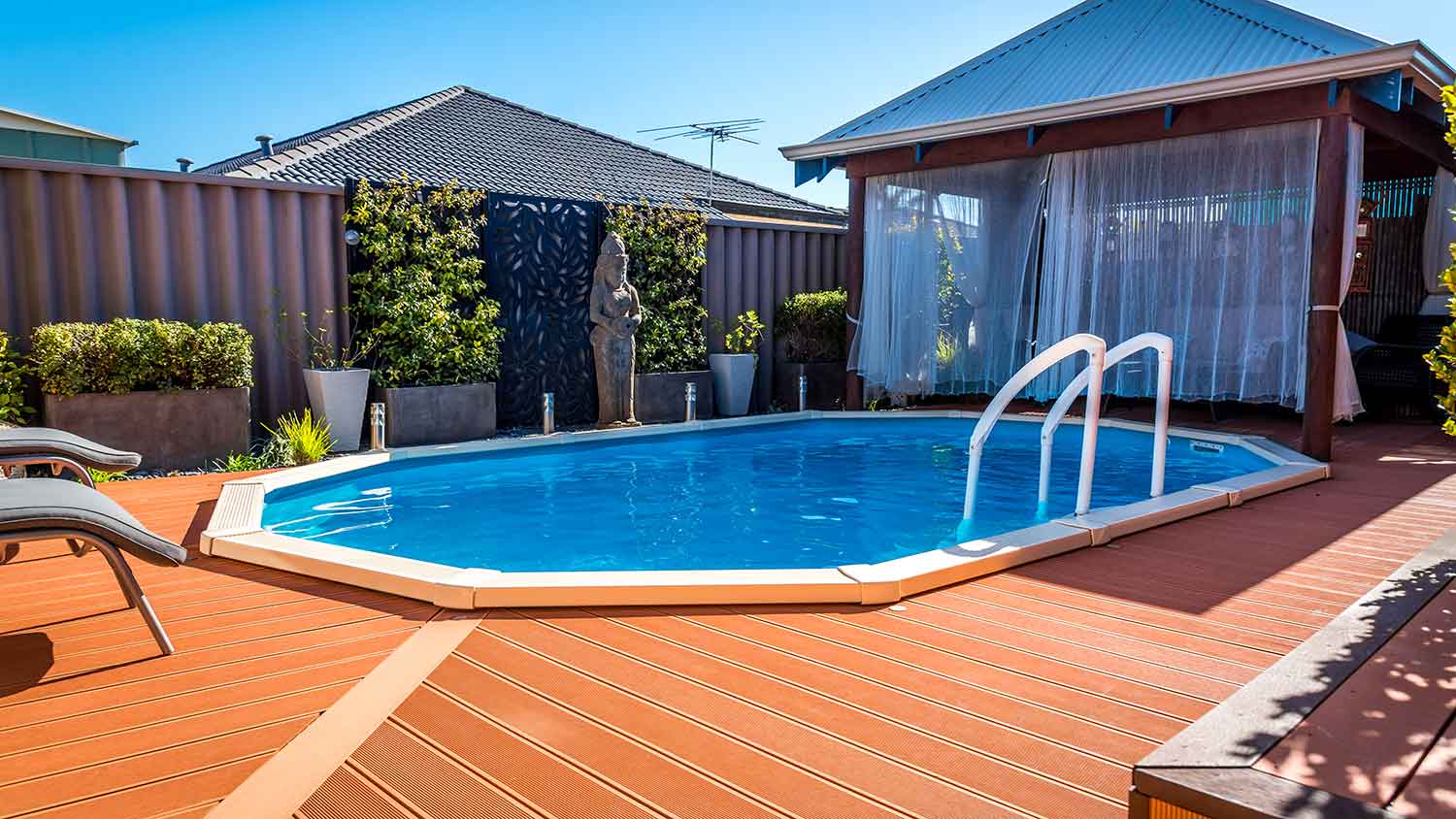
Install Above Ground Pools questions, answered by experts
Pool maintenance costs an average of $230 per service, with prices ranging from $50 to $750 per service, depending on several factors. The type of service will usually be the most significant cost factor, as opening and closing a pool takes a few hours and can total $400 or more, while regular cleanings could cost under $100. The size of your pool and the type of pool—above-ground, in-ground, saltwater—can also affect the price of maintenance.
Permits are generally required to build an in-ground swimming pool. These permits cover aspects like zoning, safety fencing, and electrical work. Obtaining the correct permits involves coordination with local building authorities.
The best way to find a reliable pool service company is to look for one that is properly licensed and insured, has positive customer reviews, maintains good ratings with the Better Business Bureau (BBB), and provides pricing that fits into your budget.
You can also ask the following questions to see if a pool service company is right for you:
Do you provide discounts if I sign up for multiple services or a contract?
What services can you provide?
How many years of experience do you have?
Do you have any customer references I can call?
You can check if your pool is bonded by looking for a copper wire that connects to the motor and pumps and then extends into the ground. However, if you’re unfamiliar with electrical wiring, contacting a pool electrician to inspect the motor and pumps is safest. An electrician can check the system and determine if it is up to code and meets all swimming pool bonding requirements.
Yes, salt water pools are more expensive than chlorine-based pools because they require a more complex system than traditional, chlorinated pools. This added complexity means more skilled labor and a higher investment upfront. Also, if you need to repair a salt water pool, finding a contractor with the needed experience is generally more time-consuming.
The Minto, ND homeowners’ guide to above ground pool installation services
From average costs to expert advice, get all the answers you need to get your job done.
Ready for a backyard oasis? Learn everything about above ground pool installation, including average costs, site prep, and how to hire local pool installers.
Above ground pools are more affordable than inground pools, so can you put an above ground pool in the ground to save money? Learn when it’s safe to do so.