




Top-rated generator install pros.

Get matched with top generator install pros in Moselle, MS

Enter your zip and get matched with up to 5 pros

Need a pro for your generator install project in Moselle, MS?

Select your specific project to find the pro for you.

Find Generator install pros in Moselle

Hodas Generator & Electrical LLC
New to Angi

Serving Moselle, MS and surrounding areas

Approved

In business since 2012

Free estimates

Credit card accepted

We take great pride our experience, expertise, quality, and customer service that we provide to meet the consumer's needs. It is our mission to provide excellent workmanship and complete customer satisfaction, from the start to the completion of a project. order to understand the needs and expectations of our customers, we take great care to work and communicate with every customer a professional manner. Our reputation is based on service, safety, and quality, regardless of how large or small the job.

22 neighbors recently requested a quote
Nail Electric
New to Angi

Serving Moselle, MS and surrounding areas

Approved

Hey everyone my names Parker Nail. I’m excited to launch my LLC. I’ve been doing Electrical work for 4 years now. I’m always looking for side work and would be happy to handle any type of electrical service needed. My goal is to provide quality and safe work that you can rely on. I’m available after I get off work during the week and on weekends.

Avatar for Electrical Repair Service
Electrical Repair Service
5.0(
54
)

Serving Moselle, MS and surrounding areas

In business since 2013

Free estimates

Credit card accepted

"He arrived on Time. He was very friendly and efficient. He did excellent work and cleaned up when he was finished. I would recommend him fully."
Ring Security Light
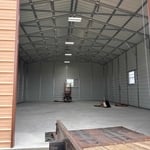
Shed and pole barn
Shed and pole barn
Shed and pole barn
Shed and pole barn

+6

Response time8 hrs
Response rate94%
Recommended by100%of homeowners
Showing 1-10 of 43
Generator Install questions, answered by experts

Natural gas and electricity rates vary significantly based on location, and pricing can change over time, too. It’s possible that in locations where natural gas is particularly inexpensive, it will cost less than grid-based electricity will. However, you should also factor in the generator’s initial costs and maintenance needs, as well as its noise level and if it can comfortably power all your home appliances.

The amount of time a standby generator can run continuously is around 3,000 hours on average. However, standby generators can generally run indefinitely as long as they have a continuous fuel supply. Generators hooked up to a home’s natural gas supply are the best option for extended usage, as these won’t rely on a finite fuel supply based on how much you have in storage. Generators running on liquid propane or diesel won’t last as long, as these require fuel storage and regular refueling to stay running.

In most cases, there are no tax credits available for home generators. However, that’s a general statement that applies to federal tax credits, so you might have access to state or local tax incentives. You can check the Database of State Incentives for Renewables & Efficiency (DSIRE) for more information about your area. If you hire a reliable home generator installer, they should also know if there are any state or local perks you can use to reduce your installation costs, including tax breaks and rebates.

To determine the right size generator for your house, you should calculate the total wattage of the appliances and devices you want to power during an outage. List all essential items, note their start-up wattages, and add them together.

Here are some typical wattage requirements for common appliances:

  • Refrigerator: 600 watts

  • Large dehumidifier: 700 watts

  • Large window air conditioner: 1,400 watts

  • Water heater: 3,000 to 4,500 watts

  • Electric furnace: 5,000 to 25,000 watts

A 7,500-watt generator might be sufficient for essentials like a refrigerator, freezer, well pump, and lighting circuits. However, for high-demand items like a water heater or furnace, a whole-home generator is a better choice. A portable generator may be enough if you only need to power a few critical items.

While home square footage can offer a rough estimate, it is not always a reliable indicator. For reference, here are some typical generator sizes based on square footage:

  • 1,000 sq ft: 6–9 kW

  • 1,500 sq ft: 7–10 kW

  • 2,000 sq ft: 10–14 kW

  • 2,500 sq ft: 12–16 kW

  • 3,000 sq ft: 16–20 kW+

For the most accurate sizing, consult a professional who can calculate your home's peak and average power consumption and recommend the optimal generator.

Whole-house generators need to be installed on level ground several feet away from walls and other objects. Because they tap into the electrical system directly, they usually need to be close to your home electrical panel for a transfer switch installation. It also helps with installation if they are near to a gas line or propane tank installation.

The Moselle, MS homeowners’ guide to generator installs

From average costs to expert advice, get all the answers you need to get your job done.