




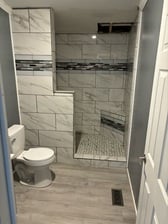
Top-rated ceramic tile pros.

Best ceramic tile pros near Crowder, MS

Enter your zip and get matched with up to 5 pros

Need a pro for your ceramic tile service project in Crowder, MS?

Select your specific project to find the pro for you.

Top-Rated Ceramic tile pros in Crowder - Updated Nov 2026

Darryl's Stones and Tile
New to Angi
Tile: Ceramic and Porcelain - InstallTile: Ceramic and Porcelain - Repair

Serving Crowder, MS and surrounding areas

In business since 2010

Free estimates

With over 8 years of experience, Darryl's Stones and Tile is committed to excellence in every aspect of our business. We uphold a standard of integrity bound by fairness, honesty, and personal responsibility. Our distinction is the quality of service we bring to our customers. Accurate knowledge of our trade combined with ability is what makes us true professionals. Above all, we are watchful of our customers' interests and make their concerns the basis of our business. Call us today! \n \n

Showing 1-10 of 50
Ceramic Tile FAQs, answered by experts

You have creative freedom when it comes to your tile trim. If, however, you are considering skipping tile trim, please think twice about that. It is good practice to install tile trim, whether on walls or flooring. Think, too, about the aesthetic you are going for and choose a trim type and color that will help enhance the space.

Porcelain is a relatively affordable, mid-range countertop material. It typically costs between $50 to $70 per square foot.

Compared to quartz, porcelain is slightly more affordable, as quartz generally ranges from $50 to $200 per square foot. However, lower-quality, builder's grade quartz can be similar in price to porcelain.

Compared to granite, the price can be similar, depending on the quality of the stone. While granite slabs can range from $50 to $200 per square foot, you can find lower-end granite in the same price range as porcelain. High-end granites will cost significantly more.

Porcelain is generally more expensive than laminate, acrylic, and ceramic, but less expensive than high-end slate, concrete, and marble. A key benefit is that porcelain does not require sealing, which reduces long-term maintenance costs.

Grout and caulk are commonly used together, especially in bathrooms. Grout goes between the tiles and keeps them sturdy and in place on the walls or floor. Caulk goes in corners or where two different materials meet (like where the bathtub meets the tile) to create a waterproof seal. However, they are not interchangeable—you shouldn't use caulk to adhere tile and shouldn’t use mortar if you need a waterproof seal.

When tiling over concrete, you should install an anti-fracture membrane after the concrete has been prepared. The anti-fracture membrane acts as a moisture barrier and should be installed to protect the tiles from moisture which helps maintain their integrity. Often, Ditra, a brand name, is used interchangeably with moisture barrier.

Porcelain and ceramic tiles are made from clay, but porcelain tiles are fired in a kiln at a higher temperature. This makes them more durable, but it also means porcelain is more expensive than ceramic at $3 to $5 more per square foot.

Even with the higher price point, many people choose porcelain over ceramic because there are more color and design options.

The Crowder, MS homeowners’ guide to ceramic tile services

From average costs to expert advice, get all the answers you need to get your job done.