




Top-rated weed maintenance pros.

Get matched with top weed maintenance pros in Houston, MO

Enter your zip and get matched with up to 5 pros

Need a pro for your weed maintenance project in Houston, MO?

Select your specific project to find the pro for you.

Find Weed maintenance pros in Houston

No results for Weed maintenance pro in

Try adjusting your search criteria.
Weed Services questions, answered by experts

Sealing pavers helps cut down on weed growth, but it won’t wipe it out entirely. What it does really well is harden the joint sand—especially if you’re using a sealant with polymer additives—so weeds have a much harder time breaking through. It also blocks airborne seeds from settling in the cracks and keeps debris from building up. This results in fewer weeds, easier maintenance, and a cleaner-looking surface. Just remember, sealing is a strong defense—not a one-and-done solution. Stay on top of sweeping, spot-treating, and resealing every few years to keep your weeds in check.

Landscaping fabric can only help to prevent weed growth in the short term. It's not an ideal long-term solution because dirt will eventually make its way on top of it, causing weeds to sprout. These fabrics can also leave microplastics in the environment for many, many years, so pulling weeds using one of the methods in this guide as soon as you see them is a better long-term prevention strategy.

The best time to hire a weed service company is in the early spring. This allows them to apply a pre-emergent weed killer that stops weeds from taking root, making maintenance for the rest of the season much easier. Following the initial spring application, a monthly service through the summer and early fall is a good idea for ongoing weed control. These regular treatments, combined with manual removal or spot treatment, should be sufficient to maintain a weed-free yard. Alternatively, you can hire a professional in the fall for the following year, as some companies may offer better rates on contracts signed before the busy spring season.

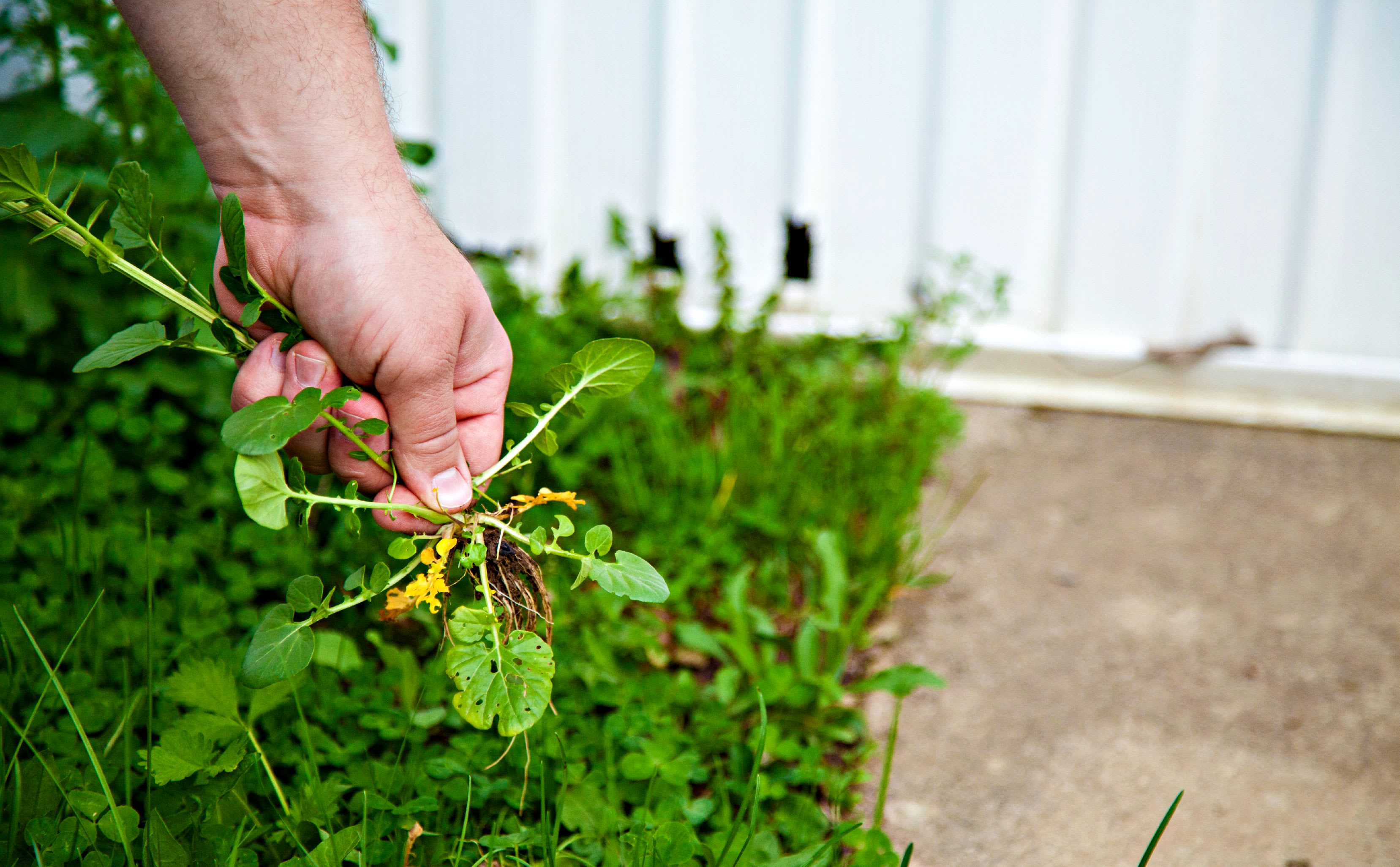
Dandelions, while hard to control and widespread across the country, are not typically categorized as noxious. Yellow starthistle, however, looks very similar to a dandelion and is highly damaging to local plants and invasive across the country.

Too much clover in your lawn can indicate several issues with your soil. Clover can thrive in soils with abnormally high pH, low-cut grass, and low nitrogen. Amending these issues can push clover out for good.

Hardy perennial clover loves the low nitrogen and compact conditions that often come with poor, infertile soils. But other factors also contribute to a clover explosion, including drought conditions, cool temperatures, under fertilization, and over-irrigation. You’ll need to evaluate all these elements when planning to kill off the clover.

The Houston, MO homeowners’ guide to weed maintenance services

From average costs to expert advice, get all the answers you need to get your job done.