



Top-rated pressure washers.

Get matched with top pressure washers in Hamilton, MO

Enter your zip and get matched with up to 5 pros

Need a pro for your pressure washing project in Hamilton, MO?

Select your specific project to find the pro for you.

Find Pressure washers in Hamilton

The Cleaning Service
New to Angi
Exterior Surfaces - Powerwashing

Serving Hamilton, MO and surrounding areas

Approved

I have over 15 years of professional cleaning experience specializing in commercial, luxury, post-renovation, post-construction, and new build cleaning. I am looking to grow into servicing businesses while continuing to provide exceptional cleaning for apartment communities, common areas, and high-end properties. Detail-oriented, dependable, and committed to delivering consistently high-quality results, I ensure every space is spotless, welcoming, and professionally maintained.

Campus Midwest
New to Angi
Exterior Surfaces - Powerwashing - For Business

Serving Hamilton, MO and surrounding areas

Approved

Campus Midwest provides professional commercial cleaning services throughout the Kansas City metro area. We specialize in janitorial services, office cleaning, deep cleaning, move-in/move-out cleaning, floor care, post-construction cleanup, pressure washing, and exterior property maintenance.\n\nWe also provide outdoor maintenance services such as, mowing, trimming, landscaping, hardscaping, power washing, snow removal, tree trimming, brush removal/cleanup, tree/land clearing, tree removal, and much more! \n\nWe are committed to reliable service, quality work, clear communication, and customer satisfaction on every project. Licensed, dependable, and locally owned.

...
Showing 1-10 of 62
Pressure Washing questions, answered by experts

It is possible to pressure wash your deck, but it’s usually best to leave the work to a professional for two main reasons. First, power washers are expensive, and you can avoid high upfront costs by hiring a deck washing pro instead. Second, you must be careful to use the correct setting to avoid damaging your deck material. You can only clean soft woods like pine with a wide spray and a low pressure; otherwise, the water will leave unpleasant marks on your deck. Hard woods, composite material, and metal can stand up to increasingly higher water pressures.

You should avoid using a pressure washer on any surface or item that could be damaged by the high-pressure spray, as some materials are too delicate to withstand the force.

Key items and surfaces to avoid include:

  • Electrical Components: Never pressure wash electrical systems, as water can cause short-circuits and create a safety hazard. This includes utility meters, breaker boxes, electrical outlets, generators, and HVAC or air conditioner units.

  • Delicate and Fragile Materials: Fragile items can crack, shatter, or be stripped by the pressure. Avoid pressure washing windows, glass, light fixtures, shingled roofs (especially asphalt), and stucco.

  • Painted, Stained, or Sealed Surfaces: Unless your goal is to strip the finish, do not pressure wash painted surfaces, stained wood (like decks), or anything with a protective seal that could be stripped away. Be especially cautious with older surfaces that may contain lead paint.

  • Soft Woods and Certain Decking: Delicate surfaces like softwood, composite decking, and antique or wooden patio furniture can be etched or damaged. If you must wash wood, use a lower-powered pressure washer with a wide-angle nozzle to prevent damage.

  • Living Things: Never use a pressure washer on people, pets, or plants. The force can cause serious injury and will destroy landscaping.

We don’t recommend pressuring washing clapboard siding. At high levels of pressure, a pressure washer can damage wood siding permanently. Pressure washing can also make it easier to drive water into the cracks of clapboard (which are recommended for easier drainage), causing moisture damage.

If you think your clapboard siding is so dirty it could benefit from pressure washing, we suggest contacting a pressure wash cleaning service and getting a quote on a wood siding project. Some siding manufacturers recommend never pressure washing because it can force water behind the siding.

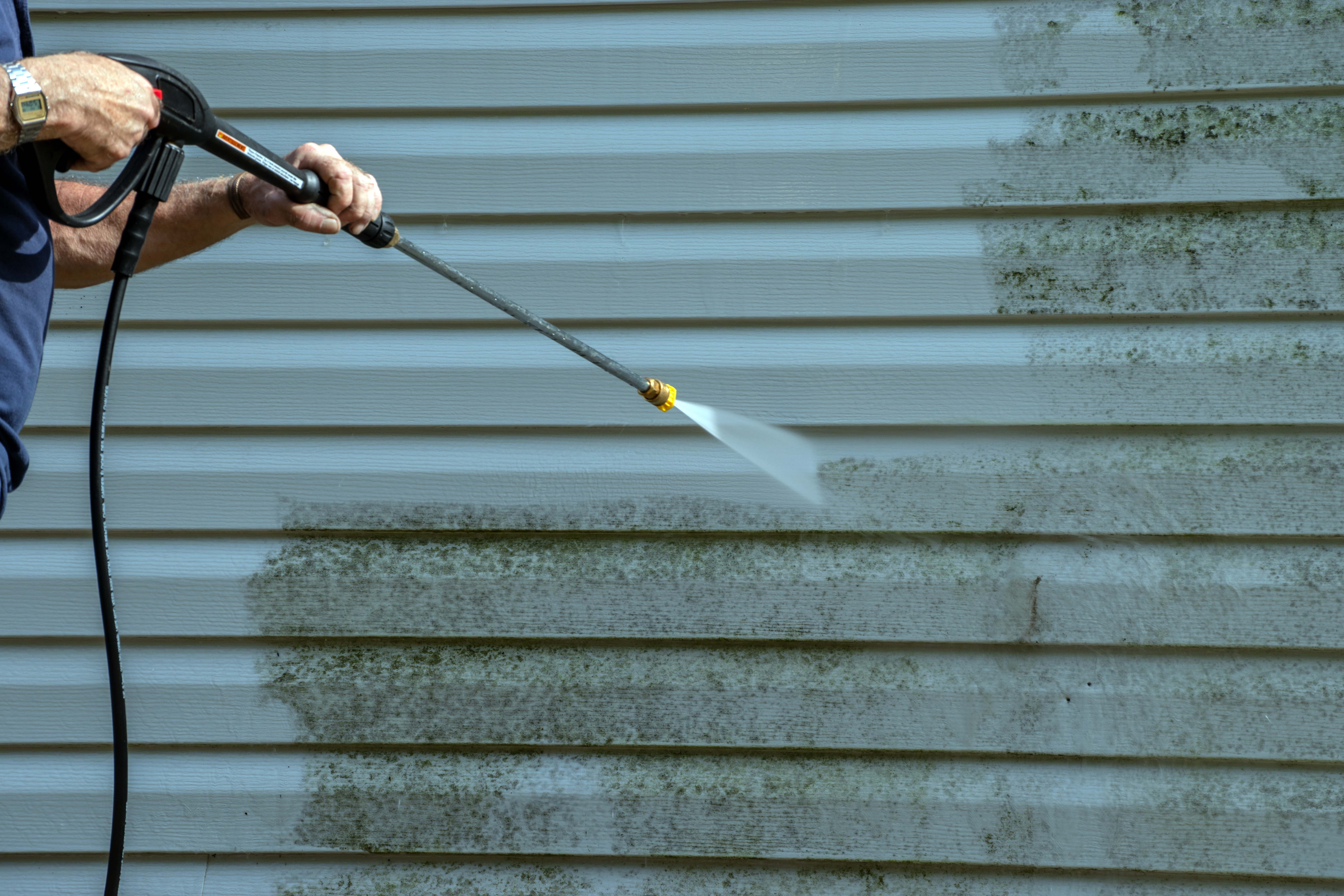
Pressure washers are better for residential use. Power washers are best suited for cleaning very hard surfaces (like concrete and cement) and removing tough stains or tacked-on grime. Meanwhile, pressure washers have more uses. For example, you can use one to deep clean a wooden fence, spray down your vinyl siding, or clear out your gutters.

The ideal PSI (pounds per square inch) for a pressure washer depends on the surface you are cleaning. For general home use, a pressure washer with a range of 2,000 to 3,000 PSI is recommended and powerful enough for most residential projects.

The specific PSI you should use varies by task:

  • High-Pressure Tasks (2,500-3,000 PSI): Tough materials like concrete, stone, masonry, and brick can handle higher pressures. This is suitable for removing stubborn stains from driveways or cleaning graffiti.

  • Low-Pressure Tasks (around 600-1,300 PSI): Softer surfaces require a gentler touch to avoid damage. Use a low PSI setting for cleaning wood decks (especially softwoods like pine and cedar), vinyl siding, outdoor furniture, and stucco.

For best results, choose the right nozzle for your surface, such as a 15-degree nozzle for siding or a surface cleaner attachment for driveways. Using an extendable wand can also make the work easier and more ergonomic.

The Hamilton, MO homeowners’ guide to pressure washing services

From average costs to expert advice, get all the answers you need to get your job done.