We take great pride in our experience, expertise, quality, and customer service that we provide to meet the consumers' needs. It is our mission to provide excellent workmanship and complete customer satisfaction from start to completion of a project. To understand the needs and expectations of our customers, we take great care to work and communicate with every customer in a professional manner. Our reputation is based on service, safety, and quality, regardless of how large or small the job.\n
At Earthscape, our uncompromising dedication to quality craftsmanship ensures that every project is approached individually, creating a personal masterpiece that meets the needs and expectations of our clients, from design to completion. We specialize in landscape and architectual stone masonry (interior & exterior). Examples of our work include: Fireplaces(indoor & outdoor), walls, flooring, facing, patios, and pool decks. We also make custom birch and stone furniture and furnishings. Let our team go to work and add the beauty and strength of natural stone to your home and landscape, creating your perfect little corner of the world.\n \n
Yes, fence posts need to be installed below the frost line to ensure stability and prevent heaving caused by freezing and thawing cycles. The frost line is the depth at which soil freezes during winter. By placing posts below this line, often around 3 to 4 feet deep or as recommended for your specific region, you reduce the risk of the ground shifting, which can lead to leaning or unstable fences. Adequate depth provides better anchoring and helps maintain the fence's integrity, ensuring it remains secure and upright throughout changing seasons.
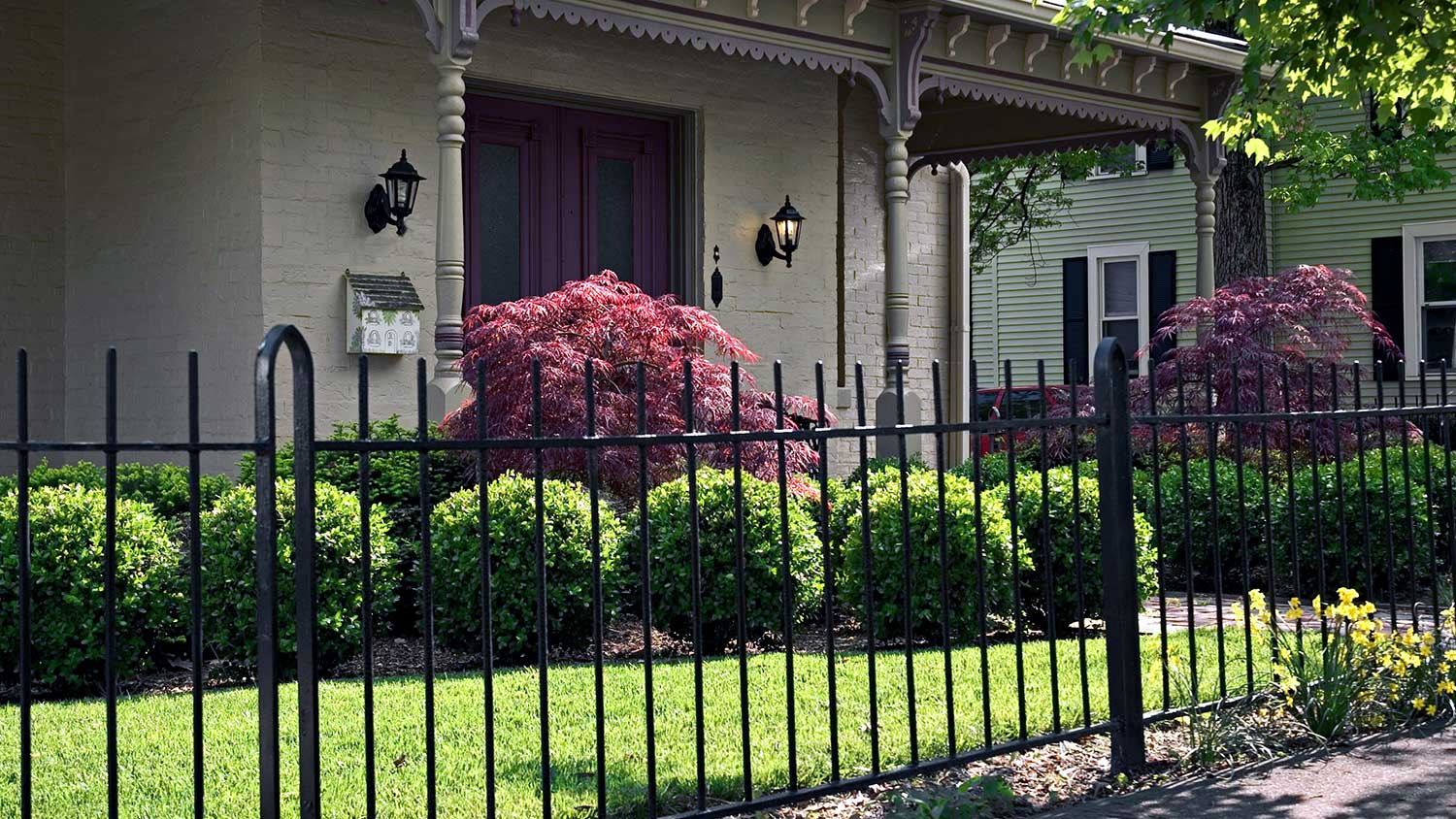
The average cost to install a wrought iron fence is around $3,150, with typical project costs ranging from $470 to $10,500. The final price can vary significantly based on several factors, including the fence's total length and height, design complexity, metal thickness, and your property's topography.
For materials alone, you can expect to pay around $25 to $35 per linear foot. When including installation, the cost is typically between $50 and $70 per linear foot.
Additional factors that can influence the total cost include:
Custom designs, decorative flourishes, gates, and columns
Labor costs in your area
The need for permits
Land preparation, such as old fence removal, tree or bush clearing, and land grading
For an accurate estimate, it is best to consult a professional fence installer with the specific measurements and design requirements for your project.
Posts for a horizontal fence should be no more than 6 feet apart. Wood pickets are not as strong when mounted horizontally as when mounted vertically. As such, the fence panels on a horizontal fence can’t cover the same span between posts as a vertical fence can. If you install the posts further apart on a horizontal fence, the fence will lose stability, making the boards more likely to sag.
The ideal distance between fence posts depends on several factors, including the terrain, the purpose of the fence, and the material used. For different types of fences, here are some general guidelines:
Wood and Metal Fences: Posts should be spaced between 5 and 8 feet apart.
Vinyl Fences: Spacing can be between 6 and 8 feet.
Chain-Link, Mesh, or Lattice Fences: Posts can be set anywhere from 4 to 25 feet apart, with 4-10 feet being common for chain-link.
Wire Fences: Spacing can be up to 12 feet apart.
The safest pool fence depends on your specific needs, such as protecting children and pets. Generally, a fence that is difficult to climb and lacks gaps that a child or pet could slip through is safest. Mesh and tempered glass are very safe options because they are difficult to climb. Mesh fences often meet height requirements, although they may not be the most durable. Solid fences made of wood, concrete, or stone can also be very effective, provided they are high enough to prevent climbing. For additional safety, you could install a pool safety net or a full swimming pool enclosure. Proper maintenance of the pool area is also essential.
The Wheaton, MN homeowners’ guide to wrought iron services
From average costs to expert advice, get all the answers you need to get your job done.
Unsure who to hire to install a wrought iron fence? Compare fence contractors and ornamental iron pros, see how installation works, and choose confidently.