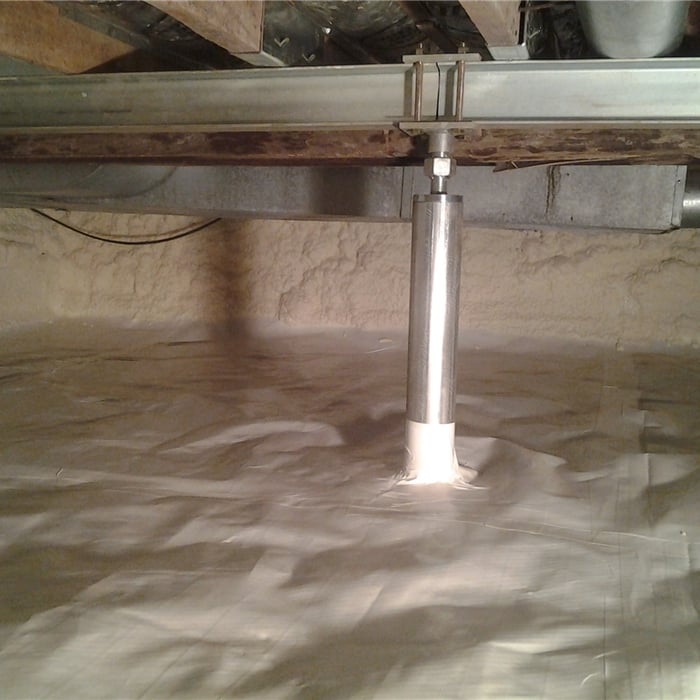
"I live in a small rural town and Rick took the time over the phone to get an understanding of our basement setup so that he could give an accurate quote. He was very responsive, followed through on all plans, arrived on time, was tidy and professional every step of the process. The cost ended up being a little less than expected. The system he installed is working perfectly and our radon issue is fixed! Highly recommend!!!"
"This job was completed efficiently and professionally. A design specialist came to test and measure every detail for the project. The crew arrived with everything needed for the job. They worked very hard to install Waterguard in the concrete floors inside around the foundation to the sump pump basket. They also installed Geo-lock anchors to support a block wall that was bowed. This company has 36 years in business and provides excellent results and professional customer relations. Call Amer. Wtrwrks for a free estimate. You will not be disappointed. A wise investment of $11,270."
Radon Detection and Reduction questions, answered by experts
The cost for a radon mitigation system typically ranges from $800 to $1,500, with an average around $1,000. The final price depends on several factors, including the size of your home, the severity of the radon issue, and the type of system required. Your home's foundation type also significantly impacts the cost. For example, sealing and ventilating an unfinished basement might cost around $4,600, while encapsulating a crawl space without a foundation slab can range from $1,500 to $15,000.
Use a radon test kit or hire professionals to conduct a detailed assessment of radon levels in your home.
The cost to replace a radon fan ranges from $300 to $600 for the fan itself, with installation adding an additional $200 to $500. Overall, the total cost for replacement can range from $500 to $1,100, depending on factors such as the fan model, home size, and local labor rates. If the fan is part of a larger radon mitigation system, the price may be higher.
Radon is the number one non-smoking cause of lung cancer in the United States, but it can cause some other concerning side effects in the meantime. If you have a raspy voice, chest pains, trouble breathing, difficulty swallowing, or any of the above, don’t hesitate to perform radon testing and install a mitigation system as soon as possible.
Your radon mitigation system may be loud because it’s time to replace it. Any sounds are usually from the inline fan that helps create the vacuum and resulting airflow. If you hear a new, loud mechanical or humming noise from your radon fan, it might be time to replace it. Most fans used in radon mitigation systems last up to 10 years, but may need to be replaced sooner.
The Red Lake Falls, MN homeowners’ guide to radon detection and reduction services
From average costs to expert advice, get all the answers you need to get your job done.
Get clear answers on how much radon remediation costs, including average prices, key cost factors, and tips to save money on your home’s radon mitigation.
Find out what impacts radon testing costs, including average prices for DIY kits and professional services, so you can protect your home and budget confidently.
Radon is a gas that you can't see or smell and is harmful to your health. If your home has radon, you need to know who installs radon mitigation systems.