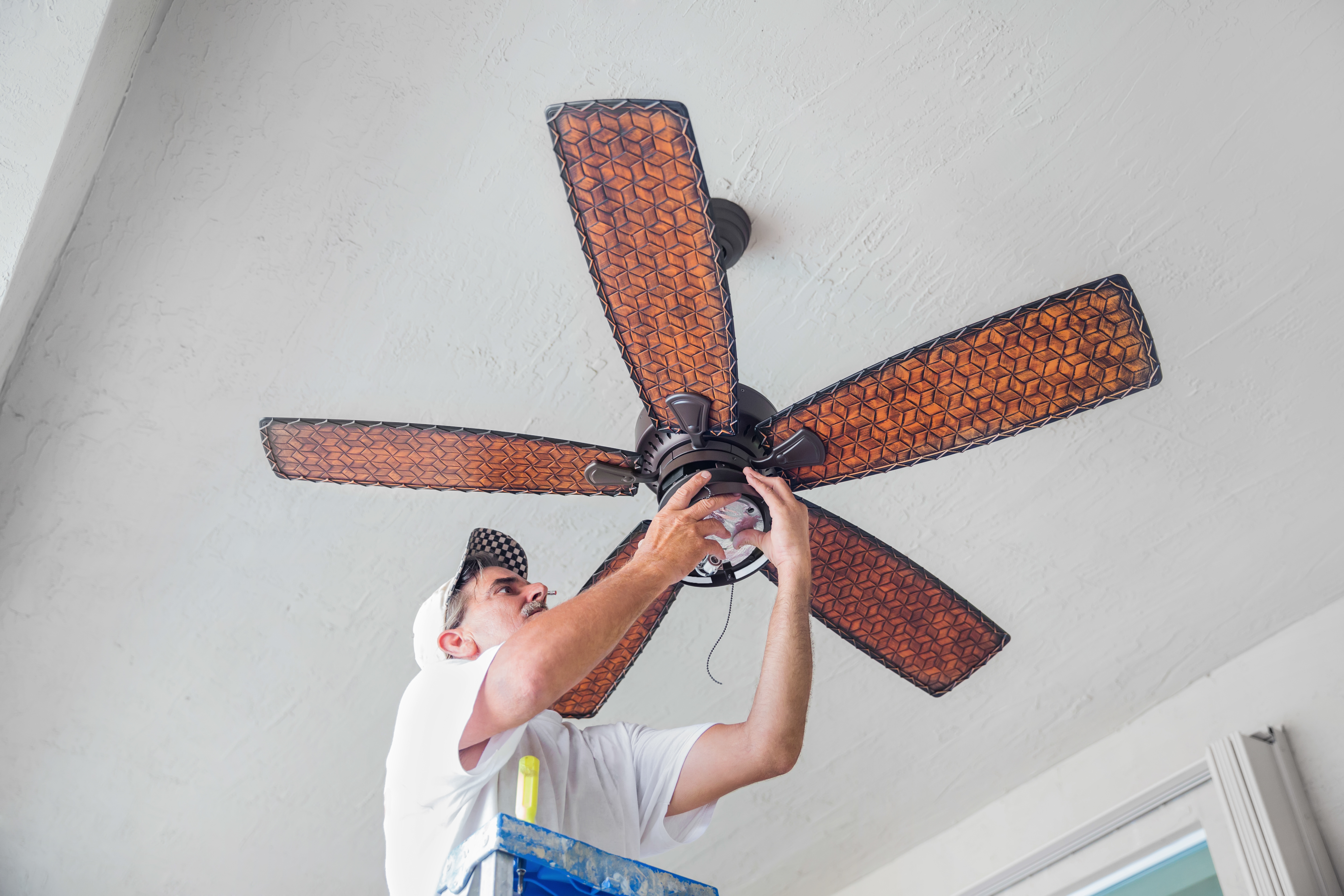









Top-rated ceiling fan pros.

Best ceiling fan pros near Onekama, MI

Enter your zip and get matched with up to 5 pros

Need a pro for your ceiling fan service project in Onekama, MI?

Select your specific project to find the pro for you.

Top-Rated Ceiling fan pros in Onekama - Updated Nov 2026

Avatar for American Home Shield – Home Warranty
American Home Shield – Home Warranty
3.5(
5,689
)
Ceiling Fan - InstallCeiling Fan - Repair

Serving Onekama, MI and surrounding areas

In business since 1971

Credit card accepted

"I love American Shield.  I love American Shield.  I love them. We have 2 homes; this home is 30 years old, our home in California is twenty years old and we have used them in both places.
A, number 1, plus, plus!"
Additional Photos
Additional Photos
Additional Photos
Additional Photos
Additional Photos

+2

Recommended by65%of homeowners
Ceiling Fans FAQs, answered by experts

Ceiling fans are very often worth the investment because they improve comfort in your living space and help reduce utility bills. In the late spring and early fall—and even in the summer in some areas—homeowners with ceiling fans can often get away with open windows and fans, which can cut down on cooling bills and also reduce wear and tear on the HVAC system. Over time, ceiling fans can pay for themselves by saving you money on electric bills and air conditioner repair and maintenance.

Fans not turning on, wobbling, noisy motors, or faulty remote controls are common issues requiring repair.

Fan power is measured by CFM, or cubic feet per minute. For every 1,000 feet of square footage in your attic, you need a minimum of 700 CFM. Steeper roofs may need larger fans or about 840 CFM.  You can figure the size of attic fan you need by multiplying the square footage of your attic floor by 0.7. (multiply by 1.2 for a steep roof and 1.15 for a dark roof). That number is the CFM required for your fan to run efficiently.

If you’re removing a ceiling fan without visible screws, start by locating the fan canopy—a round cover placed above the fan blades and motor. There should be a thin ring that can be turned counterclockwise to remove the canopy and reveal the screws. After unscrewing the fan, you can disconnect the wires and remove the entire fan from the mounting hardware. For safety, make sure the fan switch is turned off before you remove the canopy. It may be easier to remove the fan blades first, too.

The direction your ceiling fan spins helps create comfortable airflow in your home and can also help cut down on energy costs. 

During summer, your ceiling fan should spin counterclockwise. This will push cooler air downward in a column and help lower your room’s air temperature. In the winter, set your ceiling fan to spin clockwise and at the lowest speed setting. This will pull cool air upwards, displacing the warm air that pools towards the top of your ceiling and bringing it down towards the floor.

The Onekama, MI homeowners’ guide to ceiling fan services

From average costs to expert advice, get all the answers you need to get your job done.