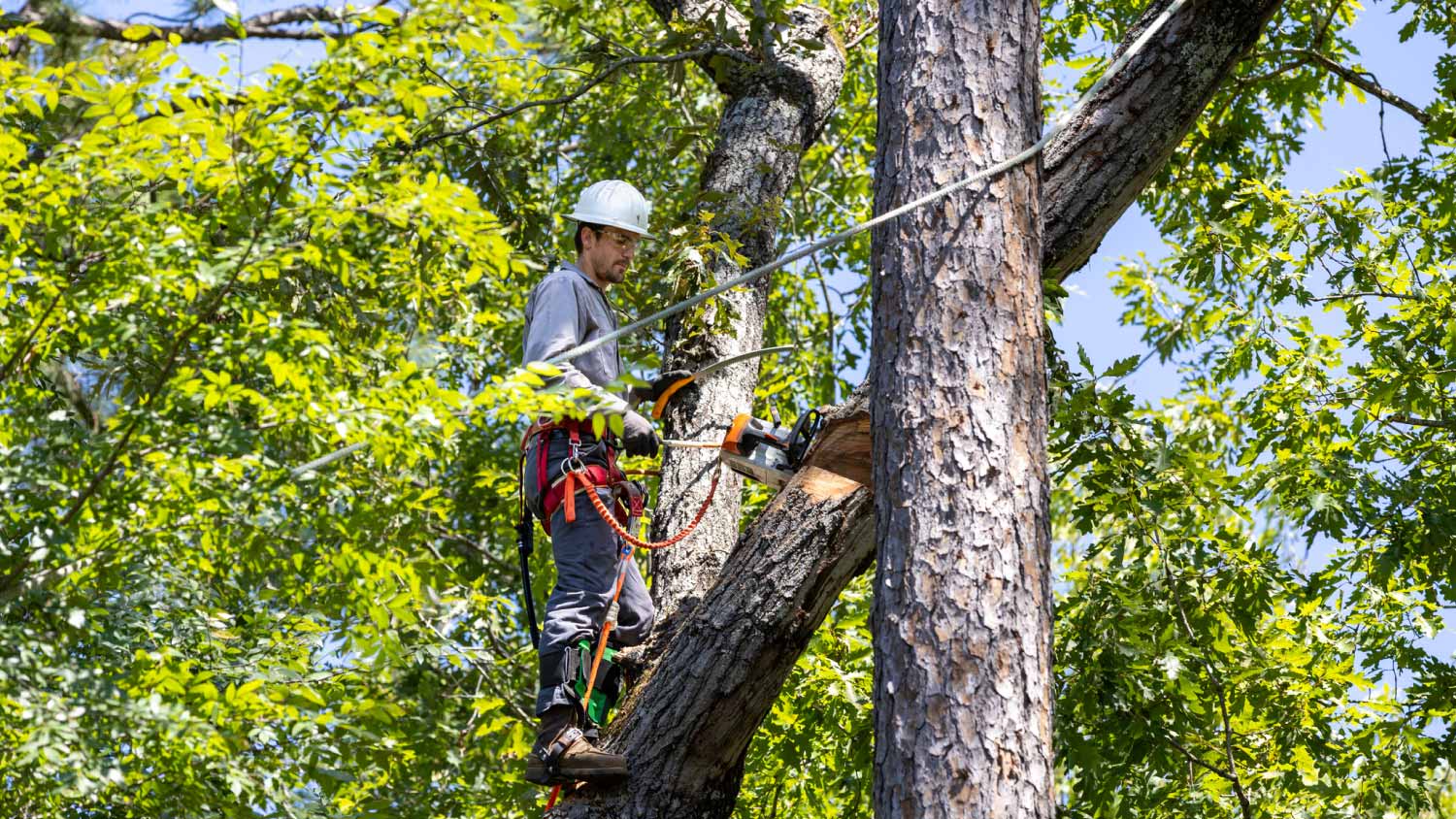
We take great pride in our experience, expertise, quality workmanship, and customer service. We specialize in professional tree services including tree trimming, tree removal, pruning, storm cleanup, hazardous tree removal, and general tree maintenance for both residential and commercial properties. Our mission is to deliver safe, reliable, and high-quality work while ensuring complete customer satisfaction from start to finish. We take the time to understand each customers needs and communicate professionally throughout every project. Our reputation is built on safety, reliability, attention to detail, and quality service, no matter the size of the job.
At Zach's Excavation we pride our company on reliability, great communication, integrity, and quality work. We strongly believe in giving our absolute best in all the work we perform. We are experts and will always keep you educated about the work process. We look forward to earning your business.
Milks Tree Service Inc is committed to excellence in every aspect of our business. We uphold a standard of integrity bound by fairness, honesty, and personal responsibility. Our distinction is the quality of service we bring to our customers. Accurate knowledge of our trade combined with ability is what makes us true professionals. Above all, we are watchful of our customers' interests and make their concerns the basis of our business.
We take great pride in our experience, expertise, quality and customer service that we provide to meet your needs. It is our mission to provide excellent workmanship and complete customer satisfaction from start to completion of a project. In order to understand the needs and expectations of our customers, we take great care to work and communicate with every customer a professional manner. Our reputation is based on service, safety and quality, regardless of how large or small the job.
Precision Lawn Care USA, is committed to excellence in every aspect of our business. We uphold a standard of integrity bound by fairness, honesty, and personal responsibility. Our distinction is the quality of service we bring to our customers. Accurate knowledge of our trade combined with ability is what makes us true professionals. Above all, we are watchful of our customers' interests, and make their concerns the basis of our business.
My name is Tyler, I am a very avid outdoorsman, I grew up in the woods hunting and fishing I have had a patchy childhood but here I am working to make a living so my next generation doesn’t have to understand struggle, my number one priority is to always satisfy the customer
I do industrial mechanics, which involves quite a few different set of skills. I do work full time, but enjoying helping people with the skills I can provide.
I take care of the dirty, heavy work that homeowners and contractors don't want to handle around Monroe, Adrian, and the surrounding areas. With a heavy-duty F-250 and a big hydraulic dump trailer, we do everything from ripping out old kitchens and tearing down sheds to clearing overgrown brush, grading land, and cleaning out gutters. We don't just show up, smash things, and leave a mess—we handle the full demolition, pack up the trailer, and haul every piece of trash straight to the landfill so your property is completely clean and ready for whatever's next. If you need a job done fast, safely, and without the corporate hassle, give me a call.
Trimming your palm trees once or twice per year keeps them healthy and robust. Caring for palm trees includes cutting off brown leaves to prevent wildfires and pathway obstruction. However, you don’t want to over-trim the palm tree. Cutting too many branches off will weaken the tree and prevent future growth. And it’s essential to have a strong, healthy palm tree during hurricane season to prevent safety risks or property damage.
It depends on the type of tree. Typically, late spring on the cusp of winter is ideal for trees about to emerge from dormancy and produce new buds. That said, late fall is ideal for certain deciduous trees prone to bleeding sap. Avoid trimming trees in early spring, when they’re prone to disease.
Generally, avoid trimming trees in the summer (with the exception of pruning fruit trees as needed). Trees use a lot of energy in the summer, most of which is relegated to new growth. If you chop it too early, you could stunt the next season's growth. Again, when in doubt, do some research based on the specific tree type.
The amount of time it takes for a tree trunk to rot depends on several factors, including the tree’s size, species, and environmental conditions. It can take anywhere from a few years to several decades for a tree’s trunk to rot. A tree stump, on the other hand, can take up to 10 years to disappear after it’s decayed naturally.
Full decorating services often provide rental trees for their Christmas packages, so you shouldn’t have any trouble finding one. However, individual interior decorators and others may not offer rented trees, so always check the specifics of their services before booking. Keep in mind that you’ll need to prepare the Christmas tree for pick-up shortly after the holidays.
The Horton, MI homeowners’ guide to arboricultural services
From average costs to expert advice, get all the answers you need to get your job done.
How much does an arborist cost? This guide explains the cost of different services, ongoing expenses, and other factors to consider when hiring an arborist.
Arborists are specialized tree care experts. This guide will help you hire an arborist with all the qualifications to give your trees the best care possible.