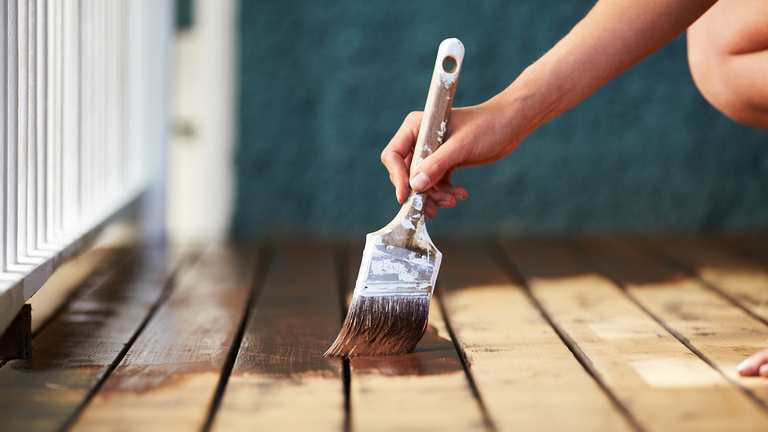





Top-rated deck staining pros.

Get matched with top deck staining pros in Madison, KS

Enter your zip and get matched with up to 5 pros

Need a pro for your deck staining project in Madison, KS?

Select your specific project to find the pro for you.

Find Deck staining pros in Madison

L & E Enterprise
5.0(
4
)
Exterior Home or Structure - Paint or StainExterior Home or Structure - Paint or Stain: LargeExterior Home or Structure - Paint or Stain: Medium

Serving Madison, KS and surrounding areas

In business since 2001

Free estimates

"Ed provided exceptional service at a great price. He was easy to work with and my wife loved dealing with him as well. I have to share that the very first project I asked Ed to bid was a complete deck rebuild without sharing I may have any future business for him at all. He drew up the bid for the rebuild but he could sense it wasn't a huge priority and all we really were trying to do was fix some stair structure issues and paint the deck. Ed also came with that bid and was the one that suggested it and ultimately convinced is it was the right thing for us. This meant a fraction of the opportunity for Ed but he felt it was the right thing and we were so thankful. Between this integrity, rare partnership approach from a contractor, and the quality of work at an unbeatable price we've come back to Ed for repeat business for years and haven't been disappointed."
Recommended by100%of homeowners

Showing 1-10 of 21
Deck Staining questions, answered by experts

In most cases, sanding an old deck before staining it is necessary to achieve a decent finish. If your old deck has a relatively new stain finish on it and you're only doing touch-ups, you can generally skip the sanding part. However, if your goal is to make the deck look and function better, sanding first is a must. 

Applying too much sealer to a deck might seem like extra protection, but it can cause more harm than good. Wood is a porous material with a limited capacity to absorb liquids. When you go overboard with sealer, the excess can't soak in and instead forms a film on the surface. This leftover layer is prone to peeling, cracking, and trapping moisture, ultimately defeating the purpose of sealing in the first place. 

The number of coats you need to apply when whitewashing a surface depends on how opaque you want the final product to be. If you're going for a transparent, barely there look, a single coat or two may suffice. For fuller coverage, you'll want to use multiple coats. Another option is to use a less diluted paint to get a thicker coverage. 

Adding a second coat of stain to wood can even out the color to some extent, but it won't drastically alter the hue if the initial application is too light or too dark. It's more effective at enhancing the richness of the color rather than significantly changing it. Ensure the first coat is dry before applying the second.

Wood stain is not flammable after it dries. The solvent in wood stain is what causes the liquid form to be highly flammable, but the stain drying process involves the solvents dissolving, which leaves behind a non-flammable product on your wood project. Wood stain is, however, flammable before you apply it, so you should always store partially full cans and used wood stain rags away from sources of heat and open flames.

The Madison, KS homeowners’ guide to deck staining services

From average costs to expert advice, get all the answers you need to get your job done.