






Top-rated generator install pros.

Get matched with top generator install pros in Oldenburg, IN

Enter your zip and get matched with up to 5 pros

Need a pro for your generator install project in Oldenburg, IN?

Select your specific project to find the pro for you.

Find Generator install pros in Oldenburg

Avatar for Tri-State Water, Power & Air
Tri-State Water, Power & Air
4.3(
8
)
Fixed Generator - InstallGenerator - InstallGenerator - Install - For Business

Serving Oldenburg, IN and surrounding areas

Approved (Corporate)

In business since 1992

Emergency services offered

Warranties offered

"It was pretty rocky. At first. Several appoints made by Tri-State no one ever showed up.Crew showed up to install the Generator before the site survey and did not have necessary equipment or cooperation of Electric or gas company nor call before you dig had been notified. I called Tri-State to warn them the call before dig had never been preformed. They said they'd take care of it, did not happen until right before installation crew came back the second time. The first time they were here they could not have installed the generator even had they had all the parts because none of the utilities had been marked. Finally after about three months the Generac was installed and working. I had several questions that I could never get answered by calling Tri-State. One of the installation team had to come back a couple of weeks later to replace a damaged part and he answered all my questions. The guys who installed the Generac were great, the problem is your guys operation center and call center as far as I can see do not communicate very well. Anyway the generator has worked fine in several power outages this spring. I am happy right now but I live in dread something goes wrong and I have to call Tri-State for help."
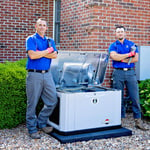
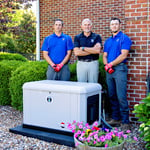
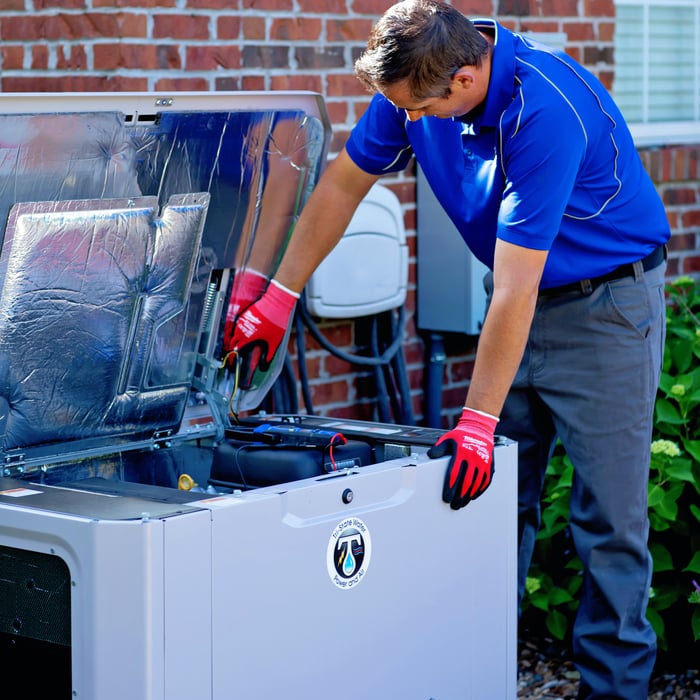
Additional Photos
Additional Photos
Additional Photos
Additional Photos
Additional Photos

+2

68 neighbors recently requested a quote
Recommended by87%of homeowners
Showing 1-10 of 20
Generator Install questions, answered by experts

To determine the right size generator for your house, you should calculate the total wattage of the appliances and devices you want to power during an outage. List all essential items, note their start-up wattages, and add them together.

Here are some typical wattage requirements for common appliances:

  • Refrigerator: 600 watts

  • Large dehumidifier: 700 watts

  • Large window air conditioner: 1,400 watts

  • Water heater: 3,000 to 4,500 watts

  • Electric furnace: 5,000 to 25,000 watts

A 7,500-watt generator might be sufficient for essentials like a refrigerator, freezer, well pump, and lighting circuits. However, for high-demand items like a water heater or furnace, a whole-home generator is a better choice. A portable generator may be enough if you only need to power a few critical items.

While home square footage can offer a rough estimate, it is not always a reliable indicator. For reference, here are some typical generator sizes based on square footage:

  • 1,000 sq ft: 6–9 kW

  • 1,500 sq ft: 7–10 kW

  • 2,000 sq ft: 10–14 kW

  • 2,500 sq ft: 12–16 kW

  • 3,000 sq ft: 16–20 kW+

For the most accurate sizing, consult a professional who can calculate your home's peak and average power consumption and recommend the optimal generator.

While diesel is relatively stable, it won’t last nearly as long as propane and you may have to replace it if it sits unused for too long. Diesel can sometimes struggle to work efficiently or start engines during especially cold weather, so it’s not the best choice for every climate. Compared to fuels like propane and natural gas, diesel generators tend to be noisier and create more exhaust, which isn’t always ideal for home use.

If you’re deciding between a solar battery versus a generator for the best backup power solution, you can take a few factors into consideration. Solar batteries are quiet while generators can be quite loud. Generators have a lower up-front cost, but they require fuel and ongoing maintenance while solar batteries are more expensive but don’t have many ongoing costs.

Generators are usually sized by running watts and starting watts. Ideally, you’ll want a generator that can offer both the necessary running watts and starting watts for everything you need to power without going beyond 90% of its capacity. Calculate your home’s electrical load based on the breakers in your home or adding up the appliance and lighting needs of connected rooms.

It might seem counterintuitive, but installing a generator transfer switch will save you money in the long run. While you’ll have to pay between $400 and $2,500 to have the transfer switch installed, you’ll recoup that amount later on when you don’t have to pay for expensive repairs to your appliances, devices, and electrical system that may have burned out, overloaded, or stopped working due to a sudden loss of power or an incorrect hook up of a generator to your home

The Oldenburg, IN homeowners’ guide to generator installs

From average costs to expert advice, get all the answers you need to get your job done.