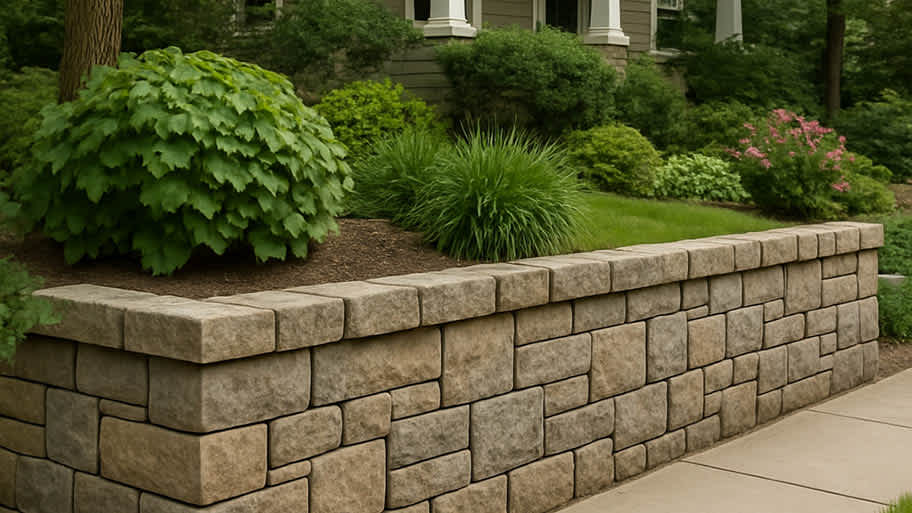





Top-rated retaining wall installation pros.

Get matched with top retaining wall installation pros in Thomson, IL

Enter your zip and get matched with up to 5 pros

Need a pro for your retaining wall installation project in Thomson, IL?

Select your specific project to find the pro for you.

Find Retaining wall installation pros in Thomson

Avatar for SAH Construction
SAH Construction
5.0(
2
)
Retaining Wall - Install

Serving Thomson, IL and surrounding areas

In business since 2025

Free estimates

Warranties offered

"Scott did a great job. The lions share of the work was a new poor in a garage that was dirt and pea gravel. It wasn't easy working in the smaller garage with a low roof. Other work was an alleyway between that garage and my main garage along with a landing from my main garage and having to match up to the ramp up to house along with driveway pavement. So three different levels to match up to and Scott did a great job."
Response time10 hrs
Showing 1-10 of 18
Retaining Wall Installers questions, answered by experts

The lifespan of a retaining wall varies based on its material, installation quality, maintenance, and local climate, with an average range of 20 to 100 years. Retaining walls made from durable materials like concrete, stone, and brick generally last a minimum of 50 years. Concrete walls typically last between 50 and 100 years, while brick can last for over a century in ideal conditions. Timber retaining walls can last from 20 to 40 years, depending on the wood quality, and pressure-treated wood walls average around 30 years. It is important to note that a retaining wall can fail prematurely if it was poorly constructed, for example, with inefficient footings or without necessary rebar reinforcements.

Rebar is a steel support that goes inside concrete to prevent structural damage over time. Concrete is susceptible to impact, weight, and tension. By inserting rebar into the concrete during the installation, you can help extend its lifespan and avoid hazardous situations where the foundation of your home gives way to tensile forces.

With foundation walls, the slab on grade and force at the top of the wall is resisted by flooring. With retaining walls, the force at the top of the wall is not resisted.

Sand and gravel are two suitable options for filling behind a retaining wall. If you’re building your own retaining wall, you’ll complete this part of the process—known as backfilling—after you finish laying the blocks. Make sure not to skip it—otherwise, you could wind up with drainage issues, which can cause your retaining wall to collapse.

To maintain the integrity of your landscape, a retaining wall must be installed if the slope of the angle exceeds 35 degrees. The lean of the wall must be 1 inch per 12 inches in height to disperse the weight of the soil uniformly and guarantee the correct drainage of the soil.

The Thomson, IL homeowners’ guide to retaining wall installation services

From average costs to expert advice, get all the answers you need to get your job done.