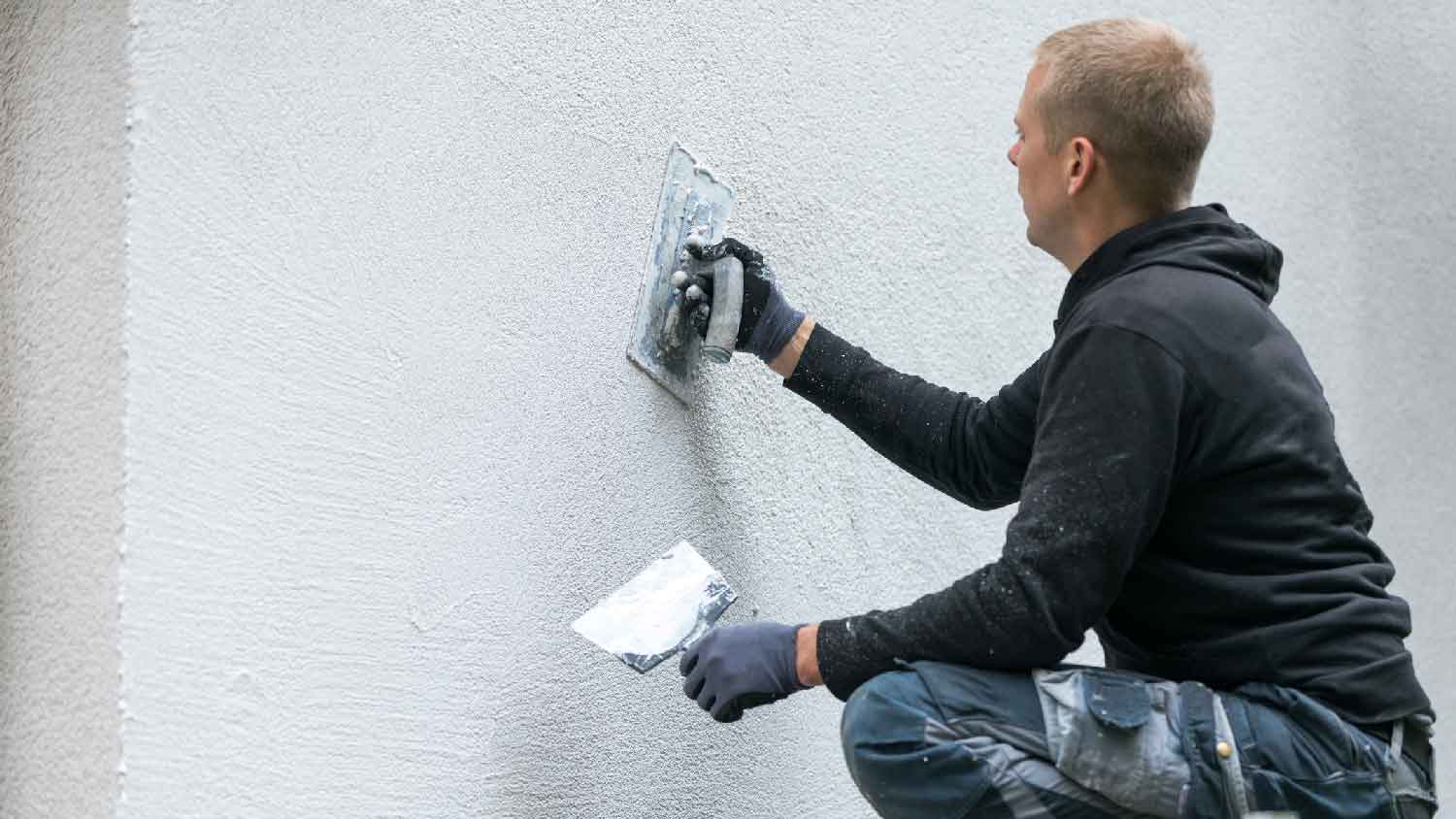







Top-rated stucco pros.

Get matched with top stucco pros in Fisher, IL

Enter your zip and get matched with up to 5 pros

Find Stucco pros in Fisher

Leiva Construction
New to Angi
Synthetic Stucco - Install or Completely Replace

Serving Fisher, IL and surrounding areas

In business since 2015

Free estimates

Credit card accepted

We take great pride in our experience, expertise, quality, and customer service that we provide to meet the consumer's needs. It is our mission to provide excellent workmanship and complete customer satisfaction from start to completion of a project. In order to understand the needs and expectations of our customers, we take great care to work and communicate with every customer in a professional manner. Our reputation is based on service, safety, and quality, regardless of how large or small the job. We have consistently focused on the needs of our customers, providing personalized attention and a stress-free experience.

Stucco questions, answered by experts

The curing time for stucco typically takes several weeks to fully complete. During the curing process, the stucco undergoes a chemical reaction and gradually hardens. It's important to note that curing is different from drying. While the surface of the stucco may dry relatively quickly within a few hours or days, the curing process continues beneath the surface, strengthening and solidifying the stucco. 

It's best to avoid excessive moisture exposure during the curing period, as it can impede the curing process. The exact curing time can vary based on factors such as temperature, humidity, and the specific stucco mixture used.

Yes, you can screw directly into stucco. Only do so if the item you are installing is a permanent fixture. Drill a pilot hole into the stucco using a masonry or concrete bit, then drive in the screw with a power drill or screwdriver.

It’s not advisable to use CLR on stucco. CLR is a powerful acidic cleaner designed for removing tough mineral stains. Stucco is a porous material commonly made of cement, lime, and sand. The acidic nature of CLR can potentially damage or etch the stucco surface, leading to discoloration or deterioration. 

It is best to use cleaning solutions specifically formulated for stucco or mild household cleaners mixed with water to clean stucco siding. Always test any cleaning product in a small, inconspicuous area before applying it to the entire stucco surface.

The best way to assess that your stucco needs repair is to inspect it, both visually and physically. If you notice cracks, chips, or staining, that’s a good indication that your stucco could use some TLC by a professional. Additionally, if you touch an area that feels soft and has a little “give,” you should consider repairing it as soon as possible to avoid further damage, both to additional stucco spots and to your home’s structure. 

Solid, unpainted stucco shouldn’t suffer damage from dots of glue used for this task. If the stucco is dirty, you may notice slight marks when you heat and peel the glue away, but these aren’t permanent.

However, not all stucco walls are solid stucco. Some are “faux” stucco with a foam backing. This kind of stucco veneer is more susceptible to damage, including damage from hot glue. We don’t suggest attaching anything to these kinds of stucco walls, so make sure you check the stucco type before starting this project.

The Fisher, IL homeowners’ guide to stucco services

From average costs to expert advice, get all the answers you need to get your job done.