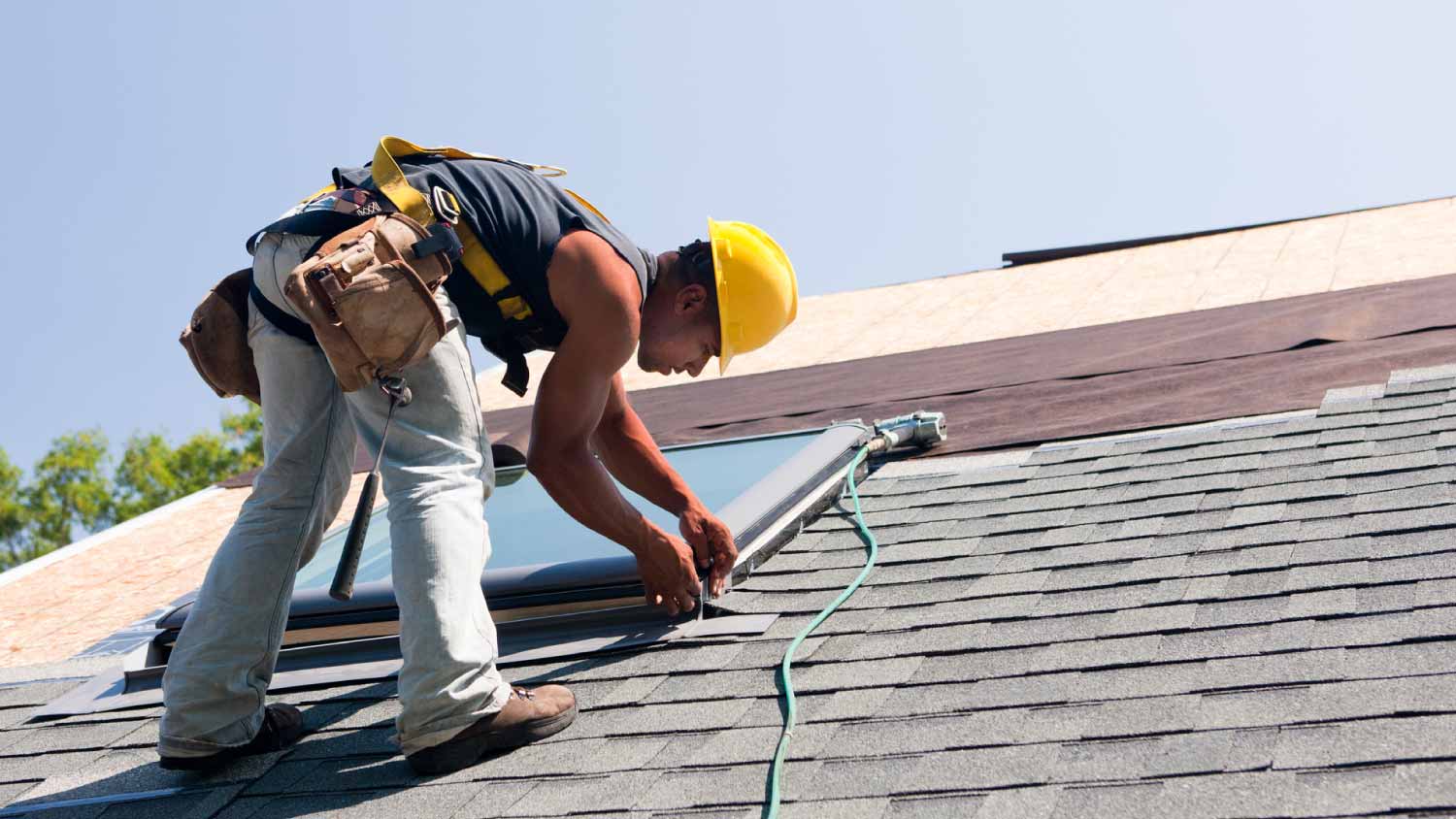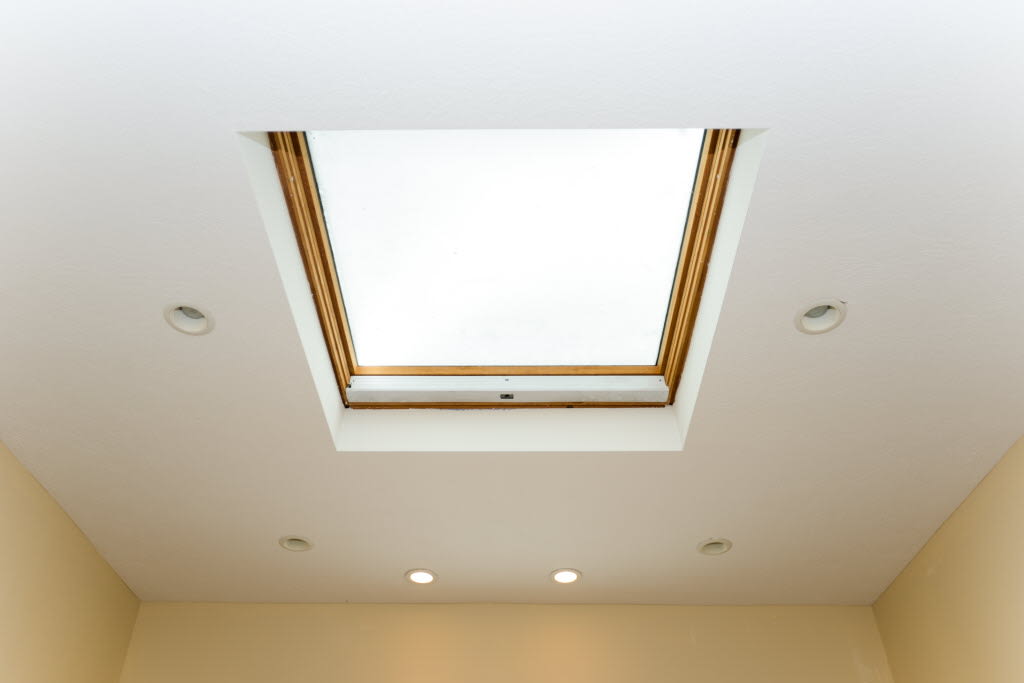




Professionals repair or seal a skylight by inspecting for damages, resealing any gaps with appropriate weatherproofing materials, replacing cracked glass or seals, and ensuring the frame is tightly fitted to prevent future leaks and ensure proper drainage.
Local window and door specialists, glaziers, and roofers should all install skylights. You can also do an internet search to find companies that specialize in skylight installation near you. Keep in mind that skylight installation is very complex and can be dangerous without the proper tools and safety precautions, so we don’t recommend this as a DIY project.
Whether you need a permit to install a skylight depends on the scope of the project and local regulations. Generally, permits are required if the installation involves altering the structural components of your home, such as moving roof rafters. In some municipalities, a permit might also be necessary if the skylight protrudes above the highest point of your existing roof. However, if no structural changes are made, a permit may not be needed. The cost for a skylight installation permit is typically under $100. A convenient time to add a skylight is during a roof replacement, as your contractor can incorporate the new opening into the design.
Ceiling costs depend on many factors, such as the material used and size, but coffered ceilings are considered one of the more expensive ceiling options. If you want to install a coffered ceiling but have a limited budget, consider using plywood instead of hardwood—it costs $2–$4.50 per square foot, while hardwood can be as much as $20 per square foot.
There are four main types of lighting used in homes: ambient, task, accent, and decorative. Within these categories, there are a number of fixtures to choose from including ceiling-mounted lights, floor lamps, under-cabinet lights, track lighting, and more.
Choosing the fixture that’s right for you depends on your home design and the area you’re looking to illuminate.